The system is not just broken; it’s designed that way. Voter rolls grow, but polling places shrink. It’s like a scene from a Kafka novel.
In Georgia, growing nonwhite communities face fewer polling places. This leads to long lines, like the five-hour wait at the Christian City Welcome Center.
But the usual methods don’t work. Paid canvassing and mass mailers fail in “high-information” elections. They often confuse people more than they inform them.
There are big gaps in service. Broadband deserts make online registration a dream. Seasonal work doesn’t match election days. And precinct maps are like puzzles, not service plans.
This isn’t about charity; it’s about saving democracy. We need a tactical, hands-on approach. That’s where a strong rural outreach strategy starts. It’s about mobilizing trusted community partners.
Partner network rural libraries markets clinics food banks faith leaders
Grassroots organizers in mosques and tenant unions showed us how to engage with rural areas. Groups like Faith in Minnesota and the New Virginia Majority focused on real issues all year. They built trust, not just for elections.
Don’t try to parachute in. That approach is like a cold call. Instead, build your network through diplomacy and trust.
Map the local ecosystem of trusted institutions. These places are where life happens and bureaucracy is familiar. They are your co-conspirators.
- The Rural Library: More than books, it’s the de facto community center, a neutral ground where people seek help.
- The Clinic: Where paperwork anxiety is a daily reality. Staff understand navigating complex systems.
- The Food Bank Line: Not just a queue for groceries, but a forum. This is where real talk happens.
- The Faith Leader: A moral authority who can vouch for your intent beyond political cycles.
- The Farm Bureau Rep: The pragmatic voice connecting economic reality to community well-being.
Enlisting faith and farm partners means more than renting space. It’s about aligning with their missions. A pastor is a conduit to congregants, not just a venue. A clinic director is an ally in public health, not just a host.
This approach turns partners into force multipliers. They become your local ambassadors, spreading word through channels you can’t access. Their endorsement carries more weight than any flyer. Research on community-based health outreach shows that local leaders have a big impact. The same principle applies here.
To start, engage them on their turf, on their issues. Help the library with its digital literacy day. Support the clinic’s vaccine drive. Listen at the food bank. This isn’t just for a single event; it’s investing in a community’s infrastructure. The result is more than a successful pop up event. It’s the foundation for a movement.
Ultimately, your strongest faith and farm partners are those who see your work as an extension of their own. That’s the difference between a one-day rental and a lasting alliance. It transforms a logistical operation into a genuine community effort.
Mobile kit configuration canopy tables power battery printer satellite messenger
Forget the fancy campaign office. Our base is a hatchback. It’s not about looks; it’s about democratic resilience. Setting up a mobile registration unit is like a guide for gearheads to get involved in politics. It’s like a Swiss Army knife for democracy.
It needs to work like a utility truck in a church parking lot or on a dirt road. We learned this the hard way. Data shows that a missing power cord or a dead printer isn’t just a hassle. It blocks people from voting.
Let’s plan out the kit. This is about making a political statement through logistics.
The Core Components: More Than a Canopy and Table
The canopy and tables are your stage. But the show must go on, rain or shine. Choose a heavy-duty pop-up canopy with sidewalls. It protects you from rain or sun.
The tables must be sturdy. Wobbly tables cause wobbly signatures and upset voters.
Now, the heart of the operation: power. You can’t count on a nearby outlet. A strong power system is essential.
We’re talking about a deep-cycle battery and a pure sine wave inverter. This combo can power a laptop, printer, and lights for hours. Add a solar panel for extra charge. It’s about lasting as long as a county fair.
The Non-Negotiables: Connectivity and Output
Power is useless without data. That’s where the satellite messenger comes in. For dead zones, this device is your lifeline. It lets you text and send SOS signals. It’s your backup plan’s backup plan.
The printer is next. You need a battery-backed, ruggedized printer. It must print forms in humid or dusty conditions without jamming. When the generator fails, the battery kicks in. No failed prints, no disenfranchised citizens.
Remember Georgia’s primaries? A single failure can affect thousands. Our kit is ready for every scenario.
| Component | Specification | Purpose | Redundancy Tip |
|---|---|---|---|
| Power System | 1500W Pure Sine Wave Inverter, 100Ah Deep-Cycle Battery | Runs all electronics independently for 8+ hours. | Pack a second, fully charged battery. |
| Printer | Thermal or Rugged Inkjet with Battery Backup | Produces clean forms in any environment; won’t quit during a brownout. | Carry twice the paper and ink/two printer. |
| Connectivity | Satellite Messenger (e.g., Garmin inReach) | Provides text comms and GPS in zero-cell areas. | Pre-program emergency contacts and location check-ins. |
| Shelter | 10’x10′ Commercial Pop-Up Canopy with Sidewalls | Creates a professional, protected workspace anywhere. | Bring extra stakes and ratchet straps for high wind. |
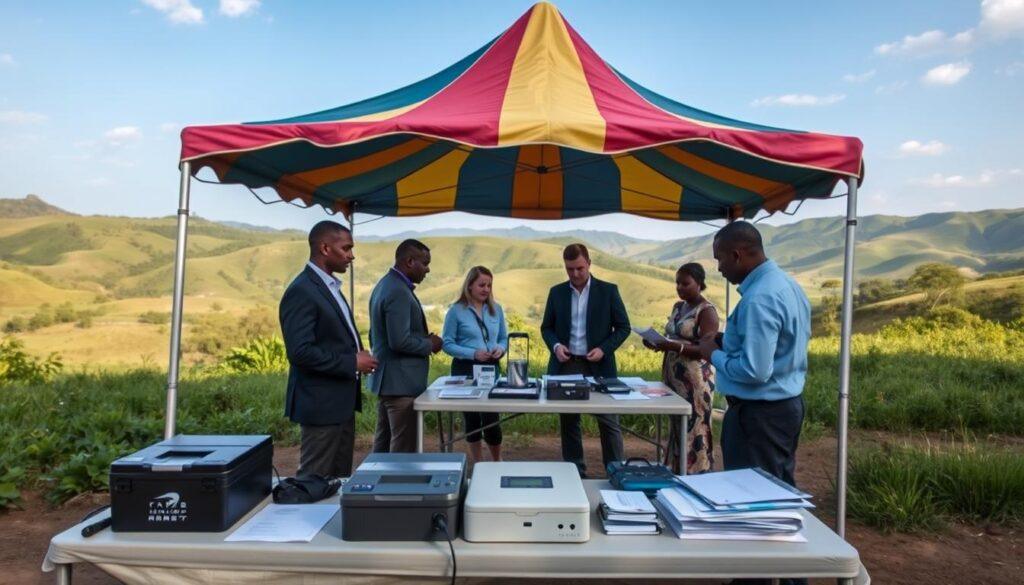
This table is more than a shopping list. It’s a statement for mobile registration that works. Each item tackles a historical failure. The canopy fights bad weather. The power system fights grid uncertainty. The printer fights technical issues.
The satellite messenger fights isolation. Together, they turn a vehicle into a self-sufficient civic hub.
Setting up this kit is the first step in saying, “Your vote matters, no matter your address.” It’s the opposite of a broken polling place. It’s MacGyver-level problem-solving for democracy. And it starts with the right gear in the trunk.
Route and schedule design cluster stops drive time fuel and weather windows
Creating a route for rural outreach is more about understanding people than just mapping. It’s about knowing the community’s rhythm and how it moves. You’re not just mapping places; you’re aligning with the community’s natural flow.
Begin with the facts—the empty polling places and where people live. That’s your starting point. Then, add the local culture. Know when the town comes alive, like during the livestock auction. That’s when you should plan your stops.
Time works differently in rural areas. Google Maps can’t account for slow roads and traffic. Your logistics planning needs to be realistic. Plan for long drives and unexpected stops.
Weather is also key. Holding events in bad weather is a waste. Plan for all seasons, from mud in spring to heat in summer. It’s about respecting the environment.
Regular visits are more effective than one-offs. Your route should be a regular visit, not a quick stop. Try to visit the same places every other Thursday. Align with local events.
Here’s a practical framework for your plan:
- Identify the Pulse: Map local events, work schedules, and social hubs onto your calendar.
- Calculate Real Time: Add a 40% buffer to all digital map estimates for rural drive times.
- Mark Your Resources: Plot every gas station and possible pull-off spot along your route.
- Consult the Almanac: Build your schedule around reliable weather patterns, not forecasts.
Your goal is to be efficient and effective. It’s about combining analysis with local knowledge. You’re not just passing through. You’re becoming a part of the community’s daily life.
Communications local radio flyers church bulletins text trees volunteer drivers
Forget the digital megaphone. In rural America, the most powerful signal travels through a handshake and a flyer on a grocery store corkboard. This section is a funeral for the fantasy of a centralized comms blast. In an age of deep skepticism, your best megaphone is a neighbor.
We’re talking about hyper-local, analog trust networks. Think the local AM radio station’s community bulletin—the one people actually listen to for weather and news. Consider the photocopied flyer on the diner’s bulletin board, right next to the ad for free kittens. This is relational organizing. It’s about trusted messengers, not broadcast messaging.
Your strategy should feel like insider knowledge, not spam from a distant political machine. The announcement in the church bulletin or mosque newsletter carries weight a glossy mailer never will. A text tree functions like a phone chain for democracy, passing info through layers of personal connection.
And recruit volunteer drivers not just as transport, but as ambassadors. The person giving the ride is your most credible spokesperson. They build trust mile by mile.
Contrast this with the Center for Voter Information’s approach. Their carpet-bombing mail strategy left voters like Gerry Cohen harassed and confused. Duplicate, conflicting mailers from outside groups erode trust. Our method builds it.
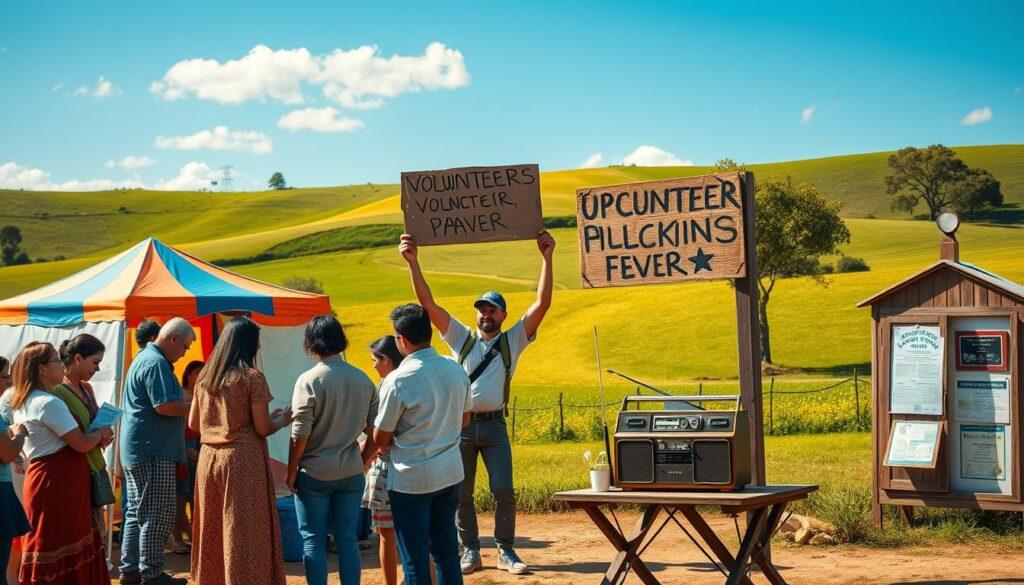
So, how do you engineer this trust? It’s about choosing the right tool for the right community. Below is a breakdown of analog tactics versus the impersonal blasts that fail.
| Communication Channel | How It Works | Trust Quotient | Ideal For |
|---|---|---|---|
| Local Radio Bulletin | Short, paid announcement on community-focused AM/FM station. Often read by a familiar DJ. | High. Voice of a local institution. | Reaching older demographics and commuters across a wide county. |
| Photocopied Flyer | Simple, informational sheet posted in libraries, clinics, markets, and food banks. | Medium-High. Feels grassroots and immediate. | Targeting specific, high-traffic community hubs for your pop up events. |
| Church/Mosque Bulletin | Listing in the weekly newsletter or a verbal announcement from the pulpit. | Very High. Endorsed by a core community leader. | Tapping into pre-existing, tight-knit faith networks. |
| Text Tree | Pre-organized chain where one volunteer texts five friends, who each text five more. | High. Information comes from a known contact. | Rapid, reliable mobilization of volunteers and attendees. |
| Volunteer Driver Ambassadors | Drivers provide rides and personally discuss the mobile voter registration drive. | Highest. Builds trust through direct, personal service. | Serving remote residents and turning every ride into a relational organizing session. |
The goal is simple. Make information about your mobile voter registration drive feel like a tip from a friend. That’s how you cut through the noise and build the participation that matters.
On site flow low bandwidth QR fallback paper forms and translation cards
Imagine a voter registration event where the internet is as reliable as a politician’s promise. This is where our on-site flow shines. The real test isn’t the fancy brochure or the hopeful press release. It’s the messy, beautiful reality of a parking lot clinic or a remote library branch.
We prepare for the worst and hope for the best. This isn’t being pessimistic; it’s being prepared. Our plan assumes you might have little cell service, a dying phone, and a long line of people. We aim for a process so smooth it feels like a luxury service, building trust in the system.
Our first move is the humble QR code. For those who are tech-savvy, it’s a smooth way in. A quick scan leads to a fast, accurate form on their phone. But we know QR codes aren’t for everyone.
When digital fails—and it will—we have a backup: paper. But not just any paper. Our forms are clean, simple, and correct, learned from past administrative troubles.
Using paper forms shows respect. A well-designed form on a clipboard with a working pen says, “Your vote matters.” It’s the opposite of the crumpled, photocopied mess that has caused problems before.
Language barriers can also cause issues. Relying on Google Translate on a spotty connection leads to confusion. Our solution? Physical translation cards for common languages. These cards are simple, visual guides that help instantly, without needing internet.
| Feature | QR Code Process | Paper Form Fallback |
|---|---|---|
| Primary Advantage | Speed & data accuracy for tech-enabled users. | Universal access, completely offline and reliable. |
| Key Consideration | Requires a smartphone and minimal bandwidth. | Requires manual data entry later, but ensures completion. |
| Trust Signal | Projects modernity and efficiency. | Projects preparedness and inclusivity, no matter the circumstances. |
| Administrative Cleanup | Data flows digitally, reducing errors. | Uses controlled, serialized forms to prevent duplicate or invalid submissions. |
The process on the ground is a dance of options. A volunteer greets someone, checks their tools. “Would you like to scan the QR code, or would you prefer a paper form?” The translation cards are there if needed. This choice empowers the person, removing shame or tech anxiety.
This isn’t just about logistics; it’s about psychology. A smooth mobile registration experience does more than just collect names. It builds trust in the system. It turns a task into a human interaction. One well-organized clipboard at a time, we’re not just registering voters. We’re showing that the system can work, even when the internet doesn’t.
Safety on county roads equipment tie down sun and heat protocols wildlife awareness
Safety on rural roads is more about survival than following rules. It’s about navigating roads that seem like they belong in the 1980s. Our duty of care is critical, as voters face hours in extreme weather just to register. If we can’t handle the basics, we lose all credibility.
Securing your kit on these roads requires a different mindset. It’s not just about bungee cords. We need positive-lock tie-downs for canopies and weights for tables. A loose piece of equipment can be a hazard on these old roads.
The sun is a major concern. Saying “have water available” is not enough. We need strong protocols, like mandatory shade structures. We also schedule breaks to keep everyone cool.
It’s essential to recognize heat illness signs in volunteers and voters. Train your team to look for:
- Confusion or irritability
- Excessive sweating followed by clammy, pale skin
- Headaches and dizziness
- Nausea or muscle cramps
This is not medical school; it’s basic common sense. A voter overcome by heat is a failure on our part.
Wildlife awareness is also key. A curious animal can shut down your operation. Simple steps like securing food and avoiding animal trails prevent these issues.
Every safety step, from securing tables to recognizing heat stroke, builds trust. It shows respect for the environment and people. This diligence is what earns you credibility with faith and farm partners. They see you understand their world, not just use it for votes. Your safety plan is your first argument for legitimacy.
Chain of custody in remote settings sealed containers timestamp photos witness log
The chaos of misdirected mail-in ballot applications, like those from groups such as the Center for Voter Information (CVI), taught us a brutal lesson. In remote settings, trust isn’t assumed; it’s built with a timestamp and a seal. When forms end up in the wrong clerk’s office, it doesn’t just create administrative hassle. It sows a full-blown crisis of confidence, fueling narratives of fraud and “stolen elections.” Our answer? A chain-of-custody protocol so meticulous it would satisfy a forensic auditor.
This isn’t about implying suspicion of the community. It’s about armoring the process against the conspiracy theories that thrive in information vacuums. We’re building a paper trail so clear, so irrefutable, that even the most cynical observer has to nod in respect. Think of it as a heist movie in reverse: instead of stealing something, we’re creating an unbreakable record of its secure journey from a rural market booth back to the county election office.
Step one is physical security. Completed forms don’t get tossed in a cardboard box. They go immediately into numbered, tamper-evident sealed containers. Think of those plastic ballot boxes you see on TV, but scaled for mobility. This simple act transforms a stack of paper into a secured asset. It signals to everyone—volunteers, partners, and the public—that this document’s integrity is key from the start.
Step two is digital witness. At every transfer point—when forms leave the canopy, get handed to a driver, or are received at a partner hub—we take timestamped photos. The container, the location, the people involved, all captured in a single shot. This creates a visual log that’s geographically and chronologically stamped. It answers the “who, what, when, where” before anyone even thinks to ask. No fog of doubt, just a spotlight of documentation.
Step three is the human ledger. The witness log. This is where our non-partisan community partners from Section 2—the faith leader, the farm bureau representative—become official validators. They sign and initial at each handoff. Their community standing adds a layer of social trust to the procedural trust. It’s a tangible commitment from respected locals that this process is clean.
So, why this level of detail? Because transparency is the ultimate antidote to confusion. The CVI mailer debacle showed how easily fear is sown. Our protocol is the rebuttal. It turns the abstract concept of “election integrity” into a series of verifiable, photographed, and signed actions. It builds public confidence not through speeches, but through demonstrable practice.
In the end, this chain of custody in remote settings is a positive practice. It’s not a reflection of paranoia, but a proclamation of professionalism. We’re showing rural communities that their participation is valued so highly that we guard it with a process worthy of a museum’s priceless artifacts. The goal is simple: make the path of a voter registration form so impeccably clear that the only thing left to debate is who to vote for.
Cost model per registration budget and grant opportunities
Election offices often lack funds, yet we spend a lot on methods that don’t work well. It’s time for a change. Good intentions are important, but they don’t pay for things like gas or printers. We need to focus on numbers and making democracy more welcoming.
Counties’ elections offices usually don’t have enough money. But, we spend a lot on paid canvassing and mass-mailer programs. These can lead to extra work and problems. It’s like wasting money for no good reason.
The mobile voter drive model is different. It’s based on careful logistics planning and clear results. Let’s look at how much it costs per registration.
| Cost Factor | Mobile Drive (Per Event) | Mass Mailer Campaign (Per 1000 Mailers) |
|---|---|---|
| Equipment/Setup | $200 (Canopy, tables, kit) | $50 (Printing & Design) |
| Fuel / Postage | $75 (Cluster route fuel) | $550 (Bulk mailing permits & postage) |
| Labor / Stipends | $300 (Volunteer honoraria) | $2000 (Paid canvasser fees) |
| Duplicate/Invalid Rate | <5% (In-person verification) | 15-30% (Address changes, errors) |
| Administrative Overhead | Low (Digital forms, immediate processing) | High (Data entry, duplicate purging) |
| Cost per Valid Registration | $25 – $40 | $80 – $150+ |
The mobile drive costs less upfront but is much more efficient. It’s not just throwing money away. It’s a smart way to use resources, focusing on people and logistics planning.
This approach is not just spending money. It’s a smart investment in our voting system. It’s a great reason to ask for grants.
There are grants for smart civic projects, like helping rural areas vote and improving election security. Your proposal should show how you’ll use the money wisely, not just ask for it.
You need to plan well and show your goals clearly. Share your plans, your team, and how you’ll measure success. This will convince funders you’re serious about making a difference.
The goal is to spend wisely, not just more. It’s about reaching those left out with care, not just in numbers. This is how we build a democracy that works for all, without spending too much.
Metrics coverage of target areas acceptance rate and return on investment
We built the mobile kit. We mapped the routes. We rallied the volunteers. Now, we face the spreadsheet. How do we measure a real victory?
First, we track true geographic coverage. Did we hit the target areas, or just the easy stops? Data from the Brennan Center for Justice shows where the need is greatest. Our goal isn’t miles driven; it’s underserved zip codes reached.
Next, we analyze the acceptance rate. Quality beats quantity every time. A high number of completed, valid forms from our QR codes and translation cards proves our on-site flow worked. This is registration with integrity.
The ultimate return on investment is in the voters. We measure the activation of low-propensity voters and track their subsequent turnout. It’s the data-driven answer to the old analysis: long lines disproportionately burden nonwhite neighborhoods. Our ROI is a new voter showing up.
Success has layers. As research from groups like Movement Voter Project highlights, metrics like volunteer shifts filled and local leadership development matter as much as raw registration numbers. We’re building capacity, not just a list.
This is the final proof. Our method isn’t just a moral imperative. It’s a demonstrably effective strategy, proven where it matters most. The data doesn’t lie.