This guide offers a detailed look at how to vote. It’s a key resource for all voting methods and important deadlines.
The voting process in this area follows New Jersey’s laws. It’s vital for every citizen to have accurate, verified information. This makes sure every vote is counted right.
Next, we’ll cover how to register, vote early, and use mail-in ballots. We’ll also talk about Election Day, ballot security, and how to fix common issues. This guide will help you understand every step.
Union County & Surrounding Counties Context; Turnout Trends
Union County plays a big role in a key area for voting. It’s in the heart of northern New Jersey, where cities and suburbs meet. It borders Essex, Middlesex, Somerset, and Hudson counties.
This area is a big deal for voting in the state. To get Union County, you have to look at it with its neighbors. Changes in these areas affect who votes and how often.
Voter turnout has shown clear patterns over time. More people vote in general elections than in primaries in Union County. This is true for Essex and Hudson too.
Middlesex and Somerset see similar ups and downs in voting. The biggest voting years are when we elect a president. Elections for local offices see fewer voters, but they’re steady.
Several things affect how many people vote. How many are registered to vote is a big factor. The type of election also matters a lot.
Who lives in the area and how they move around also plays a part. How easy it is to vote, like where polling places and ballot drop boxes are, is important too.
Union County has a lot of voters to manage. Its voting setup needs to handle regular voters and big election days. Its neighbors face the same challenges.
Union County’s voting rates usually match the rest of northern New Jersey. Sometimes, local races can change things. This helps us understand how voting works there.
Keeping polling places and ballot drop boxes running smoothly is key. The next parts will explain how Union County voters can use these resources. Knowing the region and voting history helps guide these efforts.
Key Offices & Websites
Election administration in Union County involves different offices at the county and state levels. Each office has its own duties. It’s important for voters to know which office does what.
Three main entities oversee the process. These are the Union County Clerk, the Union County Board of Elections, and the NJ Division of Elections. Their websites offer forms, deadlines, and updates.
| Office | Primary Responsibilities | Official Website & Contact |
|---|---|---|
| Union County Clerk | Issues vote-by-mail ballots. Processes voter registration applications and maintains county registration records. | Website: unioncountyvotes.com Phone: (908) 527-4999 Address: County Courthouse, Elizabeth |
| Union County Board of Elections | Manages polling places and poll workers. Oversees in-person early voting and counts all ballots on Election Day. | Website: ucnj.org/boe Phone: (908) 527-4257 Address: 271 North Broad Street, Elizabeth |
| NJ Division of Elections | Sets statewide election standards and procedures. Maintains the central voter registration portal and certifies voting systems. | Website: nj.gov/state/elections Phone: (609) 292-3760 Address: 225 West State Street, Trenton |
The Union County Clerk’s role is key for mail-in voting. This office sends ballots to voters on the permanent list. It also handles address updates within the county.
The Union County Board of Elections runs polling locations. It makes sure voting machines work right. This board also deals with provisional ballots.
The NJ Division of Elections sets the framework. Its online portal allows for statewide registration checks. All county offices follow its guidelines.
For the most accurate information, voters should check with these offices directly. Their websites have official request forms and updates. Contact information is listed for any questions.
Union County Clerk/“Union County Votes” app; Board of Elections; NJ Division of Elections portal; hotlines
The ‘Union County Votes’ app and local/state election board websites are key. They give accurate info and help with voting. You can check if you’re registered, track your ballot, and solve common problems.
These tools ensure you get the right info from the source. This part explains what they do and how to get in touch.
The Union County Clerk and “Union County Votes” App
The Union County Clerk handles many election tasks. The Union County Votes app is its main digital tool. It’s free for iOS and Android users.
The app lets you find your polling place and see sample ballots. It also tracks mail-in ballots. You’ll get election reminders and news too.
There are more official resources too. These include the local Board of Elections website, the state voter portal, and hotlines.
- Union County Board of Elections Website: Here, you’ll find candidate lists, election results, and polling place info. It’s the go-to for local election details.
- NJ Division of Elections Voter Portal: This system lets you check your registration, update your address, and request a mail-in ballot. It’s the official place for statewide voter info.
- Voter Assistance Hotlines: There are verified phone numbers for help. The local hotline answers questions about polling places and ballots. The state hotline covers broader voting rights and registration.
Here’s the contact info for these resources.
- Union County Board of Elections: (908) 527-4123
- NJ Division of Elections Voter Hotline: (877) 658-6837
These hotlines are open during business hours and before elections. They help with voter issues and share official info.
Registration How‑To
In New Jersey, you must register to vote before getting a ballot. This step links you to your polling place. It makes sure you can get a regular ballot.
To register, you need to meet three main requirements. These are set by state law. You must fulfill all three to register successfully.
| Requirement | Details | Key Notes |
|---|---|---|
| U.S. Citizenship | Must be a citizen of the United States. | Proof of citizenship is not required on the registration form, but applicants must attest to it under penalty of law. |
| New Jersey Residency | Must reside in the county where registering, at least 30 days before an election. | College students, military personnel, and those without a traditional address have specific residency rules. |
| Age | Must be at least 18 years old on or before the next Election Day. | Individuals who are 17 may register if they will be 18 by the general election. |
First, you must meet the eligibility criteria. Then, you need to submit a voter registration form to the county commissioner of registration. This step adds you to the voter rolls.
New Jersey offers several ways to submit your form. The state doesn’t favor one method over another.
- Online: You can register through the New Jersey Division of Elections portal. This is the fastest method for most people.
- By Mail: You can download paper forms from state and county election websites. Send the completed form to the county election office.
- In-Person: You can register at the Union County Clerk’s Office, the County Board of Elections, and at state motor vehicle agencies.
After processing, you’ll get a confirmation notice. If your name isn’t on the poll book, you might get a provisional ballot. You might need to show a voter ID to prove your identity.
Voter Registration: Eligibility, Methods, and Updates
In New Jersey, including Union County, you must meet certain criteria to register to vote. You need to be a U.S. citizen and a county resident for at least 30 days before an election. You must also be 18 years old by the next election. People serving a sentence or on parole for a felony can’t register.
There are three ways to register or update your voter info. You can do it online, by mail, or in person at a government office. Each method requires filling out a voter registration form.
The quickest way is online through the NJ Division of Elections website. You’ll need a current New Jersey driver’s license or non-driver ID. The site sends your application to the right county office.
To register by mail, get a paper form from the Union County Clerk‘s website or the NJ Division of Elections. Send the filled form to the County Clerk’s office. You can also ask for a form to be mailed to you by calling the Clerk’s office.
For in-person registration, visit the Union County Clerk’s office or the Board of Elections. They accept and provide forms right there. Some libraries and motor vehicle agencies also offer forms.
It’s important to update your registration if your details change. If you move, even within the same county, you need to update your address. This ensures you vote at the right polling place. You can update your registration online, by mail, or in person.
After a legal name change, like marriage or divorce, you must update your registration. Your registration name must match your ID. It’s a good idea to include proof of your new name with your form.
Changing your party affiliation is another update. In New Jersey, this affects which primary ballot you can vote in. You can change your affiliation by submitting a new voter registration form. The deadline for this is different from new registrations.
Meeting statutory deadlines is key. Missing a deadline means you can’t vote until the next election. Below is a table with important deadlines for different actions.
| Registration Action | Typical Deadline | Key Notes |
|---|---|---|
| New Voter Registration | 21 days before an election | Applies to primary and general elections. The Union County Clerk must receive the form by this date. |
| Address Change Within County | 21 days before an election | Follows the same deadline as new registration. Can often be done online via the NJ Division of Elections portal. |
| Party Affiliation Change | 55 days before a primary election | A specific deadline for primary voting eligibility. Does not affect registration for the general election. |
| General Updates (Name, etc.) | 21 days before an election | Recommended to submit well in advance to ensure records are processed correctly. |
All deadlines are strict and enforced by state law. Make sure to check the exact date for each election. Submitting on time ensures you’re included in the voter rolls for the next election.
Early Voting
Across Union County, early voting centers let residents vote at their own time. This is a formal way to vote, aside from mail-in ballots and Election Day voting.
In New Jersey, early voting happens before an election. Voters use special machines at county-run spots. These votes are kept safe until Election Day.

The early voting system is secure and easy to use. Each county has many early voting centers for different areas. These are not the same as polling places on Election Day.
Voters follow a simple process. They check in, get a ballot, and use a voting machine. The machine is either a direct-recording electronic device or a ballot-marking device.
All early votes are stored in the machine. They are kept safe until counted after 8:00 PM on Election Day.
| Voting Method | Timeframe | Location Type | Ballot Processing |
|---|---|---|---|
| Early Voting | Set days before Election Day | County-designated early voting centers | Counted after polls close on Election Day |
| Election Day Voting | Hours on Election Day only | Assigned neighborhood polling places | Counted at precinct or central location |
| Vote-by-Mail | Anytime before deadline | Mail or secure drop box | Counted as received, pre-canvassed |
This system helps avoid crowds on Election Day. It lets voters choose when to vote. This makes voting easier over several days.
Early voting is a big step forward in election management. It makes voting secure, reliable, and easy for everyone.
How In-Person Early Voting Works in New Jersey
In-person early voting lets Union County residents vote at special centers before Election Day. It’s a flexible option instead of voting on Election Day.
New Jersey law sets a standard early voting period for general elections. It starts ten days before Election Day, on a Wednesday. Voting ends on the Sunday before the election.
Any registered voter in Union County can vote early. They don’t have to use their assigned precinct. They can go to any early voting center in the county.
The early voting process is similar to Election Day. Voters check in, get their ballot, and mark it on a machine. The ballots are counted after Election Day.
Early voting centers are open at the same times. From Wednesday to Saturday, they’re open from 10:00 a.m. to 8:00 p.m. On the last Sunday, they’re open from 10:00 a.m. to 6:00 p.m.
Union County has many early voting centers for convenience. They’re often in public buildings in big towns.
- Elizabeth City Hall
- Plainfield Public Library
- Westfield Municipal Building
- Union Township Senior Center
The locations and hours might change for each election. The Union County Board of Elections updates the list. Voters should check their nearest center before going.
Early voting can help avoid long lines and fit busy schedules. For the latest info, contact the Union County Board of Elections or visit their website.
Vote‑by‑Mail (VBM)
Any active registered voter in Union County can vote by mail for any election. New Jersey’s Vote-by-Mail system replaced the old absentee voting. It lets voters cast their ballots without going to a polling place.
Every active registered voter can get a Mail-in Ballot. No reason or excuse is needed. This makes voting easier for many people.
Voters have two ways to get VBM ballots. They can ask for a ballot for one election. Or they can join the “Automatic Vote-by-Mail” list.
Choosing the automatic list means voters get a ballot for all elections. This includes general elections, primaries, and special ones. Voters must choose this option on purpose.
The Union County Clerk sends out all Vote-by-Mail ballots. This office prepares, prints, and sends the ballots. The Clerk’s website and “Union County Votes” app help voters.
The Union County Board of Elections deals with the returned ballots. This board checks and counts the mail-in ballots. The Clerk and the Board have different jobs.
It’s easy to return a completed ballot. Voters can use the USPS with prepaid postage. Or they can use secure ballot drop boxes around the county.
| Feature | Single-Election VBM Request | Automatic VBM List |
|---|---|---|
| Eligibility | Any active registered voter | Any active registered voter |
| How to Request | Online, by mail, or in-person per election | One-time opt-in request (online, mail, in-person) |
| Ballot Delivery | For the one requested election only | For all future elections automatically |
| Duration | One-time use | Permanent until voter cancels |
| Voter Responsibility | Must request a new ballot for each election | Receives ballots automatically; must return each one |
Using ballot drop boxes is a safe, no-contact way to return ballots. These boxes are watched all the time and emptied often. The Union County Clerk lists all drop box locations.
Vote-by-Mail is a good and easy way to vote. Knowing the difference between a one-time request and the permanent list is key. The next section talks about how to request, deadlines, and tracking your ballot.
Request methods and deadlines; permanent VBM list; returning by mail vs secure drop box; tracking your ballot; curing
The Vote-by-Mail system in Union County offers secure ways for voters to cast their ballots. It’s important to know each step and its deadline for a successful vote.
Voters can ask for a mail-in ballot in several ways. They can apply online, send a paper application by mail, or visit the County Clerk’s office in person. They can also join the permanent Vote-by-Mail list to get ballots for all future elections.
State law sets specific deadlines for requesting a ballot. To get a ballot by mail, the application must reach the County Clerk not less than seven days before an election. If this deadline is missed, voters can pick up a ballot in person from the County Clerk’s office until 3 p.m. on the day before Election Day.
After getting a ballot, voters have to decide how to return it. They can mail it back via the U.S. Postal Service. For this to be valid, the ballot must be postmarked on or before 8:00 p.m. on Election Day.
Another option is to use the county’s official, secure ballot drop boxes. These boxes are open 24/7 until the polls close. Ballots must be dropped in an authorized box by 8:00 p.m. on Election Day itself. There’s no need for a postmark with this method.
Voters should track their ballot’s status. They can use the state’s online tool or the Union County Votes app. The app shows when the ballot is sent, received, and accepted by the Board of Elections.
If a ballot envelope’s signature is missing or doesn’t match, the vote might not count right away. Voters are told and given time to “cure” the issue. This ensures a technical mistake doesn’t stop a voter’s intent from being counted.
Following these steps and deadlines, whether by mail or ballot drop boxes, ensures every Vote-by-Mail ballot is counted correctly under New Jersey law.
Election Day
Election Day is the last chance for registered voters in Union County to vote in person. It’s the main day for voting. All voting happens at specific places.
Finding the right polling place is key. Your home address decides where you vote. This can change in different areas.
It’s important to check where you vote. The Union County Clerk’s office or the “Union County Votes” app can help. You can also use the state’s voter lookup portal.
In New Jersey, polls are open from 6:00 a.m. to 8:00 p.m. on Election Day. If you’re in line by 8:00 p.m., you can vote. This gives voters 14 hours to cast their ballots.
Most voters in New Jersey don’t need to show a voter ID to vote. But, first-time voters who registered by mail might need ID. You can use a driver’s license, utility bill, or bank statement.
The voting process at the polling place includes a few steps:
- Check-in with poll workers at the registration table.
- Receive a standard ballot or be directed to a voting machine.
- Mark choices in the privacy of a voting booth.
- Submit the completed ballot or confirm machine selections.
When you arrive, be ready to say your name and address. Bringing ID, even if not required, can help if there are any issues.
Problems like not being on the rolls or recent moves are handled by the polls. The next section will cover resources and options like language help and curbside voting.
The Union County Board of Elections runs Election Day. Poll workers are trained to make voting easy and safe for everyone.
Polling place lookup; hours; accessibility; language assistance; curbside/ADA options
Finding your polling place is the first step to vote on Election Day. Your polling place is based on your official voting address. You must vote at this exact location.
The Union County Clerk’s office and the Union County Board of Elections have an online tool to find your polling place. Make sure to check before you go.
Polling places in New Jersey open from 6:00 a.m. to 8:00 p.m. on Election Day. If you’re in line by 8:00 p.m., you can vote.
Every polling place must be accessible to all voters. This includes those with disabilities or special needs.
The following accommodations are available:
- Curbside Voting: If you can’t enter the polling place, you can vote from your car. An election worker will bring a ballot to you.
- ADA-Compliant Equipment: Voting machines are accessible. They have audio ballots and tactile interfaces for everyone.
- Language Assistance: If English is not your first language, you can get help. Poll workers or translated materials might be available.
- Personal Assistance: You can get help from anyone you choose, except your employer or union rep. This includes entering the booth and marking your ballot.
State law requires help for voters with disabilities, blindness, or illiteracy.
If someone questions your eligibility, you can vote with a provisional ballot. The Union County Board of Elections will check your registration before counting it.
If you have questions about accessibility or need help, contact the Union County Board of Elections. Knowing your polling place and available services makes voting easier.
Ballot Security & Provisional Voting
Provisional ballots are a key backup when a voter’s eligibility is questioned. They, along with strict handling rules, are vital for fair elections in Union County.
Keeping ballots safe is a top priority. Once a voter casts a ballot or uses a machine, a careful tracking starts. Ballots and voting data are moved safely from polling places to the counting center.
A provisional ballot is given when a voter’s registration is unsure. It makes sure no one is denied their right to vote. The Union County Board of Elections checks these ballots after the election to see if they count.
Officials give out provisional ballots for certain reasons. This includes if a voter’s name isn’t in the poll book. It’s also for those who didn’t get their Vote-by-Mail ballot or had an address change not recorded in time.
The process of checking provisional ballots is clear and detailed. The Union County Board of Elections checks each voter’s registration against state records. Only votes from verified voters are counted. This counting happens openly, as the law requires.
This system ensures every legal vote is counted. It keeps the voting process trustworthy from start to finish.
Chain of custody, when provisional ballots are counted, counting timelines
Understanding how provisional ballots are counted is key to knowing what happens after Election Day. New Jersey has strict rules to make sure every vote counts. These rules help keep the election fair and honest.
The process of handling election materials is well-documented. It tracks every ballot from when it’s cast to when it’s counted. This includes votes cast in person, by mail, and at secure ballot drop boxes.
Ballot drop boxes are watched 24/7 and are locked up tight. Election officials pick up the ballots in a way that’s watched by both parties. They log each pick-up to keep a record.
Provisional ballots are checked after the polls close. A voter might use one if they’re not sure if they’re allowed to vote. Reasons include missing registration or not having the right voter ID.
The County Board of Elections has to check each provisional ballot’s voter. They do this after Election Day. They look at the voter’s registration, signature, and make sure they didn’t vote twice.
Only after checking does the Board count the ballot. This makes sure no one votes more than once. The results of these ballots are added to the official count.
Voters can see where their ballot is. They can check online or through the Union County Clerk’s website. This lets them know when their ballot is counted.
The deadline to return any mail-in ballot, including those in drop boxes, is 8 p.m. on Election Day. Any ballots in after that time won’t be counted. But, provisional ballots can be cast in person until then.
The whole system is built for security and accuracy. From sealed drop boxes to checked provisional envelopes, every step is important. These steps help voters trust that their ballot is handled right and counted if it’s valid.
Troubleshooting
Voters might face unexpected problems on or before Election Day. This guide helps solve common issues with all voting methods. It lists official contacts and steps for each problem.
Using a simple voting checklist can avoid many issues. If problems occur, reaching out to the right office quickly solves them.
Here’s a guide for different problems:
- Registration or Vote-by-Mail Ballot Issues: For questions about application status, missing mail-in ballots, or the curing process, contact the Union County Clerk’s Office. This office handles VBM requests and fulfillment.
- Early Voting Difficulties: For issues at early voting centers, like long wait times or equipment problems, talk to election officials on site. For ongoing concerns, contact the Union County Board of Elections.
- Election Day Complications: If a voter’s name is not on the roster at their assigned polling place, they can cast a provisional ballot. For incorrect polling place info, inaccessible locations, or disruptive behavior, contact the Union County Board of Elections.
Most problems have a solution. Provisional ballots are checked and counted if the voter is eligible. Missing VBM ballots can be re-issued if time allows, or the voter can vote in person.
For specific situations, like a recent move or college student status, more detailed guidance is available. The next section covers rights and procedures for these cases.
Name not on rolls, moved recently, college students, unhoused voters
Many voters face unique challenges on Election Day. These include recent moves, being a student, or being unhoused. Knowing the steps to take ensures every vote counts.
If a voter’s name is not in the poll book, they can cast a provisional ballot. Poll workers will offer this option. The voter will fill out the ballot and a form with their ID or registration details.
Later, election officials check if the voter is eligible. If they are, the ballot is counted. This way, voting rights are protected even with record errors.
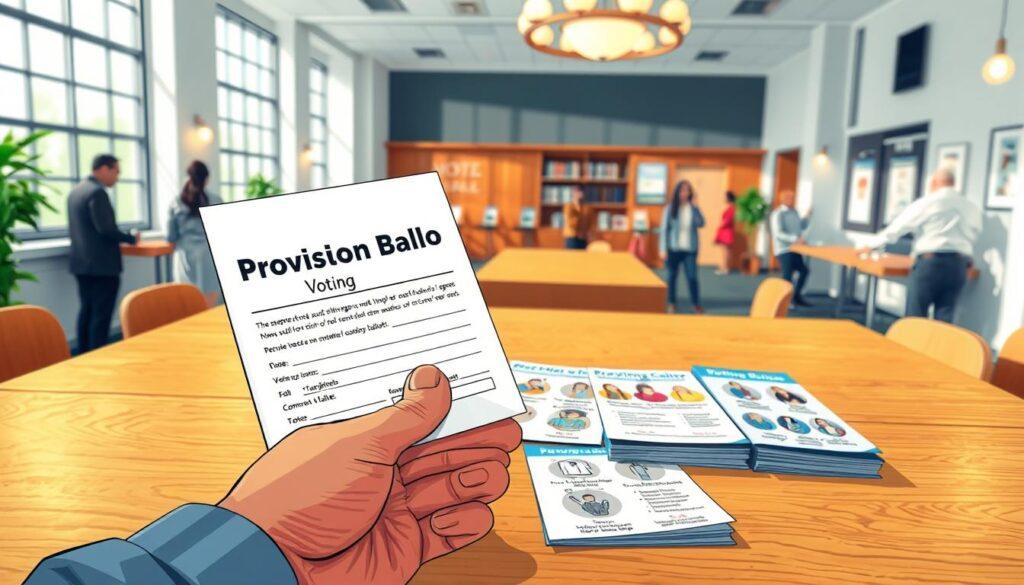
Voters who have moved face different rules based on distance and timing.
- Moved within New Jersey: A voter who moved within the county but didn’t update their registration can vote at their old polling place for this election only. They should update their address immediately afterward.
- Moved from Out of State: New residents must register in New Jersey by the deadline. They cannot vote using their previous state’s registration.
College students can choose where to register. They can register at their campus address or their permanent home address. They should pick the location they consider their primary residency.
Students voting at their campus location need proof of residency. This can often include a student ID with a utility bill or lease. They should check local requirements in advance.
Unhoused voters have the right to register and vote. They can use a shelter, soup kitchen, or non-profit agency’s address as a designated mailing address for registration. The National Coalition for the Homeless provides detailed information on this process.
These voters can also use county clerk offices or election boards as a stable location to receive mail. They are not required to have a traditional street address to participate in elections.
In all these situations, bringing acceptable voter ID or proof of residency can help resolve questions quickly. The goal is to provide a clear path for every eligible citizen to vote.
Surrounding Area Pointers
People living near Union County need to check their voting registration. This is important for those near Essex, Middlesex, Somerset, and Hudson counties.
New Jersey’s voting system is run differently in each county. The NJ Division of Elections makes statewide rules. But, each county handles its own voting details.
Don’t think voting rules are the same everywhere. Important things like where to drop off your ballot and early voting spots vary by county.
The Union County Votes app and website only have info for Union County. If you live in Linden, you need to use Union County’s resources. But, if you’re in Edison, you’ll need to use Middlesex County’s.
If you’ve moved, make sure your voting address is up to date. Moving to a new town doesn’t always mean you’ve changed counties. The county you’re registered in decides which ballot you get.
Here’s a quick guide for voters near county lines:
- Check your county of registration with the NJ Division of Elections voter lookup tool.
- Save the website of your county clerk and board of elections.
- Find early voting spots and drop boxes in your county.
- Remember, deadlines for voting and ballot requests are the same everywhere in New Jersey.
Language help and accessibility services are state rules but run by each county. If you need special help, contact your county board of elections.
Procedures for provisional ballots and fixing issues are the same everywhere. But, how mail-in ballots are handled is up to each county.
For a smooth voting experience near county borders, use the right local resources. Relying only on Union County info can cause confusion on Election Day.
Where to find similar info in Essex/Middlesex/Somerset/Hudson
The steps for the Union County Clerk and early voting centers are the same across New Jersey. But, voters in other counties need to reach out to their local election offices for specific details.
In Essex County, the main office is the Essex County Clerk. Middlesex County voters should talk to the Middlesex County Board of Elections. Somerset County’s elections are handled by the Somerset County Clerk. Hudson County’s elections are overseen by the Hudson County Superintendent of Elections.
Every county has its own website with details on registration, vote-by-mail, and early voting centers. The state’s Elections Resources page has links to each county’s info under “County Election Officials”.
This guide for the Union County Clerk is a good example. It helps voters in any New Jersey county find the information they need from their local officials.