Before you can vote, the system must know you exist. It’s like your political coming-of-age. You need to check if your name and address are on the voter list.
This is your “who’s there?” moment for democracy. You can’t vote if you’re not on the list. You can check your status online, by phone, or in person.
Not registered yet? Don’t worry. Many states let you register and vote on Election Day. Just bring the right ID.
So, the first step in any good voting plan is to check your status. Do this early to avoid missing deadlines. This small task is key to your election checklist. Without it, your voting plan is just a dream.
Choose Your Voting Method (Early, Mail, In-Person)
Democracy offers many ways to vote, each fitting different lifestyles. It’s like choosing your favorite dish from a menu. Your choice reflects your schedule, personality, and even your love for polling place treats.
Before you mark your calendar, decide how you’ll vote. This choice is personal and strategic.
The Voting Method Menu
Modern voting has many options, not just one. You can vote in person, by mail, or early. Each method has its own charm, from the excitement of voting in person to the quiet of mailing your ballot. It’s about finding what works best for you.
Do you enjoy the buzz of a polling place or prefer voting alone at home? The choice is yours.
Your Voting Method Menu
Here’s a guide to the main voting options:
- Election Day (The Classic): This is the main event. You vote at your polling station on election day. It’s traditional and full of civic energy. It’s for those who love the excitement.
- Advance Polling Days (The Sneak Preview): Why wait? Advance voting lets you vote early. It’s like a sneak peek without the crowds. Great for those who hate waiting.
- Vote Early at an Elections Office (The Insider’s Hack): Vote in person at your local election office early. It’s like in-person voting but on your schedule. It’s for the proactive citizen.
- Vote by Mail (The Creative Mode): The ultimate in convenience. Your ballot comes to you. Fill it out at your pace. It’s for the planner, traveler, or hermit in you. You play by your own rules.
Choosing your voting method is key to a successful early voting plan. It’s about voting in a way that fits your life.
Your early voting plan is your strategy for civic engagement. Whether you mail it in, vote traditionally, or early, the choice is yours.
Key Deadlines by Method
The clock is the ultimate stage manager in democracy. You can have great intentions and informed opinions, but missing your cue means your vote doesn’t count. Unlike a term paper, you can’t submit your ballot late. Deadlines are strict and vary by voting method.
Let’s navigate this temporal maze to ensure your vote is counted. Your vote is a time-sensitive instrument—handle with care.
Your Election Countdown Calendar
This is your personal, non-negotiable timeline. The dates are fixed, and deadlines are as firm as a final exam schedule. No extensions, no make-ups.
| Voting Method | Key Deadline | Crucial Notes |
|---|---|---|
| Mail-in Ballot | Request by 6:00 p.m., the Tuesday before Election Day. Ballot must be received by close of polls on Election Day. | The postmark is irrelevant; if it’s not in the election office’s hands by the time polls close, it’s a souvenir, not a vote. Plan for mail delays. |
| Early Voting at Elections Canada Office | Closes at 6:00 p.m. on the Tuesday before Election Day. | This is for in-person early voting at a local Elections Canada office, not the same as advance polls. |
| Advance Polling Days | The 4 days immediately before Election Day. | Your last, best chance to vote early in person. Dates are fixed, so check your voter card or local elections website. |
| Election Day | Polls are open from morning until evening (hours vary by location). | Your final, no-kidding, last-chance option. If you’ve missed every other deadline, this is it. |
Mastering this election checklist is about temporal logistics, not civic duty. The mail-in ballot deadline is strict, ignoring postal delays. Early voting at the elections office is a brief, one-night-only event.
The advance polls offer a four-day weekend for democracy. Miss them, and your only option is Election Day. It’s a choose-your-own-adventure where the only wrong choice is not having a plan. So, check your dates, set your reminders, and don’t let your ballot become a “what if” story.
Prep Materials (ID, Assistance, Language Support)
Voting is like boarding a plane, but you need more than a smile. You need to show who you are and where you live. Think of this as your checklist for voting. It’s not about red tape; it’s about making sure your vote counts.
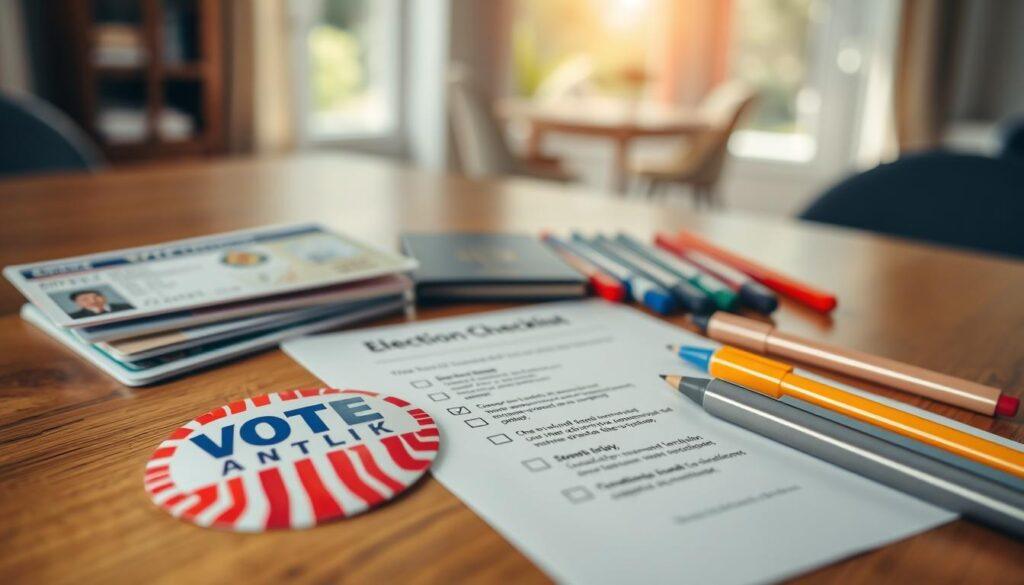
Your Voting Utility Belt
Forget about utility belts with gadgets. A voter’s belt is about documents and knowledge. You need to prove who you are and where you live. The government offers ways to do this, and we’ll explain them.
Proving You’re You
You have three ways to prove your identity at the polls. It’s like a story for responsible citizens. You aim to show officials that you are you and live where you say.
| Option | What You Need | Good for you if… | Watch Out For |
|---|---|---|---|
| The Gold Standard | One government-issued photo ID with your current address (e.g., driver’s license, state ID, passport). | You have a current, state-issued ID with your current address. | Expired IDs or documents with old addresses won’t cut it. |
| The Documentary Duo | Two pieces of ID, at least one showing your current address. Think utility bill, bank statement, or even your voter info card. | You have a student ID, social security card, or birth certificate, plus a utility bill or bank statement. | Make sure one document clearly shows your name and current address. |
| The Voucher System | Have a neighbor or household member who is a registered voter vouch for your identity and address in writing. | You’ve lost your ID or have recently moved. This is your electoral “I know a guy” option. | This requires a witness and a formal affidavit. Don’t ask a stranger. |
Your Voter Information Card is key. It proves your address and is essential for voting. Don’t throw it away.
Democracy is a team effort, and you might need help. Polling places must be accessible. If you need a sign language interpreter or help with a disability, ask ahead of time. The same goes for language support. If English isn’t your first language, you can get help. Plan ahead to ensure you can vote easily.
So, add these to your election checklist: your ID, voter info card, and plans for assistance. It’s the last check before you vote with precision.
Research Window & Information Sources
Trying to understand politics without research is like building furniture without instructions. You might create something that looks like a chair, but it’s not safe to use. Your research window is key before voting. It helps you go beyond simple slogans to really know the policies and people involved.
The Due Diligence Phase
This is your civic homework. It’s not about finding the perfect candidate. It’s about choosing the one whose policies worry you the least. This is about doing your homework, not searching for a political match.
Your first stop should be the Elections Canada website. It’s the truth about who’s running in your area. It’s like checking the house’s foundation before buying it. From there, you can start digging deeper.
Your research toolkit should include:
- Party Platforms: Look beyond the summary. Read the full platform documents. The real details are often hidden in the fine print.
- Candidate Websites & Local Debates: A candidate’s website shows their best side. But, local debates reveal how they handle real questions. These moments are gold for understanding their true abilities.
- Local News & Deep-Dive Journalism: This is where you find real information. A trusted resource can help you spot good reporting from biased sources.
This isn’t about finding a perfect candidate. That’s unrealistic. It’s about making an informed choice from the options you have. Your vote is your voice. Make sure you’ve done your homework before casting it.
Pick a Voting Date & Time
You’ve registered and are ready to vote. Now, it’s time to decide when you’ll cast your ballot. This isn’t a last-minute choice. It’s a strategic move that can make voting easy or stressful.
Your early voting plan is your guide to voting smoothly. It helps you avoid last-minute stress.
Scheduling Your Civic Duty
Election Day is more than just one day. It’s a multi-day effort. Your choice shows your voting style. Are you an early bird or a last-minute voter?
Your early voting plan turns your intention into action. It’s your strategy for voting efficiently.
Each voting method suits different people. Are you a last-minute voter or do you prefer to vote early? Your choice depends on your schedule and personality.
Let’s look at your early voting plan options. The table below gives you a briefing.
| Method | Hours of Operation | Best For… |
|---|---|---|
| Election Day | 12-hour window, hours vary by time zone. (e.g., 7 a.m. to 7 p.m. or 8 a.m. to 8 p.m.). | The traditionalist who thrives on the energy of a single, decisive day. Expect the highest crowds and peak “civic energy.” |
| Advance Polls | Typically the weekend and Monday before Election Day, often 9 a.m. to 9 p.m. | The planner who hates lines and loves options. A four-day voting weekend for the organized citizen. |
| Elections Canada Office | Varies, but often until 6 p.m. on the Tuesday before the election. | The ultimate planner or the person with a chaotic schedule. Offers the most flexibility for those who need to vote early and in person at an official location. |
Election Day is the main event. It’s a 12-hour sprint where you cast your ballot. Polls are open for a generous window, but it varies by your time zone and local rules.
Advance polls are for those who like to check big items off their list. They’re open from 9 a.m. to 9 p.m. and offer a strategic retreat from Election Day chaos.
The Elections Canada office is for ultimate flexibility. It’s open anytime before the deadline. It’s perfect for the over-scheduled or forgetful voter.
Choosing your moment is a strategic act. It’s not just about checking a box. Your early voting plan is the final step in your election campaign. Now, you’re ready for the final logistics.
Transportation & Accessibility Plan
Your vote is a destination, but the journey there is a logistical puzzle. Parking, curbs, and doorways can be more daunting opponents on election day than any political rival. A plan to vote is a ghost without a transportation plan. This isn’t just about getting from A to B; it’s about ensuring the path is clear, open, and accessible to you.
Before we get into the nuts and bolts, let’s address the core of the matter: your plan is only as good as your ability to execute it. Knowing your polling place is step one. Knowing how you’ll get there, what you’ll encounter, and what help you can get is the logistics of liberty.
The Logistics of Liberty
Voting shouldn’t be an extreme sport. The process of getting to the ballot box, navigating the building, and casting your vote should be the simplest part of your civic duty. Yet, for many, physical and language barriers can make this simple act feel like an obstacle course. The good news? You’re not running this course alone, and the course can be modified.
Getting There and Getting In
This is where the rubber meets the road—or the sidewalk, or the bus route. Your mission, should you choose to accept it, has two phases:
Phase 1: The Reconnaissance. Don’t just know your polling place’s address. Do a virtual or in-person recon mission. Is there dedicated parking? Is it a school gym with a dozen steps out front, or a community center with a ramp? The Elections Canada website, your voter information card, or a quick call to your local Elections Canada office can provide details on parking, building access, and even real-time wait times on election day.
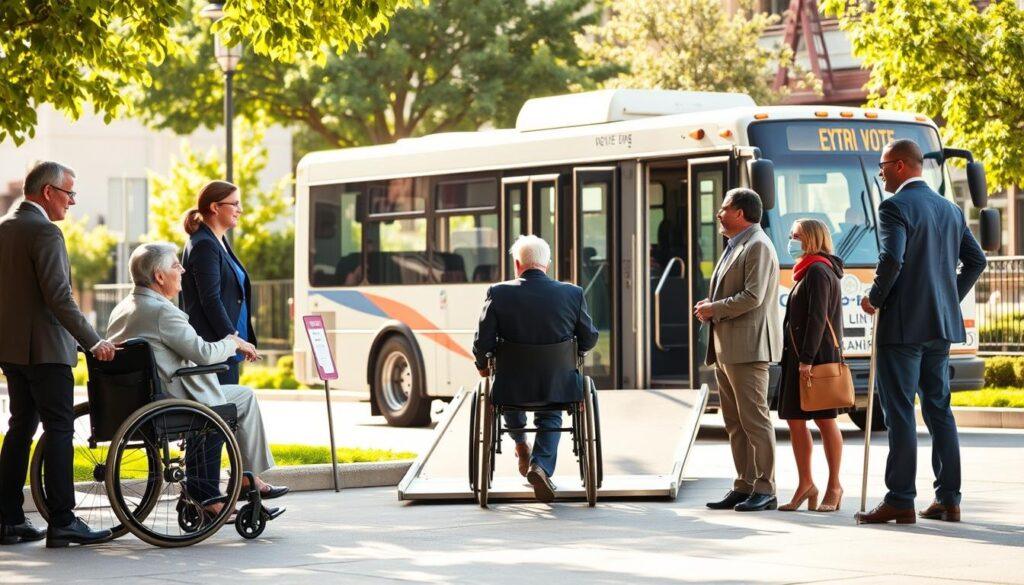
Phase 2: The Accessibility Audit. This is the most critical step for an inclusive democracy. Accessibility isn’t an afterthought—it’s a right. Here’s what you can and should do:
- Check Accessibility in Advance: Your polling station’s physical and linguistic accessibility can be confirmed ahead of time. Don’t assume; call your local Elections Canada office. Ask directly: Is there level access? Are there automatic doors? Are the voting booths wheelchair-accessible?
- Request Services Early: Need a sign language interpreter, a language interpreter, or a ballot template for the visually impaired? These are not special favors—they are your right. You can and should request them in advance. Elections Canada can provide or arrange for ASL interpretation, language interpretation, and tactile or large-print ballots.
- Plan Your Route & Mode: Are you driving? Is there parking, or is street parking the only option? Is public transport an option? If you’re getting a ride, where is the best drop-off point? If you have a disability, you can even request to vote at the returning office or by mail. The point is to eliminate election-day guesswork.
Don’t wait until you’re in the parking lot to realize you need help. The time to ask about accessibility or to request a sign language interpreter is before you walk in the door. Call your local Elections Canada office. They are, as the sage Ferris Bueller reminds us, there to help you navigate the bureaucracy of democracy. Plan your route, your mode of transport, and your requests for accommodation. That’s not just logistics; that’s the logistical high ground.
Backup Plan for Long Lines or Ballot Issues
Every plan faces unexpected challenges, and voting is no exception. You might have your ID and sample ballot ready, but things don’t always go as planned. A long line, a missing name, or a ballot error are just minor bumps in the road. They’re not the end of your voting journey. Your backup plan is your strongest ally in these situations.
The Contingency Plan
Think of this as a strategic guide for common voting day issues. A smart voter prepares for the likely, not just the ideal. Your election checklist needs a “what if” section to be complete.
First off, the big worry: the line. If you face a long line, remember your rights. If you’re in line when polls close, you can’t be turned away. Stay put. Your right to vote is protected. A simple backup plan can help you navigate these issues.
| Scenario | Potential Issue | Your Contingency Plan |
|---|---|---|
| Long Lines | Line is out the door; polls close soon. | If you are in line when polls close, you can and must be allowed to vote. Do not leave. Your vote will be counted. |
| Ballot Error | You make a mistake or the scanner rejects your ballot. | Immediately ask a poll worker for a new ballot. You have the right to a replacement if you make an error before casting. |
| Name Not on List | Your name isn’t on the precinct list. | First, ask to check a different spelling. If you’re in the right place, you can cast a provisional ballot. Do not leave without voting provisionally. |
| Wrong Polling Place | You are at the wrong polling location. | Use your state’s Board of Elections website or a poll worker to find your correct precinct. Your vote may not count if cast in the wrong place. |
Every problem has a solution, and poll workers are there to help. If you make a mistake, speak up. If your name is missing, ask for a provisional ballot. If lines are long, bring something to do. Your vote is powerful. The contingency plan is about being prepared for small issues, not expecting failure. Turn your voting challenges into minor details.
Share Your Plan & Accountability Buddy
Let’s face it, sharing a voting plan makes you more likely to follow through. Voting is often seen as a private duty. But what if we made it more like joining a gym or a book club? Having an accountability buddy makes voting a team effort, making it more fun and meaningful.
The Buddy System for Democracy
Your voting buddy is like your partner in civic duty. It’s not about forcing you to vote; it’s about having someone to share the experience with. By sharing your voting plan, you’re not just telling someone what you’re doing. You’re building a network of accountability.
The best part is, this system works both ways. Your buddy is a partner, not a boss. You can:
- Set reciprocal reminders for important voting dates.
- Share reliable information to cut through misinformation.
- Make a plan to vote together, turning voting into a fun outing.
- Celebrate after with a text, coffee, or a selfie at the polling place.
This approach changes voting from a private duty to a social activity. You’re not just accountable to yourself, but also to your buddy. It’s like having a gym buddy for voting—you’re more likely to show up.
In the end, this buddy system does more than just get two people to vote. It adds a thread of accountability to our democracy. It turns a personal voting plan into a shared promise, strengthening your commitment and the community’s civic fabric.
SMS/Calendar Reminder Setup
You’ve planned the mission and charted the course. Now, it’s time to rely on a better system than your brain. Your brain is amazing, but it’s not great at keeping a calendar. The key is to automate your reminders.
Think of your voting plan as a recipe. You’ve got all the ingredients ready and the oven preheated. The last step is setting the timer. Without it, even the best plans can fail. Your timer is your reminder.
The Final Lock-In
Your phone is more than just for social media. It’s your partner in civic duty. This isn’t about annoying alerts. It’s about creating a reliable system outside your brain.
Set reminders for important dates like voter registration and mail-in ballot requests. Mark down early voting days and Election Day. Connect these with Google, Apple, or Outlook calendars. Let your devices remind you, so you can focus on voting.
This is like having a smoke alarm for voting. You hope you won’t need it, but it’s there to remind you. You’ve planned well. Now, let technology help you remember, so you can act.