The current political scene often feels like a civic engagement turned into a gladiator pit. It’s filled with partisan shouting. But, what if we could elevate the conversation? A well-run, nonpartisan candidate forum can do just that.
Before we start planning, we need to set the rules. This isn’t about winning a partisan battle. It’s about creating a neutral space for civic engagement. The IRS says groups like PTAs, as 501(c)(3)s, must stay nonpartisan. This isn’t a weakness—it’s our strength. It’s what makes the event credible and powerful.
The key is to stay neutral. The PTA’s guidelines for hosting a candidate forum guide us. They say the forum should cover many issues. The moderator must remain impartial. This isn’t about being dull; it’s about fairness. It ensures every candidate is heard and the audience gets real information.
Think of our nonpartisan event as a place where community issues are discussed, not party politics. The moderator is impartial, the questions are fair, and the venue is free from politics. This isn’t a weakness—it’s the base of a strong, credible, and democratic event. It’s the difference between a shouting match and a meaningful conversation.
Outreach & Equal Access Invitations
Think of your candidate forum as the first move in a chess game. The invitations you send set the tone. Don’t use a mass email. This is a political move that shows your forum’s credibility.
In civic engagement, the invitation is key. It’s the first step to a democratic dialogue, not a one-sided talk.
Getting this right is your first test. A bad invitation list can ruin your event. A thoughtful approach builds legitimacy and ensures a good debate.
This turns your forum into a real civic event. Let’s look at how to send a strategic invite.
Crafting the Invitation List
Your invitation list is like a guest list for democracy’s dinner party. It’s not about inviting everyone. It’s about inviting the right people.
First, invite all viable candidates. This is a must, not a suggestion. The AAUW says invite all major-party candidates who meet the legal requirements.
In a two-candidate race, invite both. This is not a choice; it’s a democratic rule. Not doing so rigs the game.
Here’s how to plan your invitation strategy:
- The Non-Negotiable Rule: Invite all ballot-qualified, major-party candidates. No exceptions.
- The Two-Candidate Rule: In a head-to-head race, both candidates must be present for a real debate.
- The Follow-Up Protocol: Send a follow-up email to encourage candidates to attend. This is not nagging; it’s persistence.
Think of it as political chess. Your invitation list is your first move. Exclude a viable candidate, and you lose credibility. The goal is a full debate, not a one-sided talk.
The Art of the Ask
The invitation is a sales pitch. The subject line is your headline. “You’re Invited: Candidate Forum on [Date]” is a start. But why should they care?
Frame the invitation to appeal to the candidate’s self-interest. This is not begging; it’s strategic.
Your invitation should highlight the benefits of participating:
- Access to a large, engaged, and informed electorate (a candidate’s favorite demographic).
- A professionally moderated, neutral platform to present their platform.
- Direct, unmediated access to voters’ concerns.
- The opportunity to demonstrate leadership and command of the issues in a public, high-stakes format.
Follow-up is key. One email is not enough. A follow-up call or email shows seriousness. It frames participation as a strategic opportunity for the candidate.
The message is clear: “Your absence will be noted by an informed electorate.”
| Invitation Element | Weak Approach | Strategic Approach |
|---|---|---|
| Timing | Sent last-minute, giving candidates little notice. | Sent 4-6 weeks in advance, with calendar holds. |
| Follow-Up | Single email, no follow-up. | Multi-channel follow-up (email, phone, even a good old-fashioned phone call from a respected community member). |
| Message Framing | “You are invited to our forum.” | “We are giving you a platform to address a key voter demographic on [Date].” |
| Confirmation | Vague verbal agreement. | Written confirmation of date, time, format, and media rules. |
The “ask” is more than an invitation—it’s a challenge. You’re not just filling seats; you’re creating a civic moment. The candidate who gets a clear, professional invitation sees a serious event.
This turns your forum into a candidate forum guide for real civic engagement. The quality of your outreach sets the stage for everything that follows. Get it right, and you’re not just hosting an event; you’re hosting the conversation.
Format & Timing: The Architecture of Engagement
You’ve picked the candidates and the venue. Now, it’s time to design the experience. The format you choose is like a blueprint for your event. It sets the pace, depth of discussion, and quality of civic engagement.
Think of it as a menu at a political tapas bar. You need to pick the right combination of small plates to satisfy the audience’s intellectual appetite.
Choosing the Format That Fits Your Goals
Your format is your event’s DNA. It sets the pace, depth of discussion, and voter-candidate interaction. The wrong format is like serving a seven-course meal at a food truck rally.
Here’s a breakdown of your “menu” of formats, each with its own flavor profile:
- The Classic Q&A (The All-American Burger): The reliable standard. A moderator (or panel) asks questions, candidates get timed responses. It’s familiar, structured, and safe. But beware: without firm timekeeping, it can devolve into a contest of who can talk the longest, not who can answer the best.
- The Lightning Round (The Spicy Wings): Rapid-fire, 60-second answers to a barrage of quick-hit questions. It’s high-energy, covers a broad range of topics, and is great for gauging a candidate’s ability to think on their feet. The downside? It prioritizes speed over depth, and nuance is often the first casualty.
- The Town Hall (The Family-Style Feast): This format hands the mic directly to the audience. Questions come from the community, often via pre-submitted cards or live audience participation. It’s raw, unpredictable, and can lead to truly unscripted moments. It’s high-risk, high-reward, requiring a strong moderator to keep the conversation focused.
- The Lincoln-Douglas Duel (The Chef’s Tasting Menu): This is for the wonks. It’s a deep-dive debate on a single, critical issue. Candidates get longer, uninterrupted blocks of time for opening statements, cross-examination, and rebuttals. It’s the format for exposing a candidate’s depth of knowledge and capacity for sustained, complex thought. The quality of the moderator questions here is key.
The Clock is Ticking: Timing is Everything
You can have the best format in the world, but if you host it at the wrong time, you’ll be debating an empty room. Timing is not just about picking a date on the calendar; it’s about strategic timing for maximum impact.
First, the day of the week. Never. On. A. Friday. Your audience has checked out. The sweet spot? A Tuesday, Wednesday, or Thursday evening. The workday is over, but the weekend is a distant dream. It’s the Goldilocks zone of civic attention spans.
As for the time of day, the data is clear: the 6:00 PM to 7:30 PM window is political gold. You’re catching people after work but before the evening fully settles in. Starting at 6:00 PM or 6:30 PM gives people time to commute. A 90-minute event is the sweet spot—long enough to be substantive, short enough to hold attention. Start at 7:00 PM, and you’ll be done by 8:30 PM, which is a perfect launchpad for post-event analysis on the late news and social media buzz.
Why does this all matter? Because a well-timed, well-formatted forum isn’t just an event; it’s a public service. It’s a structured, fair, and accessible platform for democracy. For a deeper dive into the art and science of the debate itself, from its historical roots to modern logistics, you can explore this comprehensive guide on how debates work.
In the end, the format and timing are your levers of control. The format dictates the quality of the discourse, and the timing determines the size and engagement of your audience. Get this architectural blueprint right, and you’re not just hosting an event; you’re engineering an opportunity for genuine civic engagement.
Moderator Prep & Question Design
Think of your moderator as the conductor of an orchestra. The musicians are all politicians with something to prove. The right moderator turns a chaotic mess into a symphony of debate.
This isn’t just about picking someone with a microphone. It’s about finding the “voice of reason.” They must navigate between tough questions and campaign speeches. Your guide should start and end with this choice.
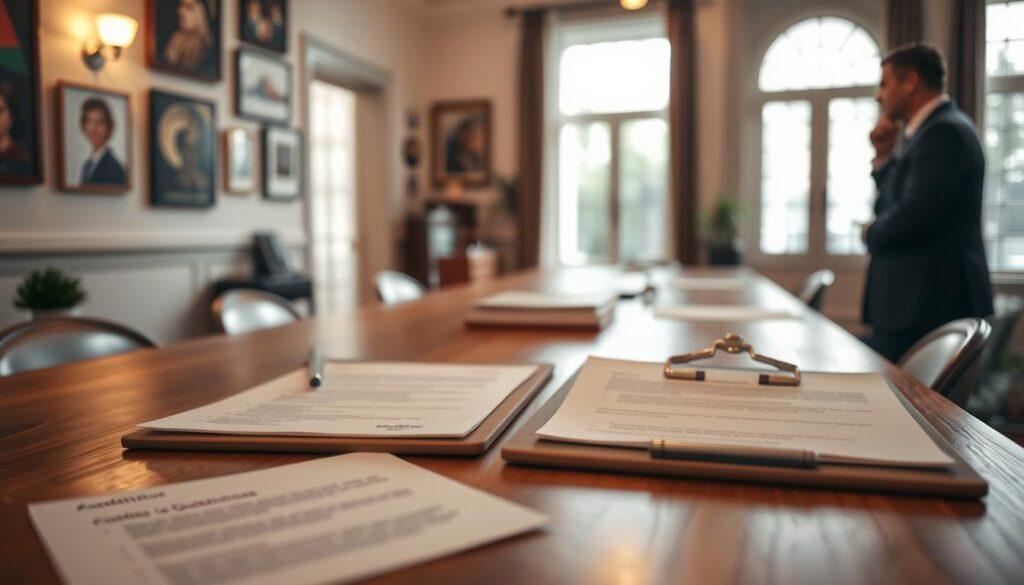
Choosing the Voice of Reason
Forget the idea of a neutral, bland moderator. The ideal one is a benevolent inquisitor. We need someone like Terry Gross or Terry Crews in the political arena.
They should have the smarts of a journalist, the timing of a late-night host, and the impartiality of a judge. A respected local journalist is the best choice. They have the skills, credibility, and neutrality needed.
A local news anchor, a public radio host, or a retired professor of political science can also be great. The key is gravitas. They must command the room with calm authority.
Avoid obvious partisans. The local party chair, a known campaign donor, or a candidate’s cousin can create bias. Your moderator should be neutral, like Switzerland.
Crafting Questions That Don’t Suck
Great questions are the heart of the forum. Bad ones lead to canned answers. Good ones get real answers. And great ones make headlines.
Here’s how to make a great forum question:
- Open-Ended, Not Leading: “Councilor, your opponent wants to cut the police budget by 10%. What’s your plan to reallocate funds to social services, and how will you measure success in your first 90 days?” This question demands real answers.
- Follow the “How” and “Why”: Questions starting with “how” or “why” are best. They can’t be answered with a simple yes or no. “How will you pay for that?” is a great example.
- Ask for the Trade-Off: “You’ve proposed a tax cut and a new community center. If you can only fund one, which do you choose, and what city service will you cut to make it happen?” This question forces a real choice.
Bad questions are leading, vague, or allow dodging. Avoid yes/no, soft, and “gotcha” questions. Your goal is to make candidates think, explain, and commit. Follow-up questions are key.
In the end, the moderator and their questions are the forum’s foundation. Choose someone respected and arm them with tough questions. The result will be a real, voter-led interrogation that serves the public.
Accessibility & Language Services
What good is a political forum if people can’t get in? True accessibility for a nonpartisan event is more than just following rules. It’s about making sure everyone can join the conversation.
We’re not just talking about ramps. We’re talking about removing all barriers. This includes physical, linguistic, and cognitive ones. Ignoring this is like building a stage without letting the audience in.
Beyond the Ramp: Real Accessibility
Thinking about accessibility as an afterthought is not enough. Real accessibility is proactive. It starts with the venue: is it reachable by public transit? Are there accessible restrooms?
True accessibility means providing multiple ways to join the conversation. This includes physical ramps, but also ASL interpretation and CART captioning. It’s about making materials accessible and providing childcare.
The Language of Inclusion
Inclusion is also a linguistic challenge. The Language of Inclusion isn’t just about translation; it’s about comprehension. For a nonpartisan event to be truly inclusive, it must be linguistically accessible.
This means providing interpretation services for major languages spoken in your community. It means providing materials in multiple languages and ensuring translators are available. This goes beyond translating a flyer. It’s about cultural competency.
| Service | What it is | Key Consideration |
|---|---|---|
| ASL Interpretation | On-site interpreters for the Deaf and Hard of Hearing community. | Hire certified, experienced interpreters familiar with political terminology. |
| CART Captioning | Real-time transcription displayed on a screen. | Ensures access for Deaf/HoH, non-native speakers, and note-takers. |
| Language Interpretation | On-demand or scheduled interpretation for non-English speakers. | Use FM systems or whisper translation for small groups. |
| Materials in Alternate Formats | Large print, Braille, screen-reader friendly digital docs. | Have them available at the door and online beforehand. |
Here’s a quick-start list for practical accessibility:
- Survey your venue in person with a critical eye. Is the accessible entrance the dignified, main entrance or a back-alley service door?
- Budget for services upfront. ASL, CART, and translation aren’t add-ons; they’re line items.
- Promote the accommodations you offer. Let people know ASL and CART will be provided. This signals who is and isn’t welcome more clearly than any mission statement.
- Provide materials in advance. Agendas, speaker bios, and key documents should be available in accessible formats days before the event.
In the end, accessibility for a nonpartisan event isn’t a cost—it’s a strategic investment. It’s what turns a public meeting into a public forum, and a passive audience into an engaged, empowered community. It’s the difference between hosting an event and building a civic space.
- Conduct an accessibility audit of your venue and materials at least one month in advance.
- Contract with ASL and CART providers the moment your event date is set.
- Promote the specific accommodations you’ll offer in all event materials.
Remember, true accessibility isn’t about checking boxes for a nonpartisan event; it’s about opening the doors—literally and figuratively—to the whole community you aim to serve. That’s not just good ethics; it’s good strategy.
Hybrid & Recording Setup
A candidate forum isn’t like a TED Talk, but it shouldn’t look like a 1990s public access show either. The hybrid event welcomes both in-person and online viewers. It’s not just a pandemic solution; it’s here to stay, making democracy more accessible.
The aim is to host an event that’s open, engaging, and fair for everyone. Getting the setup right is key. It makes the difference between a civic embarrassment and a nonpartisan event that educates the public.
To Stream or Not to Stream?
Streaming is now a must, not just a nice feature. A low-quality stream from the back of the room looks amateurish. It undermines the candidate forum guide principle of fair access.
A professional, broadcast-ready stream shows that the event is serious. It tells voters that their choice matters.
The Run of Show for a Hybrid Event
Forget about going with the flow. A hybrid event needs a detailed plan, not luck. The Run of Show (RoS) is your producer’s guide.
It’s not just a schedule; it’s a minute-by-minute script for everyone involved. It tells the moderator when to start, the AV tech when to switch cameras, and the stream operator when to go live with the mics. For a hybrid nonpartisan event, the RoS keeps everything running smoothly.
Think like a TV producer: you need at least two cameras (one wide, one close-up) and a dedicated audio feed for the stream. The in-room audio is a separate mix. Your candidate forum guide checklist should include: a dedicated stream operator, a “Run of Show Producer” to direct via headset, and a tested, reliable internet connection for the stream.
The goal is to create a seamless, professional experience. It’s not just about logistics; it’s about producing a meaningful civic dialogue.
Voter Info Table & Fact Sheets
Candidates have made their cases, but the real work starts when the debate ends. The “Voter Empowerment Zone” turns listeners into informed citizens. It’s a key part of civic engagement, giving you the tools you need to vote.
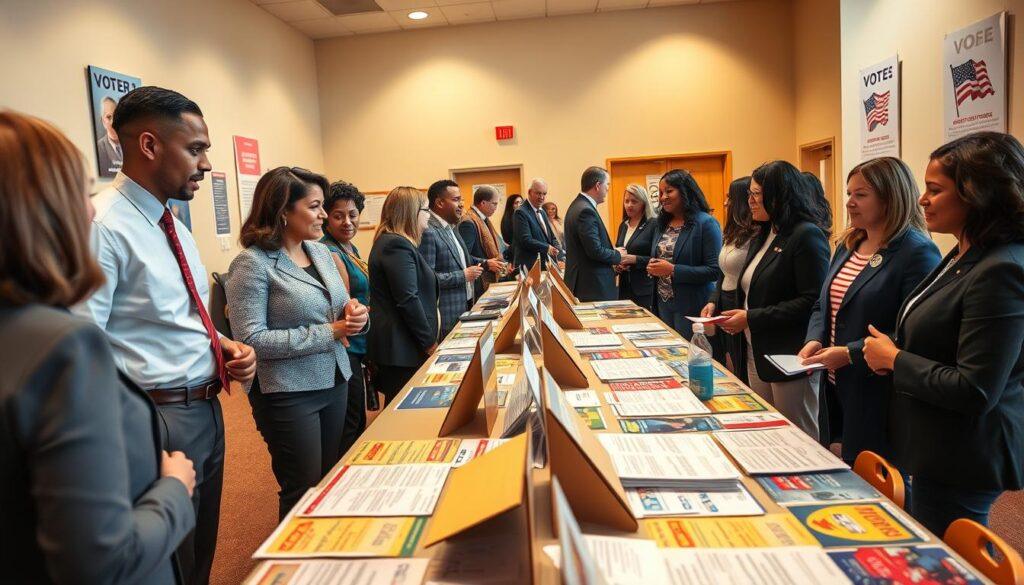
Beyond the I Voted Sticker
The sticker is a great start, but it’s not enough. Our Voter Empowerment Zone helps you go beyond. It connects debate talk to real voting choices.
Think of it as a democracy pit stop. We give you the tools and information for the final stretch. It’s about the process, not just who to vote for.
The Nonpartisan Information Hub
This is the heart of our effort. We’re not just handing out flyers; we’re creating a neutral info hub. It’s a place where you can find unbiased data to make informed choices.
Our table is stocked with resources to help you:
| Resource | What It Is | Why It Matters |
|---|---|---|
| Nonpartisan Voter Guides | Booklets or one-pagers that explain ballot measures and candidate platforms in plain language, sourced from nonpartisan leagues. | Cuts through the campaign noise. It’s the SparkNotes for the election, giving you the plot without the spin. |
| Voter Registration Forms | State-specific forms and assistance for same-day registration (where applicable). | Because the first step to voting is, you know, being able to vote. |
| Candidate Fact Sheets | Neutral, one-page bios for each candidate, featuring their photo, a neutral bio, and 3-5 key policy positions in their own words from their official platforms. | Transforms candidates from names on a sign into people with stated positions. It’s a fact sheet, not a fact-check. |
| Key Dates & ID Requirements | Clear, simple handouts with voter registration deadlines, early voting dates, and a checklist of acceptable IDs. | Removes the number one barrier to voting: logistical confusion. It’s the “how-to” manual for democracy. |
Setting up this hub is a statement. It tells everyone that the event was about more than just a debate. It turns passive audience members into equipped participants. This isn’t just a table with pamphlets; it’s a nonpartisan command center for democracy. By centralizing these resources, we move the conversation from “What did you think of the debate?” to “Here’s how you can act on what you heard.” That’s the true essence of a nonpartisan event: not just hosting a show, but building a bridge between the stage and the ballot box.
Neutral Promotion & Media Relations
In the world of politics, promoting a nonpartisan event is key. It’s not about avoiding the fight but making the event bigger and more inclusive. Your aim is to make the event the main story, not to grab headlines for taking sides. This is where careful, neutral promotion becomes your most powerful tool for civic engagement.
Think of your event as a play, and the media as your audience and amplifier. You want them to be there, but not to criticize before it starts. Your promotion strategy must be perfect in showing impartiality.
Pitching the Press Without Picking Sides
Talking to the press can seem daunting. The trick is to speak their language. The first rule for a nonpartisan event is knowing your tools.
Your main tools are the media advisory and the press release. The media advisory is like a formal invite. It tells journalists what, when, where, and who, with urgency. The press release comes after, sharing what happened and why it mattered.
Building your media list is where strategy meets hard work. It’s not just the big names. The real magic is in the local and niche areas.
- Go Beyond the Metro Desk: Look for local weeklies, blogs, and news sites. They have engaged readers who vote.
- Target the Beat, Not Just the Outlet: Find the right reporter for your story. They’re already looking for content like yours.
- Craft a List with Purpose: Segment your list. Daily papers, weeklies, TV editors, and bloggers. A targeted list works better than a big, random one.
Your pitch should focus on the event as a civic engagement event. The story is about democracy, not just the candidates.
Social media is like the town square. It’s fast, visual, and where people are. Your goal is to inform without taking sides.
Start with a clear event hashtag (e.g., #SpringfieldForum2024). Use it everywhere. Tag the campaigns, venue, and groups. This creates a neutral space online.
Graphics are your ally. Create neutral, event-focused graphics. Use a clean template. A diverse audience image is powerful. The text should focus on the event details, not the candidates.
Post a mix of content: countdowns, speaker highlights, and “What to Expect” posts. This sets expectations and shows the event’s structure.
Neutral promotion is not about being dull. It’s about being calm, credible, and essential. You’re selling the democratic process, not a product or person. This is a story the press and your community can support.
Day-Of Run of Show
The hours before your candidate forum are filled with tension. A single mistake can ruin all your hard work. This is the day for perfect execution, not new ideas.
You’ll be like a conductor, guiding the event with a script and a walkie-talkie. The run of show is your guide. It helps you manage the chaos of a live event.
Every minute, from the first volunteer to the last “lights out,” must be planned with care. It’s like a symphony.
The 60-Minute Countdown
This is your last chance to make everything real. Forget the long checklist; the last hour is key. It’s time to be like an air traffic controller.
This timeline is your control panel.
| Time to Event | Action | Key Personnel | Critical Check |
|---|---|---|---|
| H-60 Minutes | Final tech run for microphones, livestream, and accessibility equipment. Brief all volunteers on their final positions. | Tech Lead, A/V Crew | Sound check, camera angles, live stream test. |
| H-45 Minutes | Candidate “Green Room” opens. Provide final briefing packets and confirm speaking order. | Candidate Liaison | All candidates and moderators present and briefed. |
| H-30 Minutes | Final walk-through with the moderator. Confirm final moderator questions and timing cues. | Event Manager, Moderator | Final briefing on time signals and emergency protocols. |
| H-15 Minutes | House opens to the public. Ushers and accessibility volunteers in position. | Usher Lead, Accessibility Coordinator | ASL interpreters and CART captioners in position. |
| H-5 Minutes | Final audio check. House rules announcement. Final “go” check with all team leads via headset. | Stage Manager, A/V Lead | All systems “go.” |
Taming the Chaos: Troubleshooting Live
No plan survives the first contact with the public. The real test is how you handle live event chaos. It’s not about preventing problems, but solving them.
Your most important tool is the “Go-Bag.” It’s not just a tote; it’s your mobile command center. It has everything you need to fix unexpected problems.
Accessibility is key to a fair forum. If a candidate can’t get to the stage, or if a voter can’t hear, it’s your problem. Your work starts with making sure everything is accessible.
When a speaker drops out or a tech feed dies, your team needs a calm leader. The event manager, with the Go-Bag and script, is that leader. Remember, the audience sees your solution, not the problem.
Post-Event Evaluation & Follow-Up
The final gavel doesn’t mean the end of your candidate forum. The real work starts after the event. A smart follow-up strategy turns a one-time event into a lasting foundation for civic dialogue.
The Survey Says…
A well-designed, simple survey is key for honest feedback. Ask direct questions: What did you learn? Were the moderator questions effective? This data helps improve your next forum, making your candidate forum guide a living document. Use a free online tool to send a short survey to attendees, volunteers, and candidates.
The Thank-You Note Strategy
This is non-negotiable. Send personal, specific thank-yous to everyone involved. It’s not just politeness; it’s a long-term investment in relationships. A handwritten note is great, but a prompt, personalized email is better than silence.
The forum’s end is your second act. The recording is a goldmine. Cut the best exchanges into shareable clips. Write a wrap-up blog post highlighting key moments and thanking participants. This isn’t just content; it’s a public archive of the dialogue you facilitated. This entire process, from designing thoughtful moderator questions to this final step, is the complete arc of a successful candidate forum guide. This forum isn’t an end. It’s the new beginning of a more informed, engaged community dialogue.