Let’s face it. When your street is full of potholes or your rent is too high, it feels like you can’t do anything. The national politics seems like a circus, and city hall seems far away. But, what if you could change things by talking to your neighbors?
The city ballot measure is more than just a ballot item. It’s a way to make real changes. While D.C. gets caught up in politics, this tool lets people make decisions that affect their lives. It’s a hands-on way of democracy.
This case study is based on real success. Look at Los Angeles’ Measure J, which helped community projects. Or St. Paul’s rent control, which helped with housing issues. These are not just wins; they show how to take action.
So, how do you turn a shared problem into a winning campaign? This case study will guide you. We’ll identify a local problem, present the ballot measure as the solution, and show you how to win at the polls. The power to fix your street or change policies is in your hands.
Measure Summary in Plain Language
Think of a city ballot measure like an IKEA manual for democracy. If the instructions for your new bookshelf are for the “Blixt” model but the picture shows a “Klippan,” you’re not building a rebellion, you’re building a mutiny. So why do we accept ballot language that makes IKEA instructions look like a model of clarity? A well-written measure summary is your anti-mutiny guide.
Our guide is the “Ballot Proofing Guide,” and its first commandment is this: Clarity is a weapon against misinformation. It’s not about dumbing things down; it’s about precision. It’s the difference between “authorizing the issuance of general obligation bonds for the purpose of municipal infrastructure capital improvements” and “Fix Our Crumbling Streets & Sidewalks.” One is a legal shield; the other is a voter’s call to action.
Let’s get analytical. A poorly worded measure is a policy in a witness protection program—you know it’s there, but you can’t tell who it is or what it does. A well-written summary, on the other hand, is a masterclass in transparency. It translates legalese into human. For example, a good summary doesn’t say “authorizes a municipal bond issuance for the development of affordable multi-family dwelling units.” It says, “Build 1,000 new homes for our teachers and nurses.” One confuses, the other connects.
| Well-Written Summary | Poorly-Written Summary | Why It Matters |
|---|---|---|
| “Approve a 0.1% sales tax to fund 100 new mental health crisis counselors for city schools.” | “Shall the city be authorized to enact a minor sales and use tax adjustment to fund a pilot program for supplementary student and family wellness resources?” | The first is a specific, tangible promise. The second is a vague, bureaucratic question. |
| “Repair 50 miles of city streets and sidewalks over the next five years.” | “Approve a general obligation bond for municipal infrastructure capital improvements.” | Specificity builds trust. Vagueness builds confusion and “No” votes. |
| Uses active voice (“Creates a new park”). | Uses passive, legalistic jargon (“The establishment of a recreational greenspace shall be considered…”). | Active voice is for the people. Passive voice is for hiding. |
This isn’t just about grammar; it’s about power. Opaque language is a fog machine, letting special interests and political machines shape the narrative. A clear, plain-language summary is a spotlight. It cuts through the fog, letting voters see the mechanism of the policy itself. It turns “Shall the city do the thing?” into “Shall we build 1,000 homes for our teachers and nurses?” The first is a bureaucratic checkbox. The second is a clear, compelling choice.
When you’re voting, you’re not just choosing ‘Yes’ or ‘No.’ You’re choosing between a murky path and a clear one. A well-crafted city ballot measure summary doesn’t just inform—it empowers. It respects the voter’s intelligence and time by translating legal necessity into civic action. In the end, a clear measure doesn’t just win or lose at the polls; it wins or loses with the informed consent of the governed. That’s the difference between a ballot and a bullet point.
Stakeholders & Equity Considerations
Forget the simple “for or against” tally. The true measure of any policy isn’t just who voted for it, but who it actually works for. Conducting an equity audit of a ballot measure is like turning over a rock in your garden—you might find the ecosystem you expected, or you might find a whole world of grubs and worms you didn’t know were there. True equity isn’t a line in a “Whereas” clause; it’s in the unglamorous, granular details of who benefits, who carries the burden, and who, conspicuously, wasn’t in the room when the deal was drafted.
The Human Impact
Let’s start with the people, not the policy. A measure promising “affordable housing” sounds great until you realize its income caps for assistance are set so low they exclude the very service workers the city depends on. That’s not a safety net; it’s a tightrope. We must ask: does this policy fix a broken rung on the ladder, or does it just hand a taller person a longer ladder?
Consider the Boulder, Colorado model (Source 1), where a fee on landlords funds legal aid for tenants. The community impact is direct and tangible: it shifts the power dynamic by funding legal counsel for those who can’t afford it. The burden is placed on a specific group (landlords) to fund a service for another (tenants). The oversight question is key: who manages that fund, and who ensures the lawyers are effective? This is equity in action—not just a line item in a budget, but a targeted rebalancing of power.
Contrast this with a one-size-fits-all rent cap, as seen in St. Paul’s rent stabilization measure (Source 1). It protects current tenants (a human win) but may inadvertently discourage new housing development, a classic case of the road to housing hell being paved with good intentions. The human impact is a mixed ledger: security for some, potentially less for others.
The Institutional Landscape
Now, zoom out. A measure is a pebble thrown in a pond; the ripples touch institutions we don’t always see. When a “good government” measure for campaign finance reform passes, who has the resources to navigate the new, complex rules? Often, it’s the well-funded, established players. Grassroots groups, like those organized by Nonprofit VOTE or the Campus Vote Project (Source 3), can be drowned out without specific provisions for civic education and access.
True oversight means looking at the institutional gatekeepers. Who sits on the oversight board? Is the enforcement body independent and well-funded, or is it a paper tiger? The Boulder example works in part because the community impact is clear: a dedicated revenue stream for a specific service. The institutional machinery—how funds are collected, distributed, and audited—is the unsexy, critical backbone of equity.
Here’s a breakdown of the typical stakeholder landscape, because in the game of policy, if you’re not at the table, you’re on the menu.
| Stakeholder Group | Primary Interest | Perceived Benefit/Risk from a Progressive Ballot Measure | Equity & Oversight Considerations |
|---|---|---|---|
| Tenants & Low-Income Residents | Housing security, rent stability, legal protections. | High benefit from rent control, legal aid funds, tenant protections. Risk of landlord retaliation or reduced housing supply. | Oversight needed to ensure access to legal resources and that protections are enforced, not just written. |
| Property Owners & Landlords | Property rights, return on investment, manageable regulations. | Risk of increased costs (fees, taxes) and reduced operational freedom. May oppose measures seen as punitive. | Oversight must be transparent to ensure fees/funds are used as legally mandated. Fair appeals process needed. |
| Local Small Businesses | Predictable costs, customer base, community stability. | Could benefit from a more stable, housed workforce. Risk from new business taxes or commercial rent control. | Community impact studies needed to assess unintended consequences on commercial tenants and small entrepreneurs. |
| Advocacy Orgs (e.g., Nonprofit VOTE) | Policy change, civic engagement, voter turnout. | Benefit from measures that increase civic participation. Risk of burnout if they become de facto implementers without funding. | Oversight of public funds for voter education must be non-partisan and equitably distributed among orgs. |
| Local Government & Agencies | Implement & enforce laws, manage budgets. | Strain on resources (staff, budget) for enforcement. Must balance new mandates with existing duties. | Critical. Oversight mechanisms must be funded and staffed, or the measure becomes a “paper law” with no enforcement. |
The Sage would say: “A policy is a hypothesis. The community impact study is the experiment. True oversight is not just watching the meter, but checking the wiring.” We can’t just pass a law and hope. We need to build the oversight and study the community impact with the same fervor we use to pass the measure itself. The goal isn’t just to win at the ballot, but to build a city where the ladder has rungs for everyone.
Budget & Funding Mechanisms
Money doesn’t just appear out of thin air. It’s moved, allocated, and debated. This is where politics and finance really meet. Let’s follow the money.
Follow the Money Trail
Forget Hollywood’s dramatic scenes. The real action is in municipal finance. Tracing a property tax dollar shows its journey from a homeowner’s wallet to a pothole. The first rule of budget analysis is to find out where it starts and ends.
Let’s talk about funding mechanisms. You’ve got your basics like property taxes and sales taxes. But the real magic is in the creative stuff. A sales tax increase, like Denver’s Measure 2B, is like a subscription service. It provides steady, predictable revenue for ongoing services.
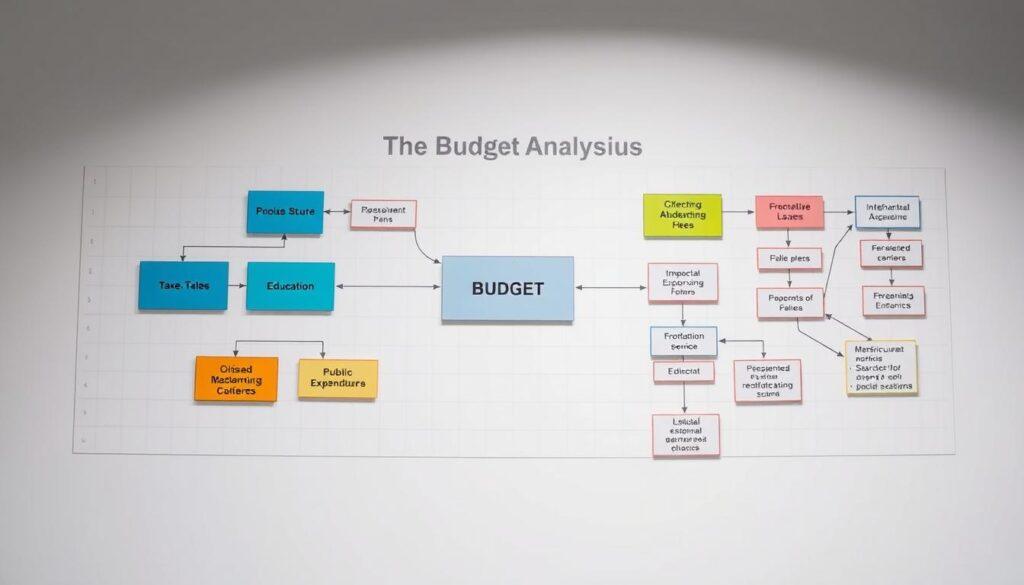
The big question is: how much, and who pays? This is where politics really come into play. A budget analysis isn’t just about numbers. It’s about the trade-offs. You can fund a new library, but that might mean less for road repairs this year.
Let’s look at the tools in the municipal toolbox. Is it a one-time project, like a new bridge? That’s a bond measure, the civic credit card. It’s great for big expenses, but you’ll pay interest for years. A dedicated sales tax is reliable for ongoing operations. And then there are targeted tools, like a real estate transfer tax, used in San Francisco to tap into its hot property market.
To understand the financial toolkit, here’s how common mechanisms compare:
| Mechanism | How It Works | Best For | Real-World Example |
|---|---|---|---|
| General Obligation Bond | City borrows money (sells bonds) for a specific project, paid back with interest via property taxes. | Large, one-time capital projects (new bridge, school). | Baltimore’s 2023 school infrastructure bond. |
| Dedicated Sales Tax | Small, voter-approved increase to local sales tax, dedicated to a specific purpose. | Ongoing, recurring needs like homelessness services, parks. | Denver’s Measure 2B for homelessness. |
| Real Estate Transfer Tax | Tax paid when a property is sold, based on sale price. | Capturing value from a hot real estate market. | San Francisco’s Proposition I (2020). |
| Parcel Tax | Flat fee per property, regardless of value. | Services that benefit property owners (like fire protection). | Common for local fire districts. |
Choosing the right mechanism is a political and economic decision. Bonds are good for big projects, but they add to the city’s debt. A sales tax is steady, but it hits lower-income households harder. A real estate transfer tax, like San Francisco’s, captures value from a hot market.
For a deeper look at these funding tools nationwide, check out the Institute on Taxation and Economic Policy’s 2024 local tax ballot measures.
A smart budget analysis doesn’t just ask “can we afford it?” It asks, “who pays, who benefits, and what are we giving up to get it?” The price tag is just a number. The real story is in the pay-for.
Implementation Plan & Oversight
The confetti has settled, and the victory speeches have faded. Now, the real work starts. This is where campaign promises turn into real results. It’s a marathon of project management, not a sprint.
Success isn’t just about following through. It’s about building trust through clear, accountable actions. This is where the campaign’s vision meets the reality of budgets and timelines.
From Vote to Victory: The Game Plan
Think of a ballot measure as a promise. The implementation plan is the legally binding receipt. We use a framework from the “Ballot Proofing Guide” to ensure success.
This process is like a checklist for governance. It turns governance into a science of checklists and communication. We move from campaigning to a multi-phase project with military precision.
Oversight starts the day after the election.
| Phase | Pre-Election (Campaign) | Transition (0-90 Days) | Implementation (90 Days+) |
|---|---|---|---|
| Primary Goal | Define the “What” & “Why” | Assemble the “Who” & “How” | Execute & Monitor the “How Well” |
| Key Activities | Voter Education, Coalition Building | Form Oversight Committee, Draft Implementation Plan | Public Dashboard Launch, Quarterly Audits |
| Key Metric | Polling & Voter Support | Stakeholder MOUs, Budget Lock-in | KPIs, Public Dashboard Metrics |
| Oversight Focus | N/A | Committee Formation & Charter | Ongoing Public Accountability |
This isn’t about bureaucracy. It’s about building a Gantt chart of accountability. The oversight committee is the project’s central nervous system.
They first job is to establish a public dashboard. It’s a “Fitbit for governance,” where citizens can track progress in real-time. It shows funds spent, milestones hit, and milestones missed.
The sunset clause guides us. Every program and budget line item should have an expiration date. It forces regular debate: is this working? Is this the best use of funds?
This isn’t about creating programs that last forever. It’s about building a learning system, not a monument.
Structured oversight turns the public into active stakeholders. It moves from “Trust us” to “Verify for yourself.” The victory lap is meaningless if you’re running in the wrong direction. This plan ensures we’re not just building a project, but building the oversight to prove it’s built to last.
Enforcement & Accountability
The champagne has been popped, and the confetti has settled. Your new policy has passed. Now, the real work starts. This is where good intentions turn into action or get lost.
Think of it like ballot proofing. A single typo can change everything. A good enforcement framework needs many checks. It’s not enough to pass a law; you need a system to follow it.
In St. Paul’s rent control ordinance, they didn’t just pass a rule and hope for the best. They built a process. The ballot proofing analogy is perfect: just as multiple officials check a ballot’s language, multiple oversight bodies must watch the watchmen. Is it a new city department with enforcement teeth? An independent commission of citizens? The structure of this oversight determines if the policy is a paper tiger or a real force for change.
Effective enforcement isn’t monolithic. It requires a multi-pronged approach, much like the layers of proofreading a ballot. A robust enforcement framework might include:
- An Independent Auditor or Ombudsman: An independent body with the power to investigate and audit compliance, free from political pressure.
- A Dedicated Enforcement Unit: A specialized team, like a city department or commission, tasked with fielding complaints, conducting inspections, and issuing penalties.
- A Public-Facing Portal: A transparent, accessible system for reporting violations, tracking case status, and ensuring the public can be the eyes and ears of enforcement.
Here’s a breakdown of possible oversight bodies and their roles:
| Oversight Body | Primary Role | Accountability Focus |
|---|---|---|
| Independent Oversight Commission | External audits, policy review, public reports | Ensuring the enforcers are following their own rules |
| Dedicated Enforcement Unit | Field inspections, violation investigations, penalty assessment | On-the-ground application and daily oversight |
| Public Advocate/ Ombudsman | Receives and investigates public complaints | Ensuring citizen access and a direct line for reporting |
Without these checks, a policy is just a suggestion. The St. Paul model shows that the “ballot proofing” principle—multiple, independent checks—is the only way to ensure the ink on the law matches the reality on the ground. The true test of a policy isn’t its passage, but its enforcement. It’s the difference between a good idea and a functioning, just outcome. That is the ultimate oversight.
Alternatives & Opportunity Costs
Imagine playing “what if?” with the city budget. The most expensive choice is often the one not made. Every decision has a shadow cost, like the road not funded or the program not launched.
This isn’t just about money. It’s a case study in the high-stakes game of public finance. Folding your hand has a real cost, just like raising the bet.
Denver is our textbook case study. Voters passed Measure 2B to fund homelessness services. This choice invested in outreach, shelter, and permanent housing.
The alternative was a defeated measure to increase camping bans enforcement. This path was about criminalization over compassion. The opportunity cost of that choice is the ghost in our budget: the cost of emergency room visits, policing, and judicial proceedings.
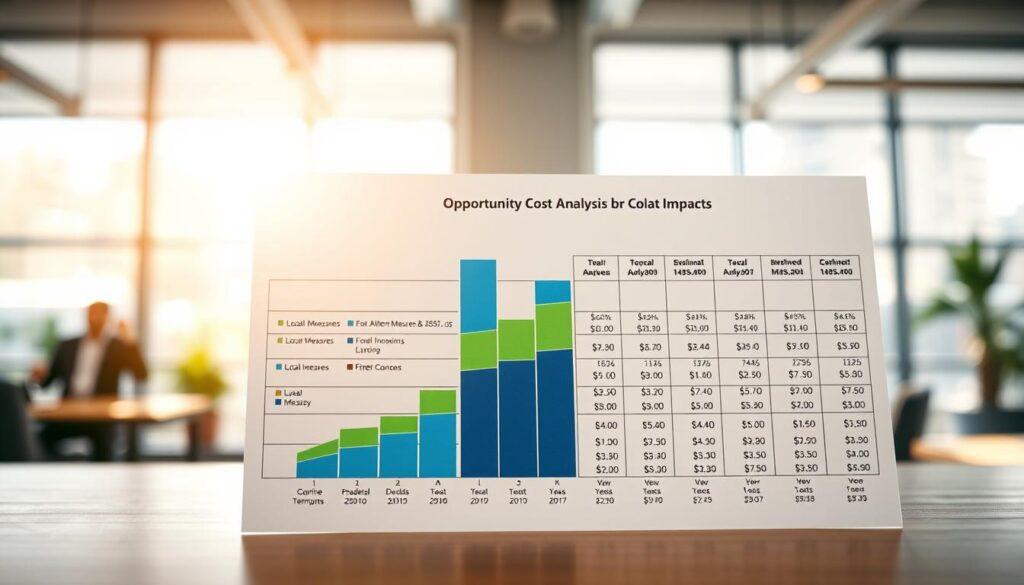
Think of the city budget as a pie. Every priority means a smaller slice for another. The cost of a new program isn’t just the cash spent; it’s the park without a playground, the pothole unfilled, or the after-school program unfunded.
When Denver chose Measure 2B, it wasn’t just spending on homelessness. It was choosing not to spend on police cars or a tax cut. The cost of inaction is often hidden in the budget.
Consider the counterfactual: What if Denver hadn’t passed Measure 2B? The case study of inaction is seen in other cities’ budgets. There’s increased strain on emergency services, higher law enforcement and EMS costs, and the cost to a city’s soul.
The defeated enforcement measure presents an alternative timeline. It’s a what-if scenario where the city chose a more punitive path. The financial ledger of inaction is written in invisible ink, showing lost productivity, human talent, and municipal costs of a growing unhoused population.
| Policy Path | Immediate Budget Impact | Opportunity Cost (The Road Not Taken) | Long-Term Fiscal Impact |
|---|---|---|---|
| Measure 2B (Action) | Upfront investment in housing and services | Other social programs or capital projects deferred | Reduced long-term costs in emergency services, healthcare, and criminal justice |
| Enforcement-Only Approach | Lower initial outlay, higher policing costs | Lost investment in prevention and housing | Higher recurring costs in emergency services, healthcare, and incarceration |
| Do Nothing (Status Quo) | Minimal direct spending | Massive opportunity cost: escalating crises, human toll, and eventual system collapse | Exponential growth in emergency and social service costs over time |
The Denver case study isn’t just about dollars. It’s a ledger of moral and fiscal choices. The opportunity cost of the defeated enforcement measure is a city with more jail cells and fewer shelter beds.
The opportunity cost of not acting sooner on Measure 2B would have been measured in human talent and civic decay. Every budget is a statement of values, and every line item is a choice that closes one door while opening another. The real cost of any policy is the best alternative we gave up to get it.
So, what’s the price tag on the road not taken? It’s not in the budget document. It’s in the what-ifs and if-onlys of a city’s soul. The Denver example teaches us that the most expensive line item in any budget is the opportunity we didn’t seize.
Scenario Impacts: The Best and Worst of What Could Happen
Let’s imagine different futures. Politicians often talk about the cost of laws, but not the cost of doing nothing. The real test of a policy is how it affects people’s lives. Let’s look at two possible 2027s, one good and one bad, both based on the same vote.
The Dream Scenario: A Case Study in Positive Community Impact
In 2027, the measure passed with strong support. The community center it funded is alive with activity. It’s where kids learn coding and seniors get tech help.
This is the “best case” scenario. It’s Denver’s Measure 2B, which reduced homelessness. It’s Boulder’s rule that ensures fairness in evictions. The funds help everyone, thanks to a watchful oversight board.
The community impact is clear: less crime, more businesses, and local jobs. The measure didn’t just pass a law; it brought pride and investment.
The Downside Risks: When Good Measures Go Sideways
In 2027, the measure passed, but with a hidden flaw. 40% of the funds go to admin costs before any programs start. The oversight board meets at inconvenient times and publishes minutes hard to find.
This is the “worst case” of a victory that feels hollow. The funds are used for other things, leaving the community disappointed. The community impact is cynicism and a feeling that nothing changes.
The difference between these two 2027s is not just money. It’s about paying attention. Denver’s camping ban pushed the problem elsewhere, causing harm. Good measures, like L.A.’s Measure J, have strong oversight and clear rules.
The measure on your ballot is more than a yes or no. It’s a choice between two futures.
Community Talking Points
Forget the legal jargon; winning a ‘yes’ vote starts with the right talking points. You’re not just reciting a zoning code amendment. You’re telling a story about your neighborhood’s future.
Think of it like this: you’re not selling a municipal bond. You’re selling new parks, safer streets, and a stronger local economy. The organizations that do this best—like When We All Vote, Nonprofit VOTE, and the Campus Vote Project—don’t win by quoting statutes. They win by connecting policy to people.
We need a “message box” framework. It’s not one-size-fits-all. You need different keys for different locks. The goal is to translate “municipal bond issuance” into “new parks and safer streets for your kids.”
Here’s how to tailor the pitch:
| Audience | Their Primary Concern | Core Talking Point | Sample Soundbite |
|---|---|---|---|
| PTA / Parents | Child safety, school quality, property values | This is an investment in our kids’ future. It’s about safe routes to school, upgraded parks, and the community our children will inherit. | “This isn’t just a road repair. It’s a safe, walkable street where our kids can ride their bikes.” |
| Local Business Owners | Economic stability, customer access, workforce | This is an investment in a stable, prosperous local economy. Good infrastructure attracts customers and employees. | “Smooth roads and reliable utilities aren’t a cost; they’re the foundation for a business to thrive.” |
| Skeptical Neighbor (Focused on Taxes) | Tax burden, government spending | This is preventative maintenance. A small investment now prevents catastrophic—and vastly more expensive—failures later. | “Would you prefer to pay a little now for a new roof, or a lot later to fix the water damage?” |
Let’s break down each audience. For the PTA, it’s all about projecting into the future. You’re not asking for a tax; you’re investing in the playground their 2nd grader will use next year. Frame every statistic in human terms. Instead of “increased green space,” talk about “the field where your kid will score their first soccer goal.”
With the local Chamber of Commerce, you’re speaking a different language. Their concern is the bottom line. A community impact here means a stable, reliable workforce and customers who can get to their shops. It’s not about “feel-good” projects; it’s about the economic engine. A 2023 study from the National League of Cities found that for every dollar invested in public infrastructure, the local economy sees a $1.50 return. That’s a 150% ROI they understand.
And for the skeptical neighbor on their porch? They don’t care about bond yields. They care about their property values and their quiet street. The community impact here is about stability and pride. It’s the difference between a pothole-ridden street that drives people away and a well-maintained block that makes people want to stay. The messaging here is defense, not offense. It’s about preserving what you have.
The nonprofit groups like Nonprofit VOTE succeed because they make the abstract personal. They don’t say “civic engagement,” they say “your voice matters.” That’s the model. This isn’t a political campaign. It’s a translation service, turning bureaucratic legalese into the tangible, human-scale community impact that makes people nod and say, “Okay, I get it now.”
How to Present Findings at Meetings
The final step is the performance. Your research is solid, and your case is strong. But, the city council chamber isn’t a library. This is where data meets drama, and your delivery is key.
It’s the difference between a policy footnote and a policy victory. Your presentation is the final, critical ballot measure for your audience’s vote of confidence.
Know Your Audience: The Council, The Board, The Town Hall
Your presentation should change based on the audience. For the city council, focus on the fiscal impact and legal precedent. Use hard data.
For a community board, talk about operational logistics and long-term oversight. At a town hall, tell a story. Use a human face instead of a spreadsheet.
The League of Women Voters model of civic engagement is about speaking the language of the room. It’s not just about showing up.
The 3-Minute, 3-Point Case
You have three minutes. Structure it like a ballot measure: precise, clear, and impossible to ignore. Use the “Ballot Proofing” principle to fact-check every claim and verify every statistic.
The 90-Second Opener: Start with the one fact that changes everything. “This city ballot measure will affect 15,000 residents in the first year.” That’s your hook.
The Data Point That Sticks: One killer statistic. Make it simple and irrefutable. “This plan increases oversight while cutting projected costs by 18%.” Let the number hang in the air.
The Unforgettable Anecdote: Data is the head, story is the heart. “I want you to meet Maria, a nurse who spends 90 minutes on two buses to get to her job downtown. This measure funds the direct bus line she needs.” The story is the policy, humanized.
This is the final logic check for your entire case. In a three-minute window, you must be the expert, the storyteller, and the most credible person in the room. Your closing argument isn’t just a summary; it’s the final, persuasive push for the oversight and accountability your city ballot measure promises. Now, go make your case.