Colorado Heat Protections are moving from legislation into a phased state process that local employers, public agencies, contractors, and employees will need to watch closely. House Bill 26-1272, titled “Extreme Temperatures Worker Protections,” takes effect on August 12, 2026, according to the Colorado General Assembly’s bill page for HB26-1272. The measure directs state labor officials to collect worksite injury and illness data tied to extreme temperatures, develop a model prevention plan, and support later employer-specific plans. For communities across Colorado, the near-term issue is not only what employers may eventually be required to do, but how local workplaces prepare before the state process reaches full implementation.
The law matters for civic life because worksite safety is tied to public services, local business operations, contracting, and daily employment. A city maintenance crew, a county facility operation, a private construction employer, or a small business with outdoor or temperature-exposed work may all need to understand the state timeline as it develops. The available state materials describe a phased approach, which gives local decision-makers time to review job tasks, communication practices, emergency procedures, and worker training before site-specific plans are expected.
What Changed Under Colorado Heat Protections
How Colorado Heat Protections Start
The new law creates a state framework for temperature-related workplace safety rather than a single immediate checklist for every employer. The Colorado General Assembly summary states that the act takes effect August 12, 2026. It also states that the Colorado Department of Labor and Employment must begin collecting data by January 15, 2027, on temperature-related injuries and illnesses at worksites. That data work is the first major public step because it is meant to inform how later policy is shaped.
The same legislative summary identifies several parts of that data effort. CDLE is directed to develop an online platform for reporting temperature-related incidents. The department is also directed to work with the Colorado Department of Public Health and Environment and to gather information from the Division of Workers’ Compensation and the Center for Improving Value in Health Care. For local employers, that signals that temperature-related injuries and illnesses may become easier to track across systems that already touch workplace health, compensation claims, and health care data.
The legislation also sets a later planning milestone. By July 1, 2028, CDLE must develop a model Temperature-Related Injury and Illness Prevention Plan, often shortened in the research materials as TRIIPP. That model plan is expected to guide employers in reducing risks tied to extreme temperatures. The General Assembly page also lists a $76,651 general fund appropriation to support implementation of the act.
Why The Timeline Matters Locally
For local governments and businesses, the dates help define the work ahead. The first date, August 12, 2026, marks when the law takes effect. The second, January 15, 2027, starts the required data collection phase. The third, July 1, 2028, is the deadline for the state model prevention plan. Those dates give city administrators, county departments, chambers of commerce, human resources offices, and small employers a sequence to follow as state guidance becomes more specific.
The bill’s sponsors are listed by the Colorado General Assembly as Representatives Meg Froelich and Elizabeth Velasco and Senators Lisa Cutter and Mike Weissman. That sponsorship detail matters less for local compliance than the agency duties now assigned in the law. The civic question for local employers is practical: who will monitor state releases, who will communicate expectations to supervisors and employees, and how will any new plan fit into existing workplace safety practices?
The Phased Process For Employers And Employees
Year One, Year Two, And Year Three
Worker Protections Colorado describes the law as using a phased approach. The organization’s summary says Year One focuses on data collection and education, Year Two on informed rulemaking based on collected data, and Year Three on full implementation of site-specific TRIIPPs by employers through its summary of worker protection phases. That sequence is important for local planning because it suggests that employers should not wait until the last stage to identify where temperature-related exposure may occur.
Colorado Heat Protections will likely be most visible in workplaces where employees spend time in heat, cold, or spaces affected by weather or indoor temperature conditions. The research materials do not provide a list of covered industries, so local officials and employers should avoid assuming that the law applies only to one type of job site. A safer civic reading is that employers should watch CDLE guidance and later rulemaking for details on scope, definitions, and duties.
The same Worker Protections Colorado material identifies several practical employer responsibilities expected under the framework. These include monitoring workplace temperatures, providing access to potable water and climate-appropriate rest areas, establishing emergency procedures, and conducting worker training in accessible languages and formats. Those items are not abstract for local operations. They may affect how supervisors schedule tasks, how crews report symptoms, how rest areas are identified, and how emergency response steps are shared with employees.
What Employees Should Watch
Employees should pay attention to how information is shared at the worksite. The research materials point to training in accessible languages and formats, which is significant for workplaces where employees may speak different primary languages or use different communication methods. If state guidance later requires site-specific plans, workers will need to know where to find the plan, whom to contact during a temperature-related concern, and what procedures apply during an emergency.
Employees may also see new or clearer reporting channels as the state develops its online data platform. The legislative summary says CDLE must begin collecting data on temperature-related injuries and illnesses at worksites by January 15, 2027. The research provided does not state exactly how employees, employers, medical providers, or agencies will use the reporting platform once it is created. That remains an area for local employers and workers to monitor through official CDLE communications as the deadline approaches.
Local Business Planning Before State Rules Arrive
Questions For Owners, Managers, And Public Agencies
Colorado Heat Protections give local employers a reason to review existing safety procedures before the state model plan is issued. That does not mean every employer already knows what the final requirements will be. The available research supports a narrower point: the law sets dates for data collection, model planning, and later site-specific prevention planning. Local preparation should stay tied to those facts rather than guessing at rules that have not yet been released.
Local businesses and public agencies can use the phased schedule to organize internal questions. The following checks do not replace state guidance, but they align with the duties and practical protections described in the research materials:
- Who is responsible for tracking CDLE updates, rulemaking notices, and the model prevention plan?
- Which work areas may involve exposure to extreme heat, extreme cold, or temperature changes?
- How are potable water, rest areas, emergency procedures, and worker training handled now?
- Are training materials available in formats and languages employees can use?
- How would a temperature-related injury or illness be documented for internal records?
For city and county governments, these questions may also affect procurement and contracts. If contractors perform work on public projects, public agencies may need to understand how future state rules apply to job sites connected to public work. The research materials do not state contract requirements, so any procurement changes should wait for official guidance. Still, public agencies can begin by identifying which departments oversee field crews, facilities, parks, maintenance, or other work environments where temperature exposure may be relevant.
Why Data Collection Comes First
The law’s early focus on data collection is a civic signal. Before the model prevention plan is due, CDLE must collect information on temperature-related worksite injuries and illnesses and coordinate with other state health and workers’ compensation sources. That structure suggests the state intends to base later rulemaking and planning on documented incidents rather than general impressions. For local communities, better data may help show where risks are concentrated, though the research does not provide any current injury totals.
Because no local injury numbers are provided in the research, communities should be careful with claims about how widespread the problem is in a particular city or county. The supported fact is that Colorado has created a process to gather that information. Once data collection begins, local leaders may be able to ask more specific questions about whether certain job settings, seasons, or procedures require closer attention.
Public Participation And Community Accountability
Where Residents May See The Issue
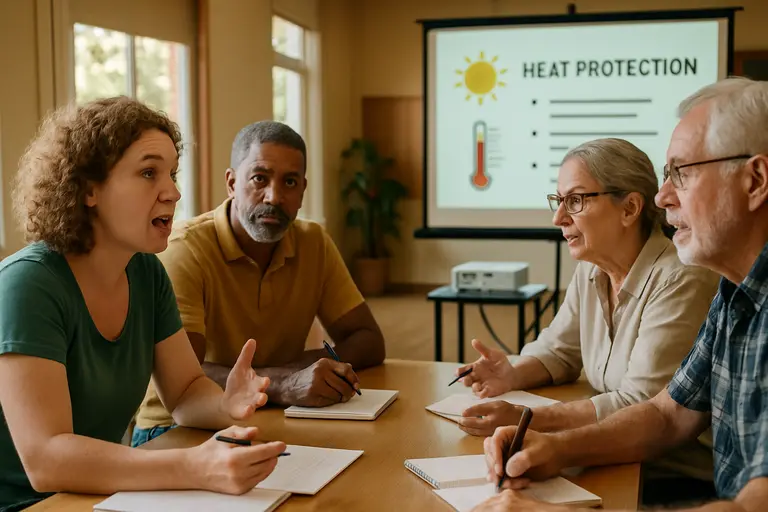
Colorado Heat Protections may appear in local civic settings before full implementation. City councils, county commissions, school districts, special districts, and public employers may discuss workplace safety budgets, staff training, water access, rest areas, or emergency procedures if future guidance requires operational changes. Chambers of commerce and business associations may also circulate information to employers as the timeline advances.
Residents who follow local budgets should watch for spending tied to workplace safety, especially if a public agency needs equipment, training, or staffing time to meet state guidance. The legislative summary identifies a state appropriation of $76,651 for implementation of the act, but the research does not state whether local governments or private employers will receive funding. That uncertainty matters. Local officials should distinguish between state implementation costs and any future local costs that may arise after rulemaking.
Community members should also look for official records. Meeting agendas, staff reports, budget requests, and departmental updates can show whether a local agency is preparing for the state timeline. If a city or county says it is updating worker safety procedures because of the law, residents can ask which state guidance it is relying on and whether those changes are required, recommended, or still under review.
Keeping The Discussion Non-Partisan And Practical
Temperature safety can become a charged topic if public debate moves away from the text of the law. The clearest local approach is to focus on dates, agency duties, employer preparation, and worker communication. The law assigns data collection and planning responsibilities to CDLE, sets deadlines, and points toward site-specific prevention planning. Those facts are enough for local employers and employees to begin asking practical questions without turning the issue into a broader political argument.
Readers who are interested in civic and community updates across this network should check out related local coverage available at Saint Joseph Detroit. This source ensures that community decisions are easily reviewed through official records, agency timelines, and the local workplaces impacted by the Colorado Heat Protections law.
Colorado Heat Protections And The Next Local Steps
The next local step is preparation based on the state schedule. Employers should identify who will follow CDLE’s work, review current procedures for water, rest areas, emergency response, and training, and be ready to compare existing practices with the model prevention plan due by July 1, 2028. Employees should watch for clearer reporting channels, training materials, and worksite procedures as the state moves from data collection to rulemaking and implementation.
Colorado Heat Protections do not yet answer every local question. The research does not provide final rule text, local cost estimates, or detailed enforcement procedures. What it does provide is a timetable and a set of state responsibilities that communities can track. For local businesses, public employers, and workers, the practical task now is to document current conditions, follow official updates, and make sure future worksite plans are understandable to the people who will use them.