In today’s world, where everything is online, meeting in person seems old-fashioned. It’s like using a rotary phone in the smartphone era.
But, this old-fashioned idea is actually more important than ever. It’s not just a throwback to simpler times. It’s a look at how we connect today.
Local events are a way to fight off the feeling of being disconnected. They help us build real connections, something the internet can’t do. This is where we make a difference in our communities.
Advocacy movements show us how these events work. They turn people from bystanders to active players in changing their world. It’s how we move from talking about change to actually making it happen.
Also, they bring people together for a common cause. Nonprofits know this, as they use these events to give a voice to those who are often ignored. It’s like a live podcast where everyone gets to speak up.
Planning & Logistics
Forget the Gantt chart for a second. The first step in event logistics is to understand the root cause you’re addressing. Anyone can rent a room and order pizza. But we’re planning a strategic intervention.
This is where the wise and the project manager meet. They start with a key question: are you treating a symptom or the disease?
This work is inspired by seasoned advocacy frameworks. You must ask tough questions before booking anything. Is the issue a lack of information, a policy failure, or community apathy? Finding the root cause is not just administrative; it’s diagnostic.
- What specific change are we trying to create?
- Who holds the power to make that change?
- What does our community truly not know about this issue?
Once you’ve diagnosed the problem, you need a treatment plan. This plan should have brutally specific objectives. If your goal is “to raise awareness,” you’ve already failed. That’s like a doctor saying their goal is “to make the patient feel better.”
We need S.M.A.R.T. goals—Specific, Measurable, Achievable, Relevant, and Time-bound. “Increase petition signatures from local residents by 25% within six weeks” is a goal. “Raise awareness” is a wish.
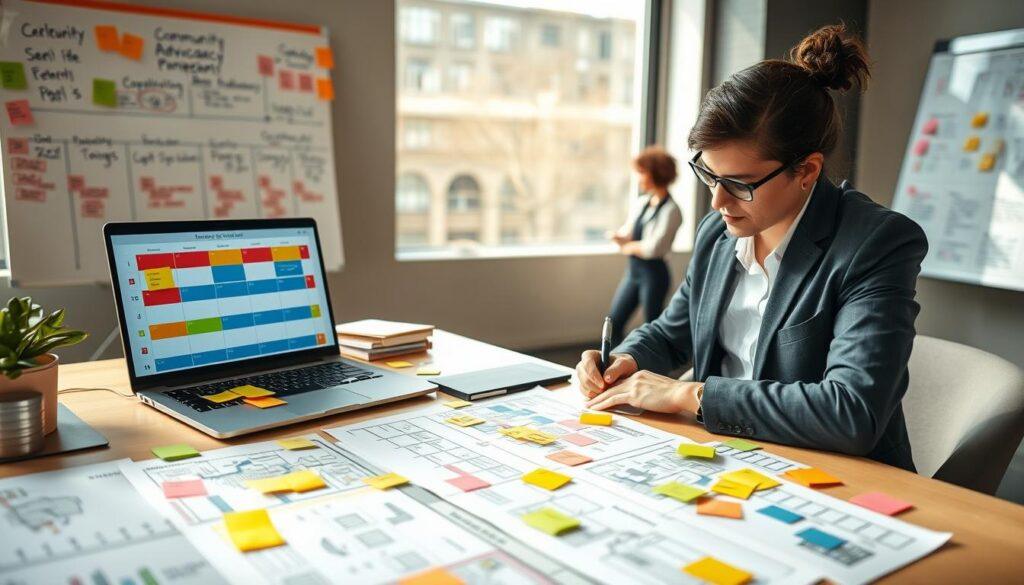
Next, you must build a clear message. Every great advocacy campaign communicates simply and powerfully. Can you explain your event’s core purpose in ten words or less to a tired parent at the grocery store? If not, go back to the drawing board. Complexity is the enemy of action.
Now, let’s talk timeline. Drawing from successful library advocacy campaigns, a surprising pattern emerges: a short, intense sprint almost always outperforms a languid marathon. Why? Momentum. Community attention is a fleeting resource. A focused 2-3 month timeline creates urgency, simplifies volunteer coordination, and makes your narrative easier to control.
A year-long timeline invites drift, competitor noise, and volunteer burnout. A 90-day sprint forces clarity and decisive action. This is where mastering event logistics becomes your superpower, transforming a vague idea into a tactical rollout.
This entire phase—the root-cause analysis, the S.M.A.R.T. goal setting, the message distillation, the timeline pressure—is your blueprint. It’s the “pre-production” that separates a curated gallery opening from a chaotic flea market. It’s what makes an event not just happen, but matter.
Engaging Speakers & Partners
Forget the keynote; think about the network. The most powerful civic engagement events are those where speakers work together like a neural network. It’s not about finding the loudest voice. It’s about creating a team where everyone boosts each other’s voices.
This turns your event into a dynamic, living ecosystem. It’s not just a series of lectures.
A stale panel of experts is like elevator music. It’s background noise. Your goal is to create a symphony orchestra, where each person plays a vital part. This means moving from a scarcity mindset to an abundance mindset.
The Honorary Chair: Your Strategic Credibility Hack
Every organizer dreams of landing a big name. But an honorary chair is more than a fancy title. They are a signal booster for your cause.
Choosing the right person is key. It’s not always the most famous local celebrity. The ideal candidate has deep ties within your community.
Once recruited, their role must be active. They should be your go-to media contact and provide quotes for press releases. They are a credibility hack, but it requires genuine engagement from you.
Building an Ecosystem, Not a Rolodex
Expand your view beyond your headliner. Most events fail here. They treat partners like co-sponsors, not true collaborators.
Think in terms of network theory. A network approach supports common causes and aligns messaging. It distributes power and resources to involve many people. Your event becomes a shared platform, not a solo act.
What does this look like in practice? Ask a nonprofit to curate a segment of the agenda. Have a local arts group handle the creative signage. Ask a youth coalition to run the social media live feed. Each partner contributes a unique skill set, weaving themselves into the fabric of the event.
Let’s break down the shift from the old model to the new network model:
| Aspect | Transactional Model (The Old Way) | Network Ecosystem Model (The New Way) |
|---|---|---|
| Relationship | One-off co-sponsorship for logo placement. | Ongoing partnership with shared ownership of outcomes. |
| Communication | Siloed; each organization promotes independently. | Aligned messaging that amplifies a unified story. |
| Resource Flow | Centralized; the main organizer bears all costs and labor. | Distributed; tasks, expertise, and social capital are shared. |
| Goal | Filling seats and covering expenses. | Building lasting community capacity and connection. |
This approach turns your event into a node in a larger, sustained network of civic engagement. The workload is lighter for you, but the impact is exponentially heavier. The social capital—the trust and relationships—is spread across the community, not hoarded by a single organization.
So, when you build your speaker list and partner roster, ask yourself: Are we assembling a list, or are we cultivating an ecosystem? The difference is the difference between an event that happens and a movement that lasts.
Promoting the Event
Forget the field of dreams; in the real world, you need a megaphone, a map, and a meme. Promotion turns details into a compelling story. It’s not just shouting; it’s creating a clear signal in the digital noise.
You might have the best venue and speakers. But without promotion, your event is just an empty room. Start with the story, not just the tools.
Crafting the Core Message & Slogan
Before making graphics, ask: why does this gathering matter? It’s not about listing features. It’s about connecting to a deeper purpose.
Think like an advocacy campaign. Your message should focus on why what you do matters. Is your event about safety or community connection? Is it about a policy or democracy?
From this “why,” create a slogan. This is your event’s “Just Do It.” A brief, memorable tagline that captures the essence of your campaign.
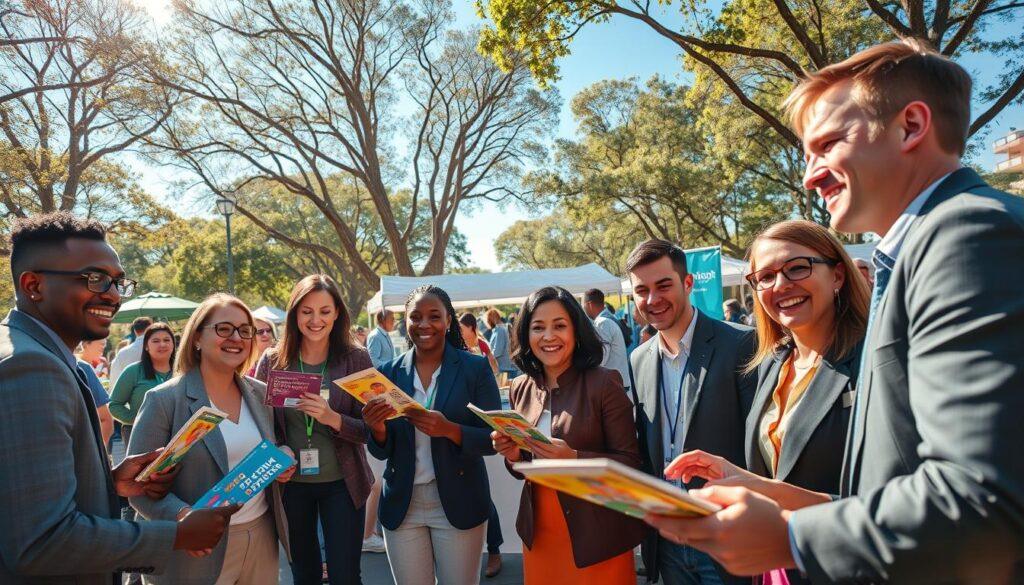
A weak slogan describes. A great slogan evokes. “Annual Neighborhood Clean-Up Day” is just a date. “Love Where You Live: A Community Clean-Up” calls to action. This message guides every flyer, post, and email.
The Multi-Channel Hype Machine
With your message ready, it’s time to share it. This isn’t just “post on social media.” It’s a strategic effort across platforms, each with its own vibe.
Twitter (X) is the meme economy. It’s fast, witty, and all about conversation. Use your slogan as a hashtag. Engage with local influencers. Think in soundbites.
Facebook is for community storytelling. Here, you share longer updates, photos, and create an Event page. Encourage people to mark “Going.” Use Groups to connect with local networks.
Instagram is pure visual appeal. Your feed should tell your event’s story with images and short videos. Use Stories for countdowns and polls. Reels can show speaker teasers or venue tours.
LinkedIn offers professional reach. If your community events have a business angle, use LinkedIn. Frame the event as a professional development or corporate social responsibility opportunity.
Don’t forget email. A personal, timely email can convert better than a social post. For more tips, check out forums on successful event promotion.
The Analog Anomaly
In our digital world, the physical world surprises us. A well-designed flyer on a bulletin board shows commitment. It signals legitimacy.
Think of it as guerrilla marketing for the soul. A poster in a coffee shop. A postcard to nearby residents. These touches feel personal, unlike digital notifications.
For local community events, the physical layer is key. It reaches those less active online and creates multiple touchpoints. Aim for omnipresence—your event should feel inevitable, both online and offline.
Promotion done right builds excitement. It turns “an event” into “the event.” It ensures the community you’re trying to bring together actually shows up.
Day-Of Checklist
Showtime has arrived. Your detailed plans face their biggest test: real people in a room. This is where your plan meets the unexpected. Think of this as your guide, written with a hint of sarcasm from someone who’s seen it all.
Your mission is to make your plan a real, impactful experience. Let’s get started.
Assemble Your Strike Team
You’re not alone. Assign roles before the first guest arrives. This prevents confusion about who does what.
- The Float: Your troubleshooter. They roam, solve problems, and find solutions. They need calmness and creativity.
- The Official Greeter: First impressions matter. They welcome everyone, guide VIPs, and hand out materials. They set the mood.
- The Social Media Conductor: If you’re live-tweeting or streaming, this is a key role. They manage the feed, engage online, and share key moments.
- The Note-Taker & Timekeeper: They track important points and keep speakers on track. This keeps the discussion focused and provides useful notes.
The Facilitator’s Playbook
You have your team. Now, guide the conversation. Facilitation is key to a successful advocacy event.
Dealing with long speeches? Thank them, validate their point, and then ask others to share. This keeps the conversation flowing.
Don’t worry about silence. It gives people time to think. If it lasts too long, ask a different question or offer a hypothetical.
Your goal is to create an inclusive, lively space. Encourage everyone to speak. Use a “go-around” for quick introductions. You’re the conductor of the room’s energy.
When Officials Are in the Room
If officials are there, things change. You must be professional. Remember, this is a forum, not a rally.
Start with their proper title. Ask questions to get their expertise, not to debate. Your job is to facilitate a productive exchange.
This is key for 501(c)(3) organizations. Keeping nonpartisan decorum is essential. Your advocacy focuses on issues, not parties.
Media presence adds to this. Have one person handle reporters—often the Float or Greeter. Give them a fact sheet on the event and its goals.
Minute-by-Minute Run Sheet
This is your day’s backbone. Adjust times as needed, but keep the structure.
- 120 Minutes Out: Core team arrives. Do a venue check and test A/V. Confirm Wi-Fi password is shown.
- 90 Minutes Out: Set up registration, signage, and seating. Give the team their roles and signals.
- 60 Minutes Out: Speakers and VIPs get briefed. Confirm their slots and A/V needs. Greeter takes their post.
- 30 Minutes Out: Social media conductor posts the “starting soon” alert. Float checks for issues. Music and lights are ready.
- 0 Minute: Start: Welcome everyone. State the purpose and rules. Introduce the first speaker.
- During the Event: Float watches the room. Note-taker documents. Timekeeper warns speakers. Facilitator manages Q&A.
- 5 Minutes to End: Facilitator starts closing remarks. Thank everyone. Preview next steps or follow-up.
- Immediately After: Team collects feedback. Social media conductor posts a key takeaway. Quick team huddle to discuss what worked and what didn’t.
This checklist is your shield against chaos. It helps you move from manager to host. Effective advocacy is about the experience you create. This experience builds community and momentum for change.
Now, take a deep breath. You’re ready. The plan is solid. The team is set. Go make that agenda impactful.
Follow-Up Best Practices
The crowd has gone. The silence is your new project manager. Most efforts die right here, in the post-event quiet.
Your gathering wasn’t the finale. It was the opening scene. Real civic engagement is a season, not a pilot episode.
Start with a strict protocol. Send thank-yous that mention specific contributions. Craft a survey that asks the hard, insightful questions. Compile every note and share them with all attendees. This turns a moment into a record.
Then, play the long game. How do you convert that room’s energy into a lasting coalition? You need a laser-like focus on long-term goals. Identify the next concrete step before the coffee goes cold. Assign clear ownership. Schedule the next meeting on the spot.
This phase is about building a movement, not archiving a meeting. Keep track of your progress. Look back and reflect. Galvanize those short-term wins into sustained momentum.
The difference between a spark and a fire is the follow-through. This is where true civic engagement is built, one deliberate action after the last handshake.