College students can start big movements online but struggle to vote. They have lots of political passion but don’t vote much. This is a big paradox in America.
In 2020, 66% of college students voted, a 14% increase from 2016. This is something to celebrate. But, only 48% of 18-24 year olds voted, compared to 63% of all voters.
Why is there such a gap? The system often makes it hard for students to vote. It’s like they’re committing a crime just for living in dorms and eating ramen. The rules around student voter registration are confusing.
Getting students to vote is like getting them to an 8am class. It’s possible but needs careful planning and clear info. Let’s explore why this is important and how we can change it.
Student-specific eligibility and residency
Ever tried explaining voter residency rules to someone who eats microwave burritos for every meal? Welcome to the world of student voting, where 18-year-olds can debate philosophy but struggle with residency.
But the truth is simple. Your dorm room is a real home. You sleep, study, and maybe even cry over math there. That makes it your home under election law.
Many students don’t register to vote where they go to college. They think they must choose between their home and college addresses. But the truth is, you can register at either place. You just can’t vote in both.
Different states have different rules, but the main idea is the same. If you live in your college dorm most of the year, you can register there. It’s not cheating – it’s your right to vote where you live.
Let’s clear up some common myths about student residency and dorm rules:
| Myth | Reality | Why It Matters |
|---|---|---|
| “Dorms don’t count as real addresses” | Dorm addresses are 100% valid for voter registration | Students can participate in local elections affecting their daily lives |
| “I’ll lose scholarships if I change residency” | Voter registration rarely affects financial aid status | Removes unnecessary fear about participating in democracy |
| “I have to choose my parents’ address” | Students can choose whichever address they consider primary | Empowers students to vote where they’re most affected |
| “It’s too complicated to register here” | Campus registration often takes less than 5 minutes | Demystifies the process and increases participation |
The beauty of student residency rules? They see college as more than just classes. It’s where you build community, pay taxes, and get involved in local issues.
So, if someone says your dorm isn’t a real home, tell them you’ve spent more time there than anywhere else. That’s not just living – that’s home.
Addressing dorms and mail issues
Welcome to the campus mailroom – a place where democracy and Amazon packages fight for attention. Students face a big challenge when voting by mail. They deal with transient addresses, busy mail services, and different state rules.
Many states don’t recognize dorm addresses as real. Mailrooms seem like black holes where ballots vanish. This leads to valid votes being rejected due to signature mismatches or lost mail.
- Understand your state’s dorm address rules – some require specific formatting
- Coordinate with campus mail services early
- Use campus addresses instead of PO boxes when possible
- Track your ballot like you’d track a textbook shipment
Signature issues are a big problem. It’s because our handwriting changes a lot. Practice signing the same way on voting documents.
Work with election officials to make sure they know campus addresses are valid homes. Many don’t get that dorms are where thousands of students live during school.
The fix isn’t hard. It just needs understanding the system and working with it. Your vote shouldn’t get lost in the battle of students trying to vote.
High-yield venues: orientation, dining, games
Let’s explore three key places where student democracy thrives: free food, social pressure, and school spirit. These spots are more than just locations. They’re battlegrounds where voting registration spreads like a viral meme.
Orientation week is a time of peak vulnerability for students. Freshmen are eager to belong and are open to new experiences. They’ll grab any free item or useful info you offer, like kittens chasing strings.
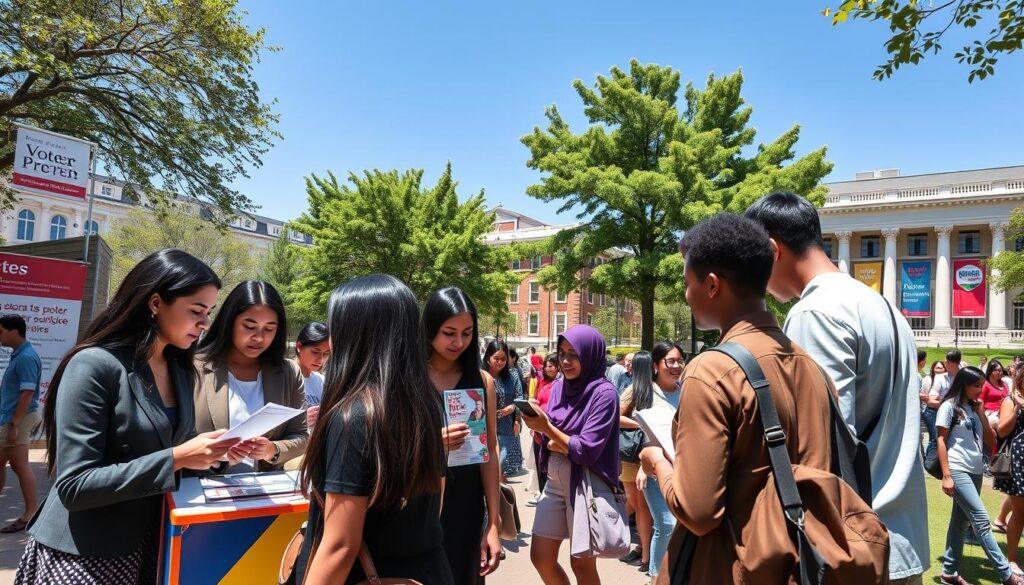
Dining halls are even more valuable. They offer captive audiences. Students have a few minutes of free time, perfect for registering to vote.
Now, let’s dive into the key to campus tabling success:
- Peer-to-peer engagement (students trust their peers)
- Strategic positioning (near food exits)
- Positive incentives (democracy is better with pizza)
Football games turn students into voters. School spirit makes voting seem like a team effort. It’s a powerful combination.
Personal contact is key. A friendly face with a clipboard beats digital campaigns. It’s a mix of politics and basic needs.
| Venue Type | Peak Hours | Best Incentives | Registration Rate |
|---|---|---|---|
| Orientation Events | 10AM-2PM | Free pens, campus maps | 22% engagement |
| Dining Halls | 11AM-1PM | Pizza slices, cookies | 18% engagement |
| Sporting Events | Pre-game hours | T-shirts, rally towels | 15% engagement |
| Library Entrances | Exam weeks | Stress balls, coffee | 12% engagement |
Effective campus tabling needs to match student rhythms. Set up during class changes. Place tables near food. Train volunteers to make quick, engaging pitches.
Your real competition isn’t other groups. It’s TikTok, Instagram, and caffeine cravings. Make voting registration the highlight of their day.
Faculty partnerships and in-class pitches
Ever wonder why professors can explain complex topics but struggle with simple tasks? It’s not their fault. We’re just asking them to do the wrong thing. The real secret is in strategic partnerships between faculty and students.
Studies reveal an amazing fact: brief peer class presentations boost voting chances by 11% over emails. Emails are like shouting into the void. But, just five minutes of peer interaction can make a big difference.
To turn lecture halls into places where students want to vote, follow these steps:
- Recruit faculty allies strategically: Look for professors who use real-world examples in their classes. Political science, sociology, and communications teachers are great, but don’t overlook STEM professors who value data.
- Train student ambassadors effectively: Choose students who are relatable, not just good at speaking. Authenticity is key. Give them a simple 3-point message: why voting is important, how to register, and what deadlines to remember.
- Time it perfectly: Use those awkward five minutes before class starts. It’s a chance to grab attention without interrupting the lecture.
- Make it zero-effort for professors: To get professors on board, make it easy for them. Offer ready-made sign-up sheets, pre-written syllabus language, and clear instructions on when to do it.
The irony is that professors become heroes by doing less. They provide the space, and students share the message. Students trust their peers more than teachers who grade them.
This isn’t about long lectures on democracy. It’s about short, peer-driven moments that actually work. When it comes to getting students to register to vote, sometimes the best approach is to let others do the talking.
Working with student orgs and athletics
Why not use what’s already there? Student groups have great systems for voting. They’re like hydras, always growing back. This is our chance to grow.
Every group has a captive audience. Fraternities, anime clubs, and sports teams all have people eager to join. They’re ready to listen.
Working with student groups brings instant trust. They’ve already built relationships. Housing associations reach students at home. Community offices connect with the town.
Athletic teams are a big deal. Imagine football players signing up during practice. Soccer teams during film sessions. Swim teams between laps.
Team dynamics push for registration in a good way. Captains lead, and teammates follow. Coaches help instead of getting in the way.
| Organization Type | Member Engagement | Registration Potencial | Partnership Approach |
|---|---|---|---|
| Student Government | High commitment | Campus-wide reach | Formal agreements |
| Academic Clubs | Moderate participation | Department-specific | Faculty-mediated |
| Greek Life | Very high | Whole chapter uptake | Leadership incentives |
| Athletic Teams | Extremely high | Near 100% participation | Coach partnerships |
| Cultural Organizations | Variable engagement | Community-specific | Multilingual materials |
The key is to use what’s already there. Leveraging existing social structures is the secret. Student groups have everything we need.
Each group has its own reasons to join. Academic clubs want to be involved. Athletic teams love competition. Cultural groups want to be heard.
Don’t see these groups as obstacles. They’re our chance to grow. Treat them as partners, and watch your numbers rise.
Digital tactics: QR codes, SMS, IG takeovers
Digital outreach in politics can be tough. It’s like trying to solve a Rubik’s Cube blindfolded. You might get lucky, but mostly, you’re just hoping for the best.
Studies show digital communications are cheaper but less effective than personal contact. They’re like leaving a voicemail instead of talking. But, when combined with in-person efforts, they can be powerful.
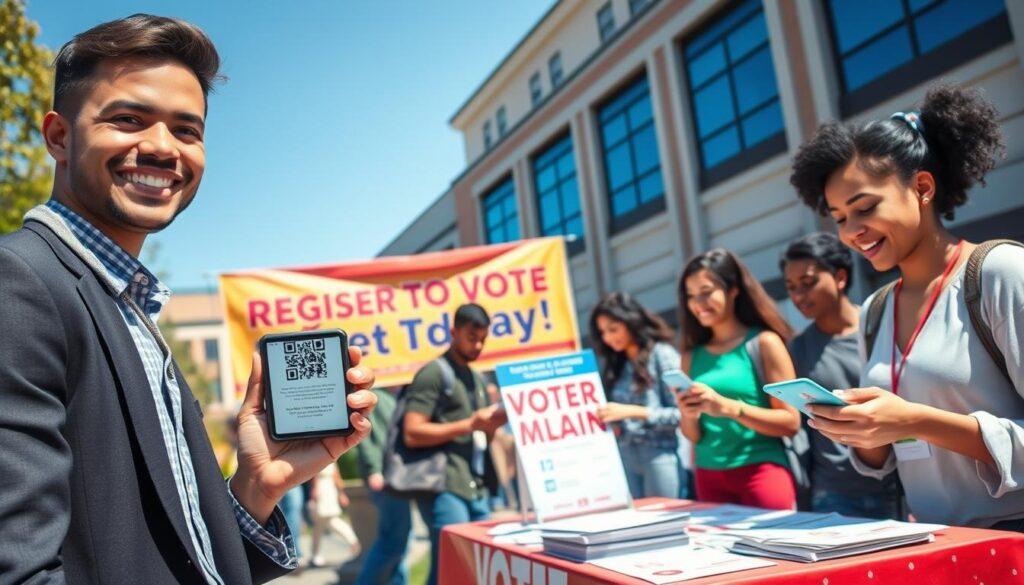
QR codes are your new best friend. They need to be placed where students pause, like cafeteria tables or library study carrels. Even bathroom stalls can work in a pinch.
Make sure your QR code sign-ups lead to mobile-optimized pages. They should take less than 90 seconds to complete. Any longer, and you’ll lose them to TikTok.
SMS campaigns need to be timed right and personalized. Text students when they’re awake and use their first name. Nobody likes feeling like they’re getting spam from their mom.
Instagram takeovers require influencers who won’t post anything bad. Choose campus partners wisely. Their follower count is less important than their credibility.
The best strategy combines QR codes, SMS, and Instagram. QR codes for sign-ups, SMS for reminders, and Instagram for social proof. It’s like a well-made cocktail—each part is important, but together, they’re amazing.
| Tactic | Best Use Case | Potential Pitfalls | Success Rate |
|---|---|---|---|
| QR Code Sign-ups | High-traffic areas with dwell time | Poor placement, slow load times | Medium-High |
| SMS Campaigns | Reminder messages close to deadlines | Wrong timing, impersonal content | Medium |
| Instagram Takeovers | Building social proof and engagement | Influencer missteps, low authenticity | Variable |
| Combined Approach | Comprehensive digital mobilization | Resource intensive, requires coordination | High |
Digital outreach works best as part of a team, not alone. QR code sign-ups grab attention in real spaces, SMS keeps momentum, and social media builds community. Together, they make a big difference in student voter registration.
Remember, technology should help your strategy, not be it. The coolest app won’t register voters if the message doesn’t connect. Focus on solving student problems, not just using cool tech.
Combatting misinformation tactfully
Let’s face it – misinformation spreads like wildfire on campus. A single TikTok about “dorm voters getting audited” can undo all the hard work of registration. Young people are hit hard by false claims, making it vital to teach them about civic education.
The problem is correcting these lies without coming off as that annoying professor. It’s not just about fact-checking. It’s about pre-bunking through peer-to-peer messages and making content that people actually want to share.
We need to debunk myths like “voting will affect your financial aid” and “you can get in trouble for voting at school.” These lies spread because they play on students’ fears about loans and their reputation on campus.
To fight misinformation without being the campus buzzkill, train student ambassadors to talk about it in a friendly way. Give them simple, relatable examples instead of complicated terms. A peer saying “That’s not how it actually works” can quickly shut down false claims.
Make content that’s more engaging than a boring lecture. Think of short videos debunking myths in under 30 seconds. Memes that first-years can understand. Infographics that spread faster than lecture recordings.
The aim isn’t to win arguments but to clear up confusion through trusted channels. When misinformation meets well-prepared peer messaging, truth has a fighting chance.
Accessibility and multilingual materials
In today’s college campuses, your voting outreach must speak many languages. It’s not about using Google Translate for a mess of words. It’s about authentic accessibility that honors our diverse student bodies.
- Native speaker review (not just your poli-sci professor)
- Cultural context awareness – voting concepts don’t translate literally
- Clean design that works across character sets
- QR codes that link to language-specific resources
But true accessibility is more than just translation. We must also consider students with visual, learning, and mobility challenges. This means:
- Large print options that don’t look like they were magnified at Kinkos
- Screen reader compatible digital materials
- Audio versions that don’t sound like a 1980s text-to-speech robot
- Physical accessibility information for polling locations
First-generation voters and international students need more than just translation. They need context. Your materials should include:
- Basic voting process explanations
- Why their vote matters in practical terms
- Student-specific issues and how elections affect them
- Clear deadlines and requirements without bureaucratic jargon
The goal is inclusive design that truly includes everyone. When your materials work for all students, you’ve succeeded.
Accessibility isn’t a burden. It’s a chance to engage the whole campus in democracy. And that’s worth translating into every language.
Event-day station map and privacy
If polling places were like campus buildings, we’d need a map and compass to vote. Campus layouts can be confusing, making IKEA look easy by comparison.
Students face challenges finding classes every day. But on election day, it’s like they’re lost all over again. It’s not because they’re not smart. It’s because the design is poor. Polling station maps should be easy to find.
Privacy is key, not just from roommates. We want to vote without being watched. This includes avoiding your professor’s curious gaze.
Feeling watched while voting can kill enthusiasm. It’s like being at a concert with security staring at you. It’s creepy and unnecessary.
Polling places should be welcoming, not like a prison. Having friendly poll workers who respect students is a game-changer.
First-time voting can shape your future political involvement. A bad experience can make you never vote again. A good one can make you a dedicated voter. The pressure is on election officials.
Here’s what makes voting on campus good or bad:
| Aspect | Welcome Experience | Dreaded Experience | Impact on Students |
|---|---|---|---|
| Location Finding | Clear digital maps with building photos | Vague written directions only | Reduces stress, increases participation |
| Privacy Setup | Proper voting booth separation | Open tables with minimal screening | Protects voter confidentiality |
| Poll Worker Attitude | Friendly, student-trained staff | Suspicious, interrogative approach | Determines future voting behavior |
| Wait Time Management | Efficient flow, class schedule aware | Long lines during peak hours | Affects student turnout significantly |
| Accessibility Features | Clear signage, multiple entry points | Single confusing entrance | Ensures equal participation access |
We don’t want voting to feel like a party. But we do want it to be less stressful than the DMV.
There are simple solutions. Like color-coded paths to polling stations. And privacy screens that work. Plus, poll workers who know students belong there.
When voting is easy, more people do it. It’s basic psychology and common sense.
Let’s make voting as appealing as waiting in line for coffee. It’s not hard.
Reminders: ballot delivery and deadlines
Student brains often forget about ballot deadlines, just like they forget about 8am classes. With midterms, social events, and searching for good food in the dining hall, voting deadlines seem low on the list. They’re even lower than remembering to buy toothpaste.
Reminders need to fit into students’ lives, not disrupt them. Texts should feel like a friend checking in, not a nag. Emails should arrive between class times, not lost in spam.
Think about it: when was the last time you read a university email? Exactly. Our reminders should be more like TikTok than textbooks.
Strategic reminder systems that actually work:
- SMS alerts 3 days before deadlines (not 3 weeks)
- Push notifications through campus apps students already use
- Instagram story countdowns that don’t feel like homework
- QR code reminders on dining hall tables during peak hours
How ballots are delivered is just as important as when they’re delivered. Students need options that fit their busy lives. Can they return ballots at the library at 2am? Is there a drop box near the late-night pizza place?
Guidance should be tailored to each student’s needs. Commuters and dorm residents have different needs. Out-of-state voters have different rules than local students. One-size-fits-all reminders are useless.
Deadline messages should acknowledge students’ many priorities. The message should be “here’s how to vote between your chem lab and club meeting.” It’s not just “remember to vote.”
Make voting as simple as ordering late-night pizza. Let’s face it, when voting and pizza are options, pizza usually wins without needing reminders.
Measuring registrations vs turnout bridge
Here’s a secret no one shares at orientation. Getting students to register is the simple part. It’s like asking them to download a syllabus app. But the hard part is turning those registrations into actual votes.
This gap between registration and turnout is where many campaigns fail. It’s like RSVPing for a party versus actually showing up. You need to track who actually casts a ballot.
Use methods like voter file matching to see how you’re doing. Research shows that reminders can really help increase turnout.
Success isn’t just about signed forms. It’s about actual votes. Measure your efforts by real votes, not just enthusiasm. Because in politics, as in finals week, execution beats intention every time.