Ever feel like your activism gets lost in the digital noise? Most protests today seem like shouting into thin air.
We often mistake being busy for making progress. But what if true power came from being strategic, not just loud?
The organizer’s playbook is not your usual political organizing guide. It’s a deep dive into movement wisdom. It teaches us to start with “who are my people?” instead of “what’s my issue?”
Real community organizing is about leadership. It’s about empowering people to use their own strengths—like relationships and determination—to create change. This approach is a big shift from traditional advocacy.
Imagine the difference between a fleeting flash mob and a strong, widespread network. The first fades away, but the second endures. We’re moving from loud voices to a well-planned strategy.
Power Mapping and Stakeholder Analysis
Every successful movement starts with a map of power. Before you take action, you need to know who’s in charge, what they want, and where to find hidden doors. This is called power mapping, the analytical core of turning passion into strategy.
Righteous anger feels good, but it doesn’t change policy. It’s cold, hard calculation that does. Organizing is about asking one simple question: who has power, who doesn’t, and how to change that?
Power comes from the direct relationship between interests and resources.
Smart organizers start by asking three core questions:
- Who are my people?
- What is their urgent problem?
- How can they turn their resources into power to solve it?
This is where civic engagement gets real. It’s not just yelling at a town hall. It’s about understanding that the councilor’s interest in re-election is your leverage. Your resource is the committed, voting constituency in their district.
You’re plotting to turn your community’s hidden power into a strategic force. It’s like chess, not checkers. You need to see the whole board and every piece on it. That’s stakeholder analysis.
Who holds the keys to the change you seek? Is it an elected official, a corporate CEO, or a community leader? What do they really want? Is it votes, profit, positive media, or legacy? Your job is to match their interests against the resources you control.
The table below breaks down this analytical process. It helps you categorize players and identify your points of influence.
| Stakeholder Type | Their Typical Interests | Their Resources | Your Potencial Leverage |
|---|---|---|---|
| Primary Ally (Your Base) | Solving the urgent problem; community improvement; justice. | Time, personal stories, voting power, local networks. | Their mobilization is your core strength. They grant legitimacy and people power. |
| Secondary Influencer (Media, NGOs) | Content, credibility, advancing their mission, audience growth. | Platforms, public attention, expertise, funding channels. | Offer compelling narratives and evidence. Their amplification can shape public perception. |
| Key Decision-Maker (Official, Corporate Leader) | Re-election, profit stability, public image, avoiding scandal. | Authority, budget control, policy-making power, institutional weight. | Your organized community represents a threat or promise to their core interests. This is your bargaining chip. |
See the game? Your leverage is never about what you ask for. It’s about what you control that the other side needs or fears. A corporation’s interest is profit; your resource might be a consumer boycott or bad press. A politician’s interest is votes; your resource is a bloc of organized constituents who will show up—or not.
This strategic form of civic engagement moves beyond participation. It’s about negotiation from a position of understood strength. You map the power landscape so you know where to apply pressure, who to bring to your side, and what victories are actually within reach.
Without this map, you’re just making noise. With it, you’re building a campaign that can win. You stop reacting to their moves and start forcing them to react to yours.
Issue Research and Framing
In the world of community organizing, a policy white paper is like the script notes. But the “Story of Now” is the blockbuster trailer. It’s what gets people excited to join the fight.
Research isn’t just about numbers. It’s about finding the emotional core that drives real change. It’s about turning facts into a powerful story.
Organizing is all about shared values told through a compelling story. Your data on wage gaps or pollution is just that—data. The “Story of Now” connects those numbers to values like fairness and health. It shows us why we must act now.
Let’s be real. Data alone won’t move people. You need a story that sparks outrage, hope, and identity. Organizers must translate complex research into a story that makes everyone feel like a hero.
Effective issue framing is like finding the human side of a statistic. Research shows us what’s happening. But the story we tell makes it personal and moral. It connects the dots between policy and our daily lives.
So, how do you become a narrative architect instead of just a data collector? The table below shows the difference between just sharing facts and telling a story that moves people.
| Aspect | The Data Dump (Ineffective) | The Story of Now (Effective) |
|---|---|---|
| Core Focus | Proving a point with facts and figures. | Inviting a choice based on shared values. |
| Emotional Tone | Neutral, academic, detached. | Urgent, moral, personally resonant. |
| Primary Output | Reports, charts, footnotes. | Personal testimonies, shared metaphors, compelling imagery. |
| Audience Role | Passive recipient of information. | Active character in an unfolding drama. |
| Call to Action | “Review the findings.” | “Join us before it’s too late.” |
Mastering the right frame is key to turning a discussion into a campaign. It’s the difference between stating a fact and telling a story. When your research supports your narrative, you empower people to act. This is the first step in building lasting power.
Community Listening Sessions
The most powerful tool in an organizer’s kit isn’t a megaphone; it’s a well-timed silence followed by a genuine question. This is where political organizing becomes real. We’re talking about one-on-one meetings, not big town halls or online polls.
Forget the mass email blast. That’s just broadcasting, not building. Real relationship building happens in living rooms and over coffee. Your goal is to listen, not to pitch or poll.
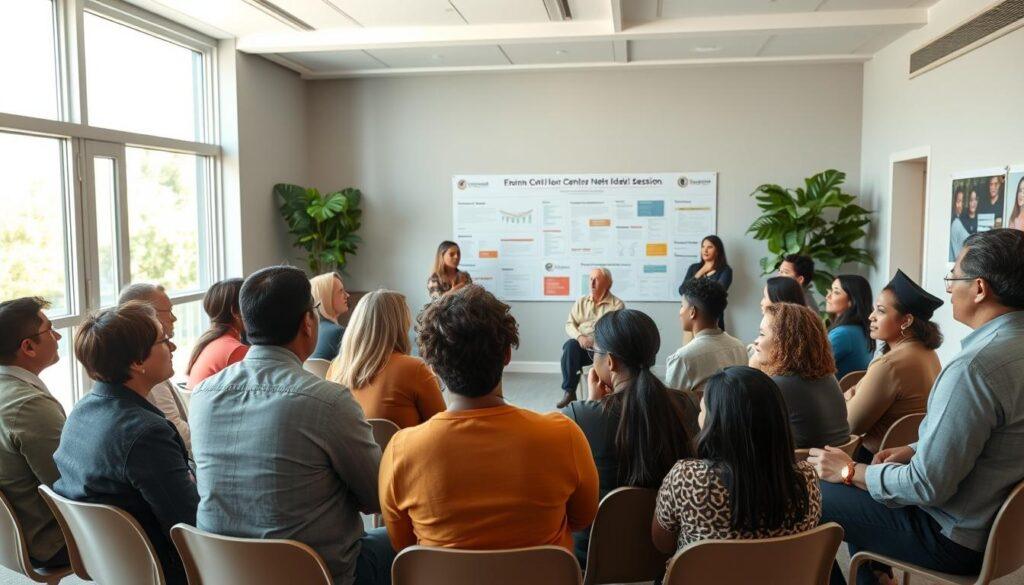
Think of it as social archaeology. You’re digging up people’s real concerns and hidden hopes. Ask, “What keeps you up at night?” and wait for their answer. This listening turns a passive community into an active constituency.
The wise organizers say you build power with others before over them. You connect people through relationships. That neighbor knows a teacher, and that teacher knows a business owner. Each conversation is a link in a growing network.
So, what does a successful session look like? It’s less about talking and more about discovering together.
- Listen 80%, talk 20%. Your main job is to understand their story, not share yours.
- Identify shared interests. Where does their struggle meet a public issue?
- Forge a relational commitment. You’re not just getting a phone number; you’re getting a promise to act together.
This work is slow and humble. It may seem inefficient in our fast world. But this foundation is essential. Every rally, campaign, and win starts with trust built in these quiet talks. You’re not just organizing; you’re building a community’s power, one story at a time.
Coalition Building Strategies
Think of coalition building as a flash mob where everyone has their own style. It’s about creating a powerful show, not a uniform group. Lone wolves might inspire, but they can’t change the game alone. A chaotic group just makes noise. The goal is a strategic alliance.
The “snowflake model” of leadership is key here. No two snowflakes are the same, yet they’re all connected. In this model, your coalition is like a snowflake. Each member keeps its own identity but works together.
Strategic alignment is the art here. You’re not trying to make everyone the same. Instead, you find common ground. This could be a shared value or a policy goal. This is where civic engagement is most powerful.
| Model Type | Leadership Structure | Resource Sharing | Adaptability | Risk Profile |
|---|---|---|---|---|
| Hierarchical Coalition | Top-down, centralized command. One or two groups call the shots. | Guarded, transactional. Resources are often hoarded at the top. | Slow. Changing direction requires rewiring the entire chain of command. | High. If the lead organization stumbles or burns out, the whole effort collapses. |
| Snowflake Model | Distributed, multi-nodal. Leadership is cultivated at every connection point. | Open, complementary. Groups share what they’re best at, creating a whole greater than its parts. | High. Different nodes can test tactics and adapt without crippling the entire network. | Low. The network can withstand the failure of a single node, making it resilient for long-term civic engagement. |
Your strategy is like building a structure. You look for groups that complement each other. One might have community roots, another legal expertise, and another media skills. Your job is to link them so they work together, not against each other.
This creates a system where power is shared. No one person is overwhelmed. Leadership grows as people step up. The beauty? Losing one part doesn’t break the whole.
You’re not just forming a committee; you’re building an ecosystem. This is a shift from scattered protests to a unified movement. It’s the difference between a weak protest and a strong, winning movement.
Direct Action Planning
Planning a direct action without a clear power analysis is like throwing a party without knowing who’s on the guest list—you might make noise, but you won’t change the room. In the theater of community organizing, action is the main event. But let’s be honest: without strategy, it’s just performance. Your goal isn’t applause. It’s a measurable victory.
So, what separates a powerful action from a performative one? It’s designing tactics that apply strategic pressure. Is your action aimed at a decision-maker when they are most vulnerable? Does it clearly demonstrate your constituency’s strength? Effective direct action planning answers “yes” to both.
The data is clear. Outcomes must be specific and measurable. “We want change” is a wish. “We demand the city council votes ‘yes’ on Ordinance 42 by the June 15th session” is a target. This precision turns vague energy into focused force.
To visualize the shift from performance to power, consider this tactical blueprint:
| Action Characteristic | Performance Action | Power Action |
|---|---|---|
| Primary Goal | Express anger or raise awareness. | Shift a specific power relationship to win a concrete demand. |
| Measurement of Success | Media coverage or crowd size. | Decision-maker’s response, commitment gained, or resources shifted. |
| Target Audience | The general public. | A specific person with the power to give you what you want. |
| Relationship to Campaign Rhythm | A one-off, isolated event. | A deliberate peak in a series of escalating actions that build momentum. |
This gets to the core rhythm of campaigning. A successful grassroots campaign is a story you tell through action. Each event should gather more people, attention, and leverage than the last. Think of it as turning the arrow of time toward your goal.
One protest is a statement. Three strategically timed actions—a town hall confrontation, a targeted boycott, followed by a disciplined sit-in—create a narrative of escalation. The pressure feels inevitable. The decision-maker’s “no” becomes increasingly costly to maintain.
This rhythmic approach is what separates lasting movements from flash-in-the-pan rallies. It’s the disciplined application of force. You’re not just making a point. You’re carefully bending the arc of a decision. You build power with each successive move, inching closer to that specific, measurable win. That’s the real playbook for change.
Media and Communications Integration
Communications is more than just a press release. It’s a key tool that shapes the battle. In political organizing, if your actions don’t reach beyond the room, they’re weak. It’s not about being popular for a day. It’s about using stories to weaken opponents and unite your supporters.
Your story is your foundation: “Story of Self, Us, Now.” This isn’t just words. It’s the deep reason people act. The “Story of Now” is your current fight. Media helps share this story, making a local issue a national concern.

Standard campaigns see media as just for public relations. Organizing sees it as a way to gain power. The aim is to change the conversation and apply pressure. It’s like moving the fight from secret meetings to public squares.
Don’t chase viral moments for their own sake. Smart media use has a strategic goal. Are you revealing a contradiction? Bringing new people into your story? Forcing someone to take a stand? That’s the goal.
This work changes how people see issues. Your story is the lens. Done well, your communications are actions that amplify pressure. That’s the smart way to political organizing today.
Leadership Development Programs
Let’s be honest. Most community campaigns don’t last long. They start strong, get everyone excited, and then disappear. This happens because they rely on one leader who shines bright but fades fast. That’s not true power.
The real value is in people, not grants or tweets. Teaching others to lead is key. This is the heart of civic engagement.
It’s not about being the hero. It’s about being the coach. Coaching helps others find their way in uncertain times. You guide, not lead from behind.
In real campaigns, coaching means creating spaces for growth. Here, new leaders can:
- Learn the Playbook: Understand key strategies like power mapping and framing.
- Run Drills: Practice leading small parts of meetings and sharing their story.
- Scrimmage: Make calls, face challenges, and learn from mistakes in a safe space.
- Debrief: Discuss successes and failures without fear.
Your goal changes. It’s not just winning votes. It’s about growing leaders who can lead others. This builds a strong leadership pipeline. It’s the only way to keep power alive after the founder leaves.
The old way and the new way are very different. Here’s a comparison:
| Aspect | Charismatic Figurehead Model | Developmental Leadership Model |
|---|---|---|
| Core Structure | Pyramid. All decisions and energy flow to/from the top. | Network. Multiple nodes of initiative and responsibility. |
| Organizer’s Role | Star Player. The primary spokesperson and decision-maker. | Coach & Facilitator. Identifies talent, creates learning opportunities, steps back. |
| Risk Factor | Extremely High. Campaign collapses if the leader leaves, gets tired, or is discredited. | Distributed. Knowledge and capacity are spread across many people; the work is resilient. |
| Long-term Outcome | A single campaign win, often followed by organizational atrophy. | Sustained, evolving civic engagement capable of tackling multiple issues over years. |
A leadership development program is essential, not just a side note. It turns temporary outrage into lasting power. It builds a community that can lead itself. That’s true power that lasts.
Sustaining Long-term Campaigns
Burnout is a common problem in activism. It happens when the initial excitement wears off. Real community organizing power comes from the hard work and resilience in the long run.
Think of a campaign as an arrow and an organization as the archer. An archer can fire many arrows over time. This shift is key to lasting success.
To build a strong archer, start with roles that people can live with. The “volunteer for 80 hours a week” model is unsustainable. Roles should be clear, have boundaries, and allow for a life outside activism.
Next, create a culture of mutual care. This is not just about feeling good; it’s about staying strong. Regular check-ins, shared meals, and rest breaks are essential. Celebrate small wins to keep morale high.
The structure of your organization must be flexible. A rigid hierarchy can break under pressure. You need a system that can adapt, learn from mistakes, and grow without losing its way.
Changing your mindset is key to moving from a campaign to a lasting institution:
| Campaign Mindset | Organization Mindset |
|---|---|
| Focus on a single, defined victory. | Focus on building lasting power and capacity. |
| Relies on episodic bursts of energy. | Invests in consistent, sustainable rhythms. |
| Leadership is often centralized and tactical. | Leadership is distributed and developmental. |
| Success is measured by the outcome. | Success is measured by resilience and growth. |
You’re not just fighting for a one-off win. You’re building a lasting institution. This means developing leaders, systems for knowledge transfer, and a financial model that supports long-term growth.
The goal is to create something that endures. Something that can handle setbacks, learn from them, and keep moving forward. That’s the true legacy of strategic community organizing.
Measuring Community Impact and Cross-Issue Collaboration
How do you know you’re winning? If you can’t answer that, you’re just practicing a hobby. True political organizing demands clear, measurable outcomes. It’s the unsexy work of defining success together.
This is where frameworks like Collective Impact enter the chat. They provide a structured playbook for moving beyond outputs to real outcomes. Think shared measurement, a common agenda, and mutually reinforcing activities across sectors. It’s about building a feedback loop where data informs strategy, not just passion.
Cross-issue collaboration isn’t solidarity for solidarity’s sake. It’s a force multiplier. The silos of single-issue politics are a strategic dead end. Modern civic engagement thrives at the intersections, understanding that housing, education, and climate are threads in the same fabric. By building bridges across these movements, you map an ecosystem of power, not just a single path.
This is the sophisticated frontier. It’s about moving from counting bodies at a rally to tracking the decision-makers you moved. It’s about replacing guesswork with learning and replacing silos with shared power. This integrated, data-driven approach is how you build campaigns that don’t just make noise, but make history.