Tampa Bay voters will decide the Property Tax Cut on November 3, 2026, and the local question is not only whether homeowners receive larger exemptions. The question for Tampa, Hillsborough County, Pinellas County, Clearwater, Largo, St. Petersburg, and other local governments is how non-school property-tax revenue would change, and what that could mean for services residents use every week.
Florida lawmakers approved placing Amendment 3 on the November 3, 2026 ballot, according to FOX 13 Tampa Bay. The station reported that the measure would raise the homestead exemption for non-school taxes from $50,000 to $150,000 in 2027 and to $250,000 in 2028, while lowering the annual assessment cap on non-homestead properties from 10% to 5% for non-school taxes. FOX 13 also reported that school taxes are exempt from the proposed reductions and that the measure is projected to reduce local government revenue statewide by more than $8.4 billion annually if approved.
That structure matters in Tampa Bay because city and county budgets are built around separate revenue streams. School taxes would be treated differently under the proposal, but non-school local governments still fund public safety agencies, transportation work, libraries, parks, recreation, administrative functions, emergency management, and local facilities through annual budget decisions. Residents comparing public-service coverage across communities can also follow related civic reporting on the issue through ITPR.
What Voters Will Decide On November 3, 2026
Amendment 3 In Plain Terms
Amendment 3 asks voters whether Florida should change the constitutional rules that determine how much taxable value is shielded from non-school property taxes. A homestead exemption reduces the taxable value of a qualifying owner-occupied home. If the exemption rises, eligible homeowners may owe less in non-school property taxes than they would under current rules, depending on their property value and local millage rates.
The proposal also affects non-homestead property by lowering the assessment cap for non-school taxes. That category can include commercial property, rental property, second homes, and investment property. A lower cap can slow the growth of taxable value for those properties, which can affect future revenue collections for local governments. The final dollar effect in any city or county would depend on taxable values, local millage rates, exemptions, and the way state officials implement the amendment if voters approve it.
What Is Known And What Is Not Yet Fixed
The statewide revenue estimate reported by FOX 13 gives voters a scale for the issue, but it does not settle the budget effect for every Tampa Bay government. City commissions, county commissions, transit boards, constitutional officers, and special districts would still have to translate the revenue change into proposed budgets, public hearings, service plans, staffing choices, and adopted millage rates.
The Washington Post reported that opponents of the measure warn it could batter local budgets and cited a Florida TaxWatch estimate of $45.8 billion in lost property-tax revenue statewide over the first five years if the amendment passes, according to The Washington Post. That estimate is statewide, not a substitute for a Tampa, Hillsborough County, or Pinellas County budget worksheet. It does, however, help explain why local officials and residents are asking for service-level details before the vote.
How The Property Tax Cut Reaches Tampa Bay Budgets
What The Property Tax Cut Would Change
The Property Tax Cut would not automatically choose which local services are reduced, protected, delayed, or reorganized. It would change revenue conditions for non-school local governments. After that, elected boards and agency leaders would have to decide how to balance budgets under the rules in effect for the 2027 and 2028 budget cycles.
For Tampa Bay residents, the practical path runs through local budget documents. A city may show the effect in its general fund, capital plan, staffing tables, or department requests. A county may show the effect through sheriff, fire rescue, transportation, emergency management, parks, library, facilities, and constitutional-office allocations. A transit agency or special district may show the effect in operating revenue, route planning, maintenance schedules, capital grants, or reserve policies. The public will need to connect ballot language to those local documents rather than stop at statewide talking points.
Why Non-School Revenue Matters Locally
The proposal separates school taxes from non-school taxes. That distinction can be easy to miss on a tax bill, but it is central to the policy choice. School districts are treated as protected under the measure reported by FOX 13, while city, county, and other non-school taxing authorities would be exposed to the revenue reductions tied to the expanded exemption and lower assessment cap.
Property taxes are not the only money available to local governments. Budgets may include sales taxes, fees, state and federal grants, reserves, utility revenue, and other sources. Still, non-school property tax collections are a major part of many local operating budgets. If a revenue source falls, officials generally have a limited set of choices: reduce spending, raise other revenues where legally available, use reserves for one-time needs, delay projects, change service levels, or adjust staffing plans.
Local Services At Stake In City And County Budgets
Core Services And Public Expectations
Residents often think first about public safety, emergency response, road work, storm preparation, and basic government operations. Local officials typically try to protect those services because delays can be visible and, in some cases, costly. Even so, a large revenue change can affect the pace of hiring, equipment replacement, maintenance, dispatch capacity, facilities upkeep, and capital planning before a resident sees a full program cut.
The Property Tax Cut does not write a Tampa Bay service map into the constitution. It leaves the tradeoffs to local budget authorities. That is why residents should ask for service-specific estimates from each city, county, transit agency, and special district that appears on their tax bill. A statewide estimate can identify pressure. A local budget worksheet can show where that pressure may land.
Libraries, Parks, Transit, And Facilities
Services outside the emergency-response category can face closer review when revenue falls. Libraries, parks, recreation programs, cultural funding, facility improvements, neighborhood projects, and some transportation work may be easier for officials to delay than legally required or safety-sensitive functions. That does not mean cuts are certain. It means residents should look for the line items, staffing assumptions, hours of operation, fee schedules, and capital projects that would change under different revenue scenarios.
Transit also deserves close attention in Tampa Bay because service planning often depends on a mix of local tax support, grants, fares, and capital funding. If local tax support changes, the effect may show up not only in routes, but also in vehicle replacement, maintenance, frequency, reserves, and grant matching. Voters who use transit, depend on caregivers who use transit, or operate businesses served by transit should ask the relevant agency for a written fiscal scenario tied to Amendment 3.
How Residents Can Read The Budget Tradeoffs
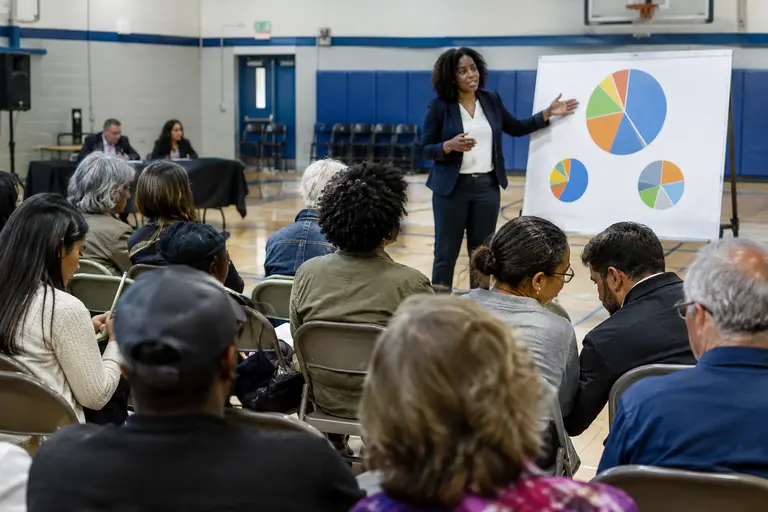
Documents To Check Before Voting
A non-partisan review starts with records, not campaign slogans. Before November 3, 2026, residents can compare the ballot language with their local budget pages, recent millage notices, public hearing schedules, and agency board materials. The same habits apply in other cities facing revenue or service questions; CountyWatchers recently reviewed how residents followed a Jacksonville budget proposal through public records and civic feedback.
- Find the current adopted budget for your city and county.
- Check which departments rely most heavily on non-school property taxes.
- Look for written estimates for 2027 and 2028, not only one-year figures.
- Ask whether the estimate assumes service reductions, fee changes, reserves, or higher millage rates.
- Review meeting agendas for budget workshops, tax hearings, and agency presentations.
Questions For Local Officials
Good civic questions are specific. Residents can ask whether fire rescue staffing, sheriff or police staffing, road maintenance, library hours, park maintenance, code enforcement, transit service, emergency management, or capital projects have been modeled under the amendment. They can also ask whether the model assumes that taxable values continue rising, stay flat, or fall.
Another key question is timing. The exemption change reported by FOX 13 would begin in 2027 and rise again in 2028. That means any effect would arrive across budget cycles, not as a single meeting item. Residents should watch for early budget workshops because the major choices may appear before final tax hearings.
Tampa Bay Property Tax Cut Voter Checklist
What To Confirm Before November 3, 2026
The Tampa Bay Property Tax Cut choice is a local-service question as much as a tax question. A voter in Hillsborough County may face different service exposure than a voter in Pinellas County, and a resident inside a city may be affected differently than someone in an unincorporated area. The ballot measure is statewide, but the budget consequences would be worked out locally.
Before voting on November 3, 2026, confirm whether your address is inside a city, which county services you receive, which special districts appear on your tax bill, and whether your local agencies have published written estimates. Ask for clear tables showing expected revenue changes, service assumptions, staffing assumptions, and reserve use. The most useful public answers will name the agency, the fiscal year, the service area, and the dollar amount at stake.
For election purposes, the key civic step is to separate three questions: what the amendment text would do, what the statewide estimates suggest, and what your local government says it would have to adjust. That separation helps residents judge the proposal without relying on partisan framing or unsupported claims.