My first city council meeting was a shock. I thought my public comment would stay public. But it ended up in a police file. This is the reality of modern activism, where surveillance is constant.
The world for nonprofits and citizens has changed. It’s like a maze, where you can speak out but must be careful. The Brennan Center found Memphis Police and LAPD monitoring activists and meetings. It’s not a bad dream; it’s our reality.
Knowing the government watches your posts can make you quiet. The fear of being watched can silence important voices. You have the right to gather and speak out, but there are limits.
Online, your words are protected, but police might see threats where there are none. To stay safe, you must know the rules and have an ethics policy. It’s like your rights as an activist: you can speak out, but be careful what you say.
Local Lobbying and Gift Rules: Disclosure Thresholds and Who Files
Trying to understand local lobbying rules is like navigating a maze blindfolded. These rules vary widely and can confuse even the most experienced activists. For example, in some places, spending over $50 on a public official can lead to a gift ban. In others, just talking to them might make you a lobbyist.
These rules are not just about avoiding fines. They help keep your cause honest. When I started, I felt like I needed a forensic accountant for a simple meeting.
So, who needs to file these disclosures? Usually, groups that spend time or money on legislative actions must register. But, what counts as lobbying can be unclear. For instance, does retweeting a call to action count? It might not yet, but it’s smart to watch for changes.
To succeed, create an ethics policy that values openness. Here are some important steps:
- Register early: Don’t wait until the last minute to file your disclosures.
- Disclose often: Transparency is your best friend in maintaining public trust.
- Know the gift limits: For the love of sunshine laws, never hand a public official a bottle of wine without checking the rules first!
Being ignored by the city council is bad. But being in an ethics hearing that makes the local paper is worse.
Election Season Signs: Locations, Blackout Periods, and Permit Quirks
Election season brings a lot of signs everywhere. You might think your neighbor’s big sign is too much. But things get even crazier when the election gets closer. Before you join the sign fight, let’s look at the rules and ethics.
Local rules are like a puzzle. Signs can’t be too big, must be far from the curb, and only up during certain times. This “blackout period” starts 45 days before an election and ends 7 days after. It’s a bit confusing, but basically, signs are only allowed during these times.
Imagine a sign getting taken down because it was too close to a fire hydrant. It’s all about keeping the area looking nice and not overwhelming it with signs.
Permits can be tricky to understand. Some places need a permit for any sign on public land, while others don’t allow them at all. Even HOAs have rules, but state laws can override them.
To avoid trouble, it’s smart to know the rules. Download the permit PDF, mark important dates, and have a measuring tape ready. This way, your “Vote for Change” sign won’t get a fine.
| City | Permit Required | Blackout Period | Max Sign Size |
|---|---|---|---|
| Springfield | Yes | 45 days before to 7 days after | 6 sq ft |
| Rivertown | No | 30 days before to 5 days after | 4 sq ft |
| Hillcrest | Yes | 60 days before to 10 days after | 8 sq ft |
Canvassing and Solicitation Ordinances: Time, Place, Manner, and ID Badges
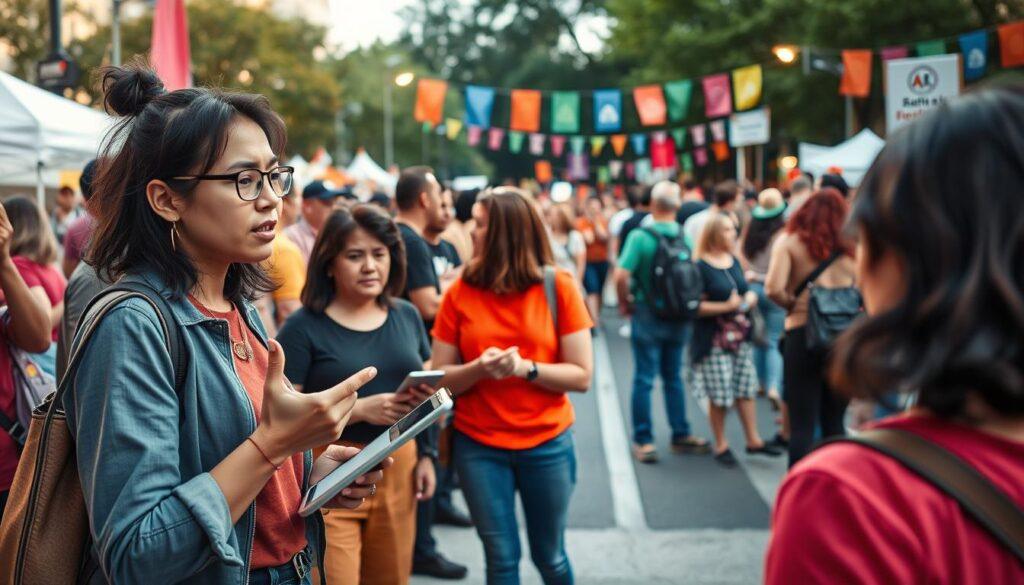
Canvassing is key to democracy, but it’s like walking through a legal minefield. When you go out to talk to people, remember that local rules apply. These rules set the time, place, and manner for canvassing, helping you avoid legal trouble.
Most places have rules about when you can canvass. You can’t start before 9 a.m. or go after 8 p.m. It’s important to follow these times. Also, don’t go to places with “No Soliciting” signs. Going there can upset people and might lead to trouble.
Being polite on the sidewalk is also important. Blocking the way can upset people and the police. With everyone watching, keeping volunteers safe is very important.
Law enforcement watching you can be scary. Studies show police have spied on activist groups. In places like Memphis and Minneapolis, this makes volunteers nervous. Your clipboard might seem like a threat to them.
Using ID badges can help show you’re serious about helping. But, it can also lead to people being judged unfairly. It’s a tricky situation.
Here are some tips for canvassing safely:
- Know the local solicitation ordinance: Learn the rules to avoid trouble.
- Carry a copy: Having the ordinance with you can help avoid misunderstandings.
- Stay friendly: If someone tells you to leave, do so nicely. You’re building trust.
- Be aware of your surroundings: Keep an eye out for your safety and others.
The biggest danger isn’t a door slammed in your face. It’s the chance of being misunderstood and getting unwanted attention. So, be ready, know the rules, and speak up safely.

Data Privacy: Consent, Storage, Retention, and Breach Plan
Data privacy is more than just a tech term; it’s key to responsible activism. When you collect names, addresses, and opinions at rallies, you’re like a mini spy agency. You need a clear plan for consent, secure storage, a data retention policy, and a breach response plan.
The American Federation of Teachers (AFT) says student privacy and safety are top priorities. Their guidelines can help activists. It’s vital to have a plan ready for privacy breaches or scams, just like schools do.
Also, check if third-party tools follow privacy rules. The news about social media monitoring companies shows we must be careful. These tools can reveal a lot about our online lives, like Dataminr’s biased searches.
You must protect your community’s data by encrypting it, limiting access, and deleting it when needed. If a breach happens, don’t hide it like Facebook. Instead, tell those affected, offer help, and have a lawyer ready. In today’s world, keeping data private is a bold move.
Accessibility: Closed Captions, Interpreters, Alt Text, and ADA Event Setup
Accessibility is more than a checkbox; it’s a promise of inclusion. Local activists must make sure every event is accessible. This includes having closed captions, which are key for clear communication.
If your rally stage is hard to reach, you’re excluding wheelchair users. This sends a bad message. An ethics policy that ignores accessibility is like a protest chant without rhythm. It might be loud, but it won’t be heard.
Here are some key things to think about for your events:
| Accessibility Feature | Description | Importance |
|---|---|---|
| Closed Captions | Text representation of spoken content in videos. | Legal requirement; aids comprehension for all. |
| Sign Language Interpreters | Professionals who translate spoken language into sign language. | Ensures inclusivity for the deaf community. |
| Alt Text | Descriptive text for images on social media and websites. | Improves accessibility for visually impaired individuals. |
| ADA Compliance | Adhering to the Americans with Disabilities Act standards. | Legal compliance and ethical responsibility. |
Also, think about sensory and cognitive access. Use plain language and offer assistive listening devices. Avoid color schemes that are hard for the colorblind to see. By doing this, you’re not just following rules; you’re promoting fairness and equity.
By prioritizing accessibility, your events become places where everyone feels valued. It’s time to make sure every voice is heard.
Volunteer Protections: Insurance, Waivers, Incident Reports, and Hotline
Grassroots movements rely on volunteers, and their safety is key. Ensuring volunteers are safe is a must for any organization. A simple accident could lead to a lawsuit, harming your group.
Insurance is a top priority. General liability and directors and officers insurance are essential. It shows volunteers you value their work and protect them.
Waivers are also important. They should be clear and not scary. A simple risk acknowledgment can protect both your group and volunteers.
Incident reports are vital. If a volunteer faces harassment, you need a solid plan. A well-documented response plan is key, inspired by the AFT’s approach. Training your team and having a hotline or email for reports is essential.
A hotline is important because activists often self-censor. It helps handle reports of police intimidation, making volunteers feel safe. This builds a culture of care and accountability.
In summary, protecting volunteers is more than just legal paperwork. It’s about creating a strong culture of care. This ensures your movement is strong and safe for everyone involved.
| Protection Type | Description | Importance |
|---|---|---|
| Insurance | General liability and D&O coverage | Protects against lawsuits and liabilities |
| Waivers | Clear acknowledgment of risks | Reduces legal exposure |
| Incident Reports | Documentation of any issues | Creates a record for accountability |
| Hotline | Dedicated line for reporting problems | Encourages open communication |
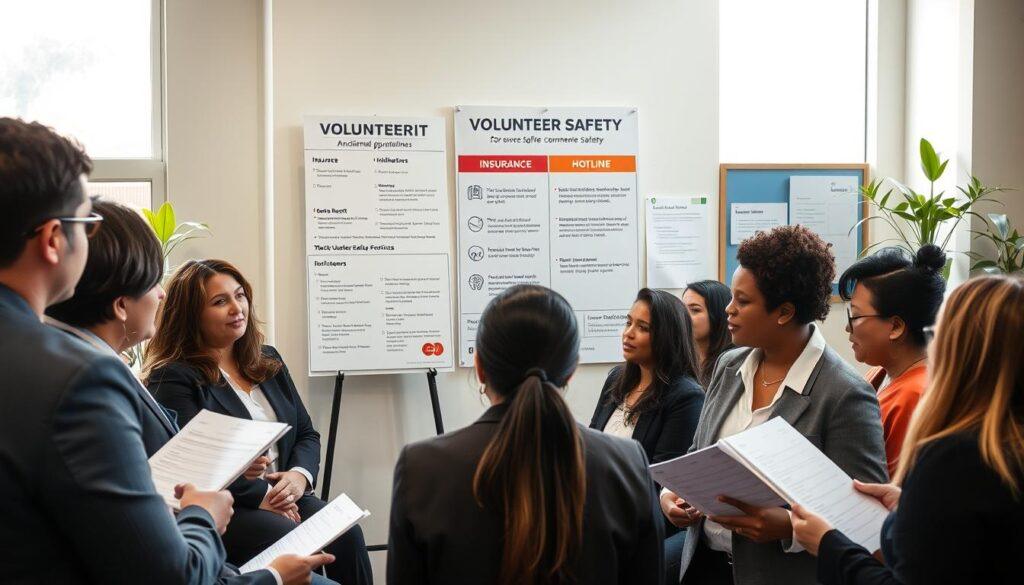
Photo and Child Safety: Consent Forms and Takedown Policy
It’s wonderful to capture a child’s moment of activism. But, it’s also a big responsibility. That cute photo of a toddler with a “Tax the Rich” sign might go viral. Or, it could end up in a police database because of a mistake.
When it comes to photo and child safety, we must be careful. Consent forms are not just for school trips. They’re needed when taking photos at rallies too. For kids, a parent or guardian must give consent, and it can be taken back.
A takedown policy is also key. It’s a way for anyone to ask for their image to be removed, without any hassle. The AFT reminds us that once an image is online, it can be found and used in ways we can’t control.
The Brennan Center found that social media tools can’t tell satire from threats. A child’s protest sign could be misinterpreted. Your ethics policy should treat every photo as a risk and every child as precious.
Before sharing photos, think: Did we get consent? Can we remove the image in 24 hours? If not, it’s better to not share.
Vendor Contracts: Deliverables, IP, and Cancellation Terms
When dealing with vendor contracts, clarity is your best friend. Whether it’s a printer for flyers or a consultant for lobbying, the fine print can be tricky. Local activists need to make sure everything is clear.
Intellectual property is key. If a designer makes your logo, do you own it or just license it? This can affect your campaign a lot.
Cancellation terms are also important. The pandemic showed us how vital these clauses are. A good contract protects you from unexpected changes. You don’t want to pay for a canceled event and legal fees too.
With lobbying rules, contracts with advocacy consultants can lead to disclosure. You want vendors who share your values. No hiring the print shop that works for the opposition.
A smart contract should have a confidentiality clause. This keeps your strategy safe. I always suggest getting a lawyer to review contracts. It’s worth it for peace of mind.
Quick Reference Cards and Contacts for Legal Help
A quick reference card is your ally in activism. It’s vital when dealing with code enforcement or volunteer safety issues. You need something quick and to the point, not a thick legal book.
On one side, write down important details. Note deadlines for permits, lobbying rules, and data privacy steps like consent and encryption. Also, include volunteer safety hotline numbers.
On the other side, list contacts. Add your local ACLU chapter, city ethics commission, and a reliable attorney. Don’t forget the state’s open government hotline. This card won’t make you a legal expert, but it helps you know when to seek help.
Studies show that not knowing the law can lead to big problems. Share this card at all meetings. Keep it updated as laws change. Remember, the First Amendment is your strength, but a good lawyer is your protection.