Gardner Edgerton Budget Cuts moved from possibility to adopted local policy after the Gardner-Edgerton USD 231 School Board failed to approve a revenue-neutral rate override on September 14, 2026, then met again on September 16, 2026, to approve a revised 2026-27 budget. According to the Johnson County Post, the failed 3-to-4 vote prevented the board from adopting the original proposed budget and led to $1.9 million in operating-cost cuts before a September 20 state budget deadline. For families, staff, and taxpayers, the key civic issue is not only the size of the reduction, but how residents can follow the board’s next steps through public records, meeting materials, and clear district communication.
What Gardner Edgerton Budget Cuts Changed
Gardner Edgerton Budget Cuts Timeline
The public sequence was compressed. The Johnson County Post reported that district budget planning for 2026-27 had begun as early as January 2026, with staff working under the assumption that the board would approve authority to exceed the revenue-neutral rate. When the board vote failed on September 14, the district had only two days before the September 16 special session, where the revised budget was approved ahead of the September 20 state deadline. That fast turnaround is why residents should pay close attention to the records tied to both meetings, including any agenda materials, public notices, budget documents, and minutes made available by the district.
The Gardner Edgerton Budget Cuts were not described in the available reporting as reductions to employee contracts or already agreed-upon pay for the school year. The Johnson County Post reported that those pay commitments would not be cut under the revised budget. That distinction matters for employees and families trying to separate confirmed budget decisions from rumors about possible effects. It also shows why public budget language should be precise: a cut to operating costs can affect district planning without automatically meaning every category is reduced in the same way.
Operating Costs And Debt Revenue
According to the Johnson County Post, the revised budget required $1.9 million in operating-cost cuts. The same report said the district would also forgo $1.1 million in revenue for its Bond and Interest Fund, which services long-term debt, including a $100 million bond approved in 2025. Residents can read the local report on the board action through the Johnson County Post budget coverage.
Those are separate financial concerns. Operating costs relate to the district’s day-to-day budget choices. Bond and Interest Fund revenue relates to debt service. The available reporting does not identify, in detail, which programs, departments, purchases, or school-level expenses will absorb the full $1.9 million reduction. Until the district posts or explains those specifics, residents should avoid assuming that one particular classroom, activity, building, or staff category has been affected unless the district says so in an official record or public meeting.
How The Revenue-Neutral Vote Shaped The Budget
What The Board Vote Did
The Johnson County Post reported that the September 14 vote to exceed the revenue-neutral rate failed 3-to-4. The report also said the board had six members at the time because one seat was vacant, and four votes were needed for approval. That procedural detail mattered because three votes in favor were not enough to pass the measure. Once the measure failed, the original proposed budget could not be adopted in the form district staff had prepared.
For residents, the revenue-neutral rate process can feel technical, but the civic effect was direct: the school board’s vote determined how much property tax revenue the district could collect for the 2026-27 budget. The Johnson County Post reported that some board members discussed taxpayer accountability during the process. The report quoted board member Lana Sutton as noting that 39% of students in USD 231 qualify for free or reduced-price meals, a figure raised in the context of financial strain on families.
Why The Mill Discussion Matters
The same reporting said the measure to exceed revenue neutral would have saved taxpayers just over 4 mills in the property tax rate compared with what would be required under inflation and growth. Because mill rates, assessed valuation, revenue-neutral notices, and district budget authority interact in ways that can be difficult to follow, residents deserve plain explanations from every public body using these tools. A household should not need technical budget training to understand what a vote means for school services, taxes, and long-term obligations.
That is where civic engagement becomes practical. Residents can ask the district to show the pre-vote budget, the revised budget, the line items reduced, the effect on the Bond and Interest Fund, and the assumptions used before and after the vote. Those requests are not partisan. They are basic steps in local oversight, and they help the public understand whether future decisions will require service changes, reserve use, deferred purchases, or other budget adjustments.
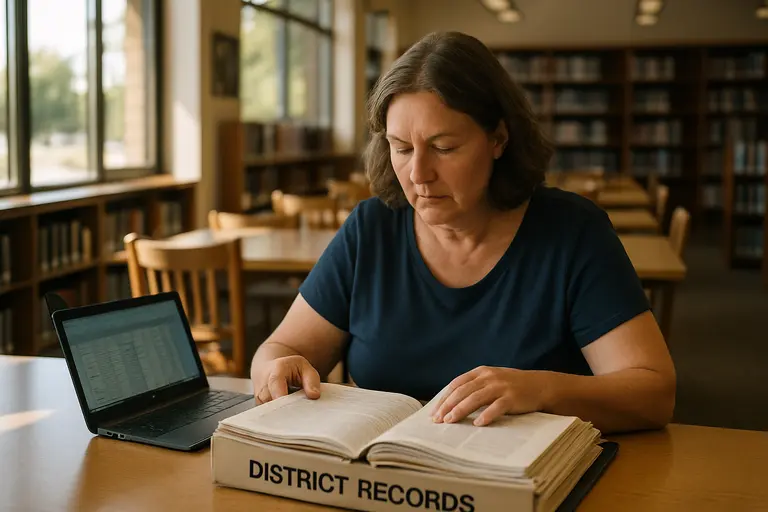
What Residents Can Track In District Records
Questions For Public Meetings
Residents who want to respond constructively can focus on the documents and meetings where decisions are made. The most useful questions are specific, answerable, and tied to public records. They also create a record that helps families and taxpayers compare district statements over time.
- Which exact budget lines were reduced to reach $1.9 million in operating-cost cuts?
- Will any reductions affect classroom materials, transportation, maintenance, technology, activities, or building-level budgets?
- How will the district manage the $1.1 million not collected for the Bond and Interest Fund?
- Will the board publish a side-by-side comparison of the original proposed budget and the revised adopted budget?
- When will the board review the effect of the revised budget during the 2026-27 school year?
These questions are fair to ask because the budget was reworked quickly after a failed vote. They also help prevent confusion. If a reduction does not affect a particular program, the district can say so. If it does, families deserve to hear that through official communication rather than through speculation.
How Civic Groups Can Help Residents Follow Up
Community organizations, parent groups, neighborhood associations, and local civic forums can help residents read agendas, compare budget versions, and track meeting dates without turning the issue into a partisan fight. Residents interested in how these civic organizations foster public participation can also explore the Houston LWS Forum, as it serves as a related site in the same network, offering insights on engagement while relying on Gardner-Edgerton USD 231 records and credible local reporting for facts about this budget decision.
The strongest public engagement happens before votes, but follow-up matters after adoption too. The board’s September 16 action settled the budget deadline problem, according to the Johnson County Post’s account, but it did not answer every public question about implementation. Residents can keep the discussion grounded by asking for posted records, timelines, and plain-language explanations of any service effects.
What Gardner Edgerton Budget Cuts Mean For Residents
The immediate civic takeaway is that a single failed tax vote changed the district’s adopted 2026-27 budget within days. The available reporting confirms the failed September 14 vote, the September 16 special session, the $1.9 million in operating-cost cuts, the $1.1 million in Bond and Interest Fund revenue the district will not collect, and the district’s statement that employee contracts and agreed-upon pay will not be cut. It does not provide a full public map of which specific programs or school-level budgets will absorb the reductions.
The civic lesson from Gardner Edgerton Budget Cuts is that school finance decisions need clear public tracking from proposal to vote to implementation. Residents should ask for the revised budget documents, watch for future board agenda items tied to spending changes, and press for explanations that connect numbers to services. That is how a community moves from reacting to a budget vote toward understanding what changed, why it changed, and what the board will do next in public view.