SYVIC Registration opened on August 26, 2026, from a Las Vegas-based civic-technology initiative that says it is inviting Americans to share views about what is working in their lives, what is not, and what they would like government to do differently. According to SYVIC’s August 26 announcement distributed through GlobeNewswire, the first phase is focused on listening, collecting public submissions, and using AI-assisted review to identify areas of agreement, disagreement, and high-priority concern.
For Las Vegas residents, the local angle is direct: the initiative is headquartered in Las Vegas, Nevada, while the public sign-up is national. That means the city is serving as the home base for a civic-technology test that is not limited to city or county issues. The announcement describes the effort as exploratory, not as an official government program. Residents should treat it as a private civic-tech initiative unless SYVIC or a public agency later announces formal partnerships.
What SYVIC Registration Changed On August 26, 2026
Public Sign-Up Marked The Listening Phase
The August 26 launch opened public registration through SYVIC.ai, according to the announcement. SYVIC said this stage is Phase 1 and is centered on listening rather than presenting a policy platform. The stated approach is to begin with public participation, then allow that participation to shape what the initiative becomes.
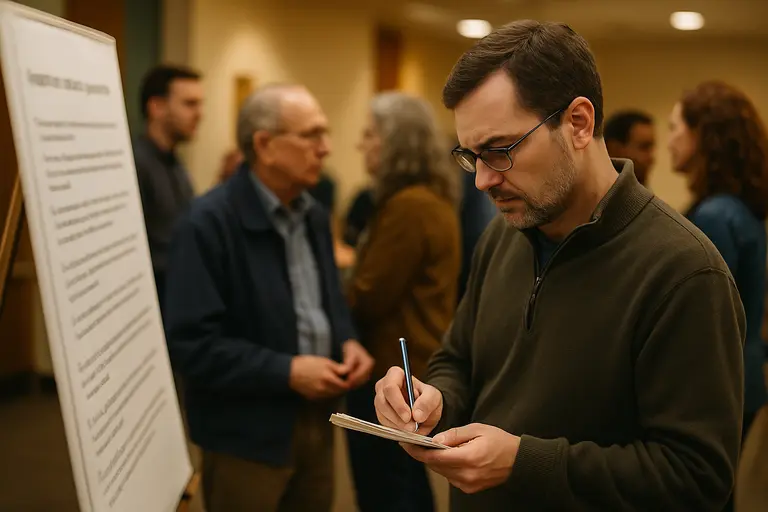
That sequence matters for community members who are used to civic meetings beginning with an agenda, a staff recommendation, or a proposed ordinance. SYVIC describes a different starting point: residents and other participants submit views first, and the system later examines patterns in those submissions. The announcement says the submissions will be analyzed to show where people agree, where they disagree, and which concerns rise as priorities.
How SYVIC Registration Works For Participants
SYVIC Registration is described as open to Americans, not just Nevada residents. The announcement says registered users are invited to describe what is working in their lives, what is not, and what they would like government to do differently. It also says a later phase is expected to allow registered participants to have direct conversations with the SYVIC system.
The announcement does not provide a participant target, funding total, audit schedule, government partner list, or launch date for the later direct-conversation phase. Because those details were not included in the cited release, residents should avoid assuming the scale, cost, or formal public-sector role of the project. A useful next civic step is to read any future SYVIC notices for clearer information on data handling, review methods, and whether public agencies receive summaries or reports.
How The Las Vegas-Based Civic-Tech Effort Is Framed
Not A Party, Campaign, Or Candidate
SYVIC’s announcement states that the initiative is not a political party, campaign, or candidate. It also says SYVIC will not endorse candidates, tell people how to vote, or present a predetermined platform. That framing is relevant for local civic readers because public trust often depends on whether a participation tool is collecting input for a campaign purpose, a government purpose, or an independent civic purpose.
Based on the announcement, SYVIC is presenting itself as the third category: an independent effort to test whether AI can listen to large numbers of citizens, organize public input, and surface concerns to governments. The initiative’s stated goal is “Work Less. Live Better.” The announcement names early public supporters Alan Levy, founder of Eavesdrop, and Deon Schwabsky, founder of NewsGPT.
Why Las Vegas Residents Should Read The Scope Carefully
For Las Vegas residents, SYVIC Registration may feel local because the initiative is based in the city. The participation pool, however, is national. That distinction affects how residents should interpret any future findings. A national set of submissions may identify broad public concerns, but it would not automatically represent Clark County, the City of Las Vegas, nearby municipalities, or any neighborhood unless SYVIC later publishes location-specific methods and participation counts.
Local civic use depends on clear boundaries. If SYVIC later reports that a concern is highly ranked, residents should ask whether the ranking reflects national responses, Nevada responses, Clark County responses, Las Vegas responses, or another grouping. They should also ask whether the sample is self-selected, whether duplicate or coordinated submissions are screened, and whether participants can see how their input is categorized.
Residents comparing civic discussion models can also consider participating in local forums within this network. One such platform is the Houston LWS Forum, which highlights the importance of maintaining local context distinct from the broader initiative.
Questions Residents Can Ask Before Sharing Input
Questions SYVIC Registration Raises About AI
The SYVIC announcement acknowledges that using AI in civic and governmental settings raises issues of fairness, accountability, auditing, privacy, and responsibility when mistakes occur. Those concerns are not side issues. They are central to whether an AI-assisted civic tool can earn public confidence, especially if summaries of resident input are later shared with officials or used to describe public priorities.
Before sharing sensitive information, residents can look for plain answers to practical questions. The announcement says the initiative will collect and analyze submissions, but it does not lay out every technical and governance detail. Community members can watch for later statements that explain how submissions are stored, whether personal information is separated from comments, how long data is retained, who can access the data, and how participants may request changes or removal.
- What information is required to register, and what information is optional?
- Will public input be summarized by geography, issue, or demographic category?
- How will SYVIC test whether the AI system is misreading or over-weighting certain views?
- Will participants be able to review how their comments are classified?
- Will any reports to governments identify limits in the data?
These questions are not arguments for or against the project. They are the same kinds of accountability questions residents should ask of any civic input system, whether it uses paper forms, public meetings, online surveys, or AI-assisted tools.
What The Las Vegas SYVIC Initiative Means For Residents
A Local Base For A National Civic Experiment
The main civic value of SYVIC Registration will depend on what happens after sign-up: how many people take part, how their input is reviewed, what safeguards are published, and whether any findings are shared in a way residents can understand and question. The August 26 announcement supports only a limited set of confirmed facts: registration opened, the initiative is based in Las Vegas, participation is national, the first phase is listening, and SYVIC says it is not a party, campaign, or candidate.
For local residents, the next step is not to treat the project as a substitute for city council meetings, county commission records, school board agendas, election office notices, or official public comment channels. Those formal channels remain the places where public bodies receive testimony and make binding decisions. SYVIC’s stated effort is different: to explore whether AI can organize large-scale civic input and identify concerns that could be surfaced to governments.
That distinction helps keep expectations clear. A resident who registers with SYVIC is participating in a civic-tech initiative, not casting a vote, filing an official public comment with a local agency, or joining a campaign. If SYVIC later publishes reports, local readers should look for dates, participation counts, methods, privacy statements, audit findings, and whether results are broken down in ways that accurately reflect the communities being discussed.
Las Vegas has become the home base for this AI-driven civic engagement test, but the public value will rest on transparency, careful reporting, and clear limits. Residents can follow the project, ask direct questions about safeguards, and continue using official local channels for decisions that affect budgets, public services, schools, roads, and representation.