Imagine a typical political campaign. Got it? Good. Now, forget that image. The old rally-and-yard-sign way is as useful as a Blockbuster card.
We’re not shouting anymore. We’re focused on precision communication. Think of it as a class in behavioral science, with data as the lesson and election day as the test.
To make a difference in the noise, you need to connect deeply. This is the art of winning elections through persuasion.
Forget about random efforts. This guide is about creating a strong signal that turns people into voters. We’ll explore the tools, from data analysis to personal voter contact, that make a difference. It’s time to connect and convert.
Voter File Analysis and Targeting
The ‘digital shoebox’ of spreadsheets is a graveyard for good outreach. Moving to a dynamic voter database is essential for a professional strategy. It’s like switching from a blurry map to a clear satellite image of the electoral battlefield.
What fills this database? It starts with names, addresses, and phone numbers. But that’s just the beginning. The real magic is in the layers you add. A good file organizes voters by more than just party affiliation.
- Voting Propensity: How likely are they to vote at all?
- Issue Salience: What keeps them up at night? Education? Taxes?
- Demographic & Life Stage: Are they a new parent, a retiree, a first-time voter?
This segmentation is your targeting superpower. It lets you tailor messages that actually resonate, instead of blasting the same generic plea to everyone.
The real analytical voodoo—a bit creepy if you think about it too much—happens in cross-referencing. You overlay consumer data, neighborhood trends, and decades of voting history. Did someone just buy a minivan? Their priorities might be shifting. This builds psychographic profiles, predicting not just if someone will vote, but why they might vote your way.
The ultimate goal? To identify your three key universes. Your base needs activation and reminders. The persuadables need a compelling, issue-specific nudge. Then there’s the often-ignored goldmine: low-propensity voters. These are the folks campaigns traditionally write off. But as some savvy nonprofits have shown, they are frequently the most impactful group to mobilize with personalized contact.
This entire data operation exists for one reason: to make every other tactic, including canvassing, brutally efficient. Why knock on every door when you know which 100 doors matter most? Your voter file transforms canvassing from a scattershot effort into a sniper’s calculated shot. It tells you not just where to walk, but what to say when you get there.
Door-to-Door Canvassing Excellence
Forget the algorithm; the most sophisticated voter engagement tool is a pair of comfy shoes and a smile. In today’s digital world, knocking on doors is a return to real politics. It’s like a campaign house call.
We’ve all met the bad canvasser. They’re like telemarketers at your door. True excellence is different. It’s about starting real conversations, not just reciting scripts.
- The Listener: They listen 70% of the time, not talk.
- The Neighborhood Therapist: They know what’s bothering people, from potholes to school funding.
- The Data-Informed Neighbor: They use voter data to make their pitch personal. They might talk about a new community center or property tax relief.
This shift from talking to listening is key. You’re starting a conversation, not giving a speech. It’s about showing you care by asking the right questions.
When data meets human touch, magic happens. Knowing a voter’s history or concerns shows you’re relevant. It’s not about manipulating them, but showing you understand their issues.
This work is about building civic relationships, not just transactions. You’re not selling something; you’re inviting people into a process. The best conversations make voters feel heard and valued.
In the end, the doorstep is democracy’s frontline. It’s messy and unpredictable, but deeply human. And in a world seeking real connections, that’s your campaign’s biggest strength.
Phone Banking Best Practices
The phone bank is like a vinyl record—it’s old but has a special charm. It’s a classic tool for reaching voters. Done right, it’s personal and powerful. Done wrong, it’s annoying.
It’s not about sending out generic messages. That’s just noise. Good phone banking is precise. It starts with analyzing voter data to target the right people.
Are we reminding supporters or talking to undecided voters? The message must match the voter. This makes each call meaningful.
The Script as a Trellis, Not a Cage
Volunteers need a script, but it should guide, not control. Think of it as a trellis for a conversation to grow. It has key points and data-backed answers.
The best calls happen when volunteers listen and adapt. A little authenticity goes a long way. Training is key to making this happen.
Building a Brigade of Persuaders
Just giving someone a script and a list won’t work. Quality contact needs people investment. Training focuses on three main areas:
- Role-Playing Objections: Practice makes perfect. Volunteers should drill responses to common objections.
- Active Listening: Teach them to listen for what’s not said. A pause or a sigh can guide the conversation.
- Tone and Empathy: A friendly, confident tone builds rapport instantly. It makes the call a conversation, not a sales pitch.
The Tech Behind the Talk
Technology can help or hinder phone banking. The choice is between predictive dialers and manual dials with voter profiles.
Predictive dialers are great for volume. They quickly connect calls to volunteers. But for persuasion, they often fall short.
The best tech is a manual system. Volunteers see the voter’s name and data before calling. This makes the call personal and respectful.
| Technology Type | Best Use Case | Key Advantage | Major Drawback |
|---|---|---|---|
| Predictive Dialer | High-volume voter identification (ID) and Get-Out-The-Vote (GOTV) reminders to known supporters. | Maximizes volunteer efficiency and contact rates; handles call logistics automatically. | Impersonal; often leads to “call lag” where the volunteer is disoriented; poor for nuanced conversations. |
| Manual Dial with Voter Profile | Persuasion calls to undecided or low-propensity voters; complex issue advocacy. | Enables personalized, informed conversations based on voter data; builds stronger rapport. | Slower contact rate; requires more training and a robust data integration platform. |
| Peer-to-Peer (P2P) Texting Platform | Rapid alert dissemination, event invites, and simple call-to-action requests to a mobile-engaged list. | High open and response rates; feels more personal than mass email; allows for quick back-and-forth. | Limited message depth; best for mobilization, not deep persuasion; can be expensive at scale. |
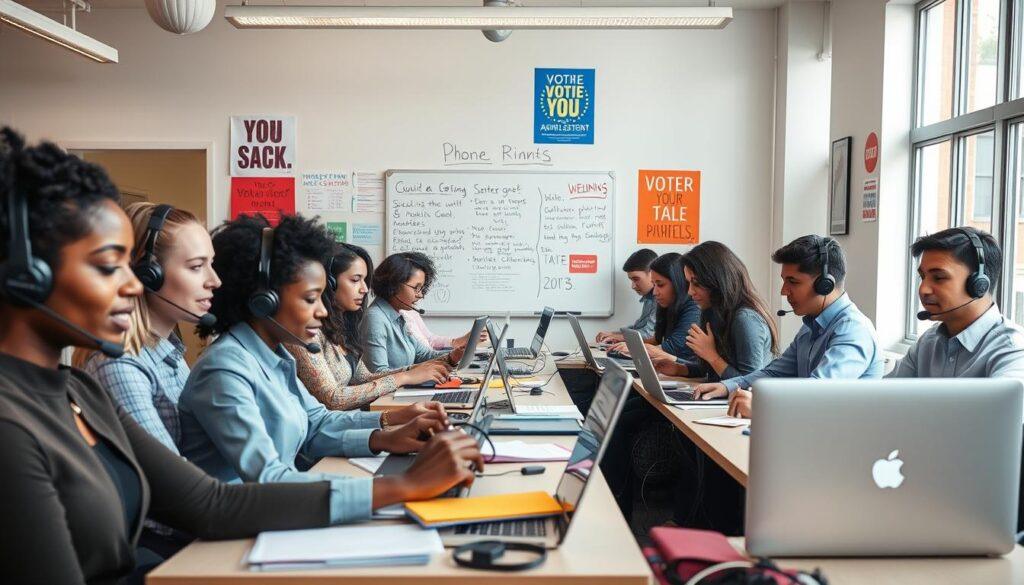
The goal is to make voters feel heard, not bothered. When a volunteer knows a voter’s concerns, it shows they care. This is the magic of phone banking. It uses data, trains for empathy, and technology as a tool, not a barrier. In today’s crowded media, this connection is rare and powerful.
Digital Voter Contact Methods
The world of voter outreach has changed. It’s no longer just about knocking on doors. Today, it’s all about using digital tools. If you’re only posting flyers online, you’re falling behind.
Modern digital canvassing is complex. It needs precision, personality, and a focus on getting people to act.
Your campaign’s digital heart should be an Online Action Center. It’s like a 24/7 field office. Here, voters can register, check their ballot status, and find polling places. It turns casual interest into action.
Then, there’s paid media. We’re talking about targeted ads, not billboards. These ads follow users with great precision. You can reach specific groups based on their interests and location. It’s canvassing for the digital age.
Email open rates are low. But SMS text programs have much higher rates. This is direct contact without the awkwardness of phone calls.
Social media is key for telling your story. Work with local influencers to make voting easier to understand. A TikTok video on mail-in ballots can reach thousands. Instagram Stories can make it feel personal. For communities that speak different languages, WhatsApp groups are essential.
Your goal is more than just getting likes. It’s about getting people to take action. Every registration, vote-by-mail request, and pledge is a success. These actions grow your voter base.
Here’s a quick breakdown of core digital channels:
| Platform | Core Strength | Best For | Conversion Goal |
|---|---|---|---|
| Online Action Center | Centralized Information Hub | All Voters | Voter Registration, Ballot Lookup |
| Micro-Targeted Ads | Precision Audience Reach | Persuadable & Base Voters | Website Traffic, Event Sign-Ups |
| SMS/Text Messaging | High Open & Response Rates | Confirmed Supporters | GOTV Reminders, Volunteer Mobilization |
| Social Media (TikTok, Instagram) | Organic Engagement & Storytelling | Young & New Voters | Education, Pledge Drives |
This isn’t a side project. It’s a fundamental shift in how we connect. Effective digital canvassing meets people where they already are. It combines data with humanity. Are you ready to log in?
Community Event Outreach
In today’s world, trust grows at a table by the corn dog stand, not on a stage. This approach turns politics into community service. It blends voter engagement into our daily lives, like at back-to-school events or farmers’ markets.
Instead of a “meet the candidate” night, join in on community celebrations. Wellpoint Care Network did this with Black Leaders Organizing for Change. They made civic participation a part of their Back-to-School event. This built trust and credibility.
At these events, your goal is to offer a service, not to sell anything. Set up a welcoming table. Give out voter registration forms. Explain the ballot in simple terms. Offer “I Voted” stickers as a thank you. You’re providing value right away, which helps overcome cynicism.
Who you have at the table is key. They should be from the community or know its issues well. They’re not just there to promote; they’re neighbors. This approach builds trust and can lead to more votes in the future.
Think about the end goal. Using mobile polling stations at community events can be very effective. Imagine someone registering to vote at your table and then voting at the same event weeks later. It makes voting easy and convenient.
| Tactic | Traditional Candidate Night | Embedded Community Outreach |
|---|---|---|
| Setting | Sterile, formal venue | Lively, pre-existing community event |
| Voter Mindset | Obligation, suspicion | Celebration, openness |
| Primary Offer | A speech (asking for support) | A service (providing value) |
| Trust Building | Slow, if at all | Rapid, through shared context |
This approach is not just for one election. It’s about becoming a permanent part of civic empowerment. You’re not just a campaign; you’re a resource. By showing up where life happens, you become a partner, not just a politician. This is how you boost voter turnout and engagement in the long run.
The folding table is more powerful than a lectern. It’s where democracy finds a sweet treat and decides to stay.
Voter Registration Drives
Turning a voter registration table into a campaign asset is a mix of street theater and science. We’re not just filling out forms; we’re starting a journey of voter contact. Our goal is to make it an experience, not just paperwork.
Forget the lonely volunteer stuck behind forms. Success depends on a complete change in vibe. You must be impossible to ignore.
- Be Proactive, Not Passive: Staff must engage. Don’t wait for people to come to you—make eye contact, smile, and ask a question. This is active voter contact, not just a booth.
- Signage as a Billboard: Use large, bold, and clear signs. If someone can’t read your purpose from 20 feet away, you’ve lost them. Think of it as a pop-up experience, not a move.
- The Snack Factor: Never underestimate the power of freebies. Snacks are great for social interaction. A bowl of candy or chips can make people want to stay and chat.
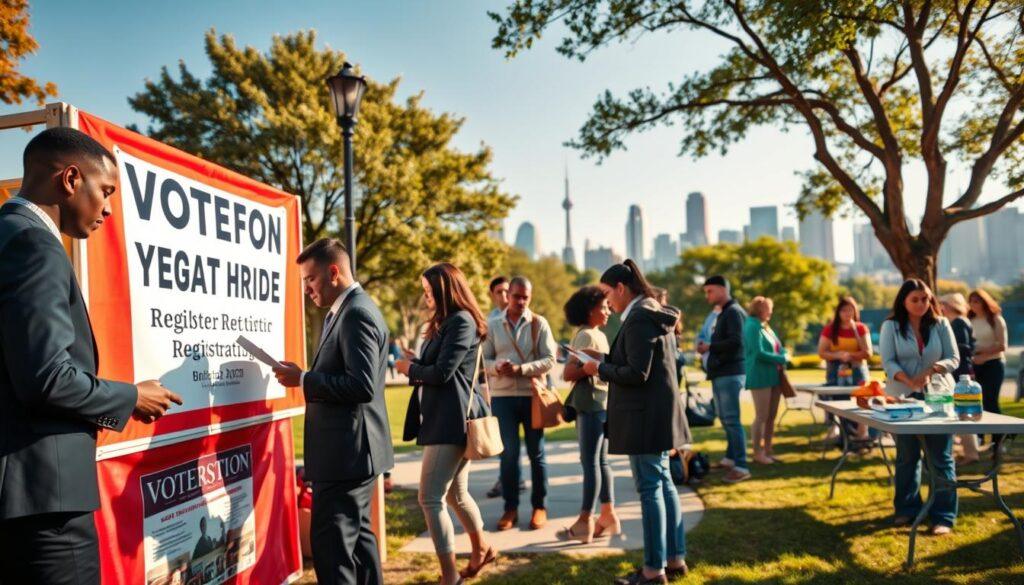
The psychological upgrade is key. Ditch the usual “Are you registered to vote?” question. It’s too easy to say “yes” and leave. Instead, ask, “Is your voter registration up to date at your current address?” This assumes action and catches those who move without updating their info.
Take it further by using a “Pledge to Vote” card. This isn’t just a signature. It’s a commitment. Making a written promise significantly increases the chance of voting on Election Day.
Strategy is about being in the right place at the right time. National Voter Registration Day is a great start for volume. But real growth comes from targeting places where people naturally gather. Set up at college orientations, community festivals, library entrances, and—most powerfully—naturalization ceremonies. You’re meeting voters where their civic journey is already on their mind.
This work is the foundation of campaign outreach. A positive, empowering registration experience doesn’t just add a name to the list. It builds a connection, setting the stage for every future interaction. A well-executed drive creates a wider, more engaged electorate from the ground up.
Absentee and Early Vote Programs
Think of Election Day as a frantic Black Friday sale. An Absentee and Early Vote (AEV) program is like the whole month of November, open all the time. It’s better to spread out your voting over weeks, not just one day.
The main goal is to bank votes early. Every vote cast before Election Day avoids long lines and bad weather. It also reduces the stress of your final push to get people to vote.
You need to educate and act. First, make the voting process clear. Do voters need a witness signature? Where can they drop off their ballots? Clear answers help more people vote.
Use every way to share clear voting guides. Send out direct mail, emails, and texts with easy steps. Local governments should help, but your campaign is key to getting the word out.
Then, you track who has voted and who hasn’t. This lets you focus on those who have already shown they want to vote. It’s like following up with customers who have added items to their cart.
This is high-efficiency canvassing. Your team isn’t starting from scratch. They’re helping those who are almost ready to vote.
Offering early voting options helps with Election Day worries. It’s a service to your supporters. This method turns a big challenge into a focused, data-driven effort. You’re not just chasing votes; you’re collecting them systematically.
Multilingual Outreach Strategies
Thinking of multilingual communities as just a translation task is like bringing a dictionary to a poetry slam. You’ll miss the whole point. Campaigns often spend money on translation and think they’re being inclusive. But, a beautifully typeset flyer in Mandarin might as well be a soggy napkin.
The real secret is trans-creation. Imagine your message as a meme. A good meme adapts, changes context, and adds local humor to spread. Your voter engagement materials need the same approach. It’s about tone, cultural nuance, and visuals that really connect, not just correct grammar.
Where do these communities hang out? Not just on Twitter or Facebook. Effective outreach means being platform-native. If they’re on WeChat for news, WhatsApp for chats, or a local AM radio for updates, you need to be there too. Your presence must be real, not just an afterthought.
Who do people trust? It’s not usually politicians. Savvy nonprofits have shown that local leaders, respected business owners, or cultural association presidents are key. These voices can make your message credible, something no ad can buy. Working with them is essential for real voter engagement.
This partnership should be real, not just for show. Hire canvassers and phone bankers from the community. A familiar accent and shared cultural references can instantly build trust. It shows respect and a desire for real talk, not just data.
So, what’s the goal? It’s to go beyond a single campaign message. A single story is weak. True, effective voter engagement is inclusive by design. It recognizes the diverse voices and experiences of the American electorate. Your task is to harmonize with them, not make them all sing the same tune.
Measuring Outreach Effectiveness
If you’re not measuring, are you even campaigning? You’re just practicing politics as abstract art. Effectiveness lives in percentages. Start with your baseline: the voter contact rate. How many attempts become conversations?
The gold standard is measuring actual turnout impact. Nonprofit VOTE’s 2024 report showed a 9-point boost for voters contacted during services. To find your own number, match your contact lists against post-election voter files. This data wizardry, as highlighted in lessons from GOTV experiments, reveals what truly moved the needle. Was it the door hanger or the text?
Track your conversion rates along the way. Count completed registration forms, signed pledge cards, and requested absentee ballots. These are your leading indicators.
Also, listen. Use surveys to get feedback from volunteers and the voters you reached. Was the script natural? Was the event location a hassle? This qualitative intel isn’t a post-mortem. It’s the R&D for your next, smarter campaign. Your power to connect and convert rests on your will to analyze and adapt.