Countywide election issues are no longer background details for residents preparing to vote on November 3, 2026. They shape where people cast ballots, how early voting information is shared, whether enough poll workers are trained, and how clearly local offices explain rules before questions become barriers. With early voting already underway in parts of the country since September 18, 2026, according to the Associated Press, county election offices have been working under close public attention as voters ask practical questions about access, accuracy, security, and communication.
For community members, the civic takeaway is direct: the county election office is often the place where national election timelines become local instructions. The National Association of Counties says counties administer elections in 36 states, with responsibilities that include voter registration, polling places, and poll workers for more than 200 million eligible voters, more than 100,000 polling places, and about 630,000 poll workers each cycle through its 2026 election administration roundtable. That scale makes county-level decisions central to voter participation, even when the contests on the ballot receive most of the attention.
How Countywide Election Issues Affect Voters
Countywide Election Issues Start With Access
Countywide election issues begin with the basic question of access: can a voter find accurate information, reach a voting location, understand the ballot process, and correct a problem if one occurs? Those are not abstract administrative matters. They are the daily duties handled by county election administrators, county boards, clerks, registrars, and local election staff, depending on the state structure.
The Associated Press reported that early voting for the U.S. midterm elections began on Friday, September 18, 2026, and that election administrators said they were prepared while concerns continued over accuracy, security, and public messaging to voters as early voting began. For residents, public messaging is not a side issue. A voter who misses a registration update, goes to an outdated polling place, or misunderstands ballot return rules may lose the chance to participate or may need extra time to resolve the issue.
That is why local election communication should be judged by whether it answers common voter questions plainly. Residents should be able to find their registration status, voting options, voting dates, identification requirements where applicable, mail ballot deadlines, ballot drop-off rules, sample ballots, and contact information for official help. If those details are scattered or hard to find, participation can depend too much on a voter’s time, language access, transportation, or familiarity with government websites.
Staffing And Training Shape Election-Day Service
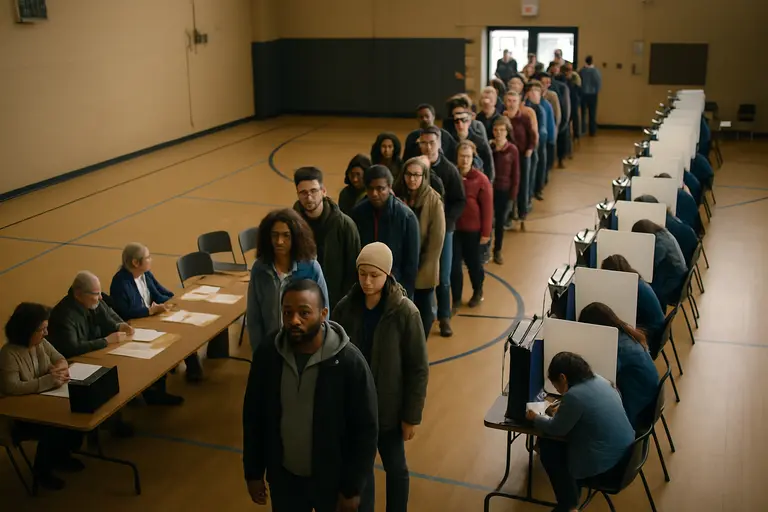
County offices depend on trained workers to operate polling places, process ballots, answer voter questions, and respond to equipment or check-in problems. NACo identifies election worker recruitment and training, cybersecurity, staffing, and sustainable infrastructure funding as essential issues for effective election administration in 2026. Those needs matter before polls open because a county cannot solve every staffing gap on Election Day.
Training affects how consistently voters are treated across polling places. A well-trained worker can direct voters to the correct line, explain provisional ballot procedures when allowed by local rules, and escalate equipment or registration questions to supervisors. A county that communicates worker recruitment needs early can give residents a way to support the process without treating elections as someone else’s responsibility.
Residents who want a stronger local process can look for official poll worker recruitment notices from their county election office. They can also attend public meetings where election budgets, voting sites, equipment contracts, staffing plans, or temporary election hires appear on agendas. The point is not to assume a problem exists. The point is to check whether the county has the people, training schedule, equipment support, and public information plan it says it needs.
What Residents Should Check Before Voting
Official Sources Should Come First
Before relying on forwarded messages, social posts, or campaign material, voters should start with their county election office or state election office. Those public offices are responsible for issuing official instructions. Community groups, neighborhood associations, libraries, schools, and local civic networks can help distribute information, but they should point residents back to the official source for deadlines and eligibility questions.
Residents can also compare how clearly their county explains different voting methods. If early voting, mail voting, Election Day voting, vote centers, or ballot drop boxes are available in a jurisdiction, the official county site should state where, when, and how each option works. If rules differ by county or state, the county election page should make that clear without assuming voters already know the legal terms.
For civic readers who track related local governance discussions across communities, the Houston LWS Forum provides insights into how these issues unfold in similar networks. The core election step remains local: verify voting details with the government office that administers elections in your county.
Questions For County Election Offices
Residents do not need to be election specialists to ask useful questions. A strong county process should make answers available before residents need them. The most practical questions concern timing, access, staffing, and correction procedures.
- Where does the county publish official voting dates, locations, hours, and ballot return rules?
- How can voters confirm registration status and correct outdated information before deadlines?
- What is the county’s plan for recruiting and training poll workers before November 3, 2026?
- Where are public notices, board agendas, or meeting materials posted for election-related decisions?
- How does the county explain mail ballot errors, signature issues, provisional ballots, or other correction steps where permitted by law?
These questions are non-partisan because they focus on administration, not outcomes. They help voters see whether the county has published the information needed for broad participation. They also help local journalists, civic groups, and neighborhood leaders identify gaps that can be raised through official channels before voting deadlines pass.
Why County Capacity Matters For Turnout
Public Trust Depends On Clear Communication
Countywide election issues can influence turnout because public confidence is built through repeated, practical contact with local offices. If a resident can find an answer quickly, confirm it with an official source, and receive the same answer from trained staff, the process feels more reliable. If information changes without explanation or appears in several conflicting places, voters may delay action or avoid voting entirely.
AP’s report that administrators said they were prepared while concerns continued over accuracy, security, and messaging points to a civic communication task that belongs close to home. Counties can publish security explanations in plain language, describe chain-of-custody practices where public, share logic and accuracy testing notices when applicable, and explain how voters should report official election questions. The details depend on state law and county procedure, but the public need is consistent: people need to know where trustworthy information lives.
Funding is part of that trust. NACo’s 2026 election administration work identifies sustainable infrastructure funding as a major concern. For residents, infrastructure can mean ballot processing space, voting equipment, cybersecurity support, accessible polling places, staff capacity, and public-facing information systems. These items often appear in county budgets, procurement documents, and meeting agendas before voters experience them at the polls.
Local Oversight Works Best Before Deadlines
County oversight is most useful before a voting deadline arrives. If residents wait until November 3, 2026, to learn about polling locations or ballot rules, their options may be limited. If they check public information earlier, they can update registration, request needed accommodations where available, contact the election office, attend a county meeting, or help share official information with neighbors.
Community organizations can support participation by hosting non-partisan information sessions based only on official county materials. Schools, libraries, faith communities, chambers, senior centers, and neighborhood associations can post official links, remind residents of deadlines, and encourage voters to verify their own status. Those actions do not require taking a position on candidates or ballot measures. They strengthen participation by reducing confusion.
County election administrators also benefit when questions arrive early. A surge of calls on Election Day can overwhelm staff. Questions raised weeks ahead of time give offices a better chance to clarify instructions, update website language, or explain procedures at public meetings. Civic engagement works best as a two-way exchange: residents ask precise questions, and public offices provide clear answers that can be checked by anyone.
Countywide Election Issues Before November 3, 2026
Countywide election issues deserve steady local attention through November 3, 2026, because they affect whether eligible residents can act on their right to vote with accurate information and reasonable access. The most useful civic work now is practical: confirm registration, read official county instructions, note voting dates and locations, understand ballot return rules, and ask county offices where to find public meeting materials on election operations.
Residents should also remember that election administration is a public service carried out by local workers under state and county rules. Holding that system accountable means using official records, public meetings, and verified information rather than rumors. When counties publish clear instructions, recruit and train enough workers, fund secure systems, and answer questions in plain language, voter participation has a stronger foundation.
The work belongs to both government and the public. County officials must provide accurate, accessible information. Residents can read it, question it, share it responsibly, and participate early enough for the answers to matter. That is how local governance supports voter participation before ballots are cast.