On August 16, 2026, postcard writing parties moved from planning to practice in Crystal Lake as Indivisible Crystal Lake held a two-hour voter outreach session at the Crystal Lake Public Library. For residents who track civic participation at the neighborhood level, the event showed how a local meeting room, donated supplies, and volunteer time can be organized around voter contact before the November 3, 2026 election. The local question is practical: what happened, what was supported by the event listing, and what should residents know before treating any voter-contact tactic as proven in their own community?
What Happened At The August 16 Event
Time, Place, And Local Access
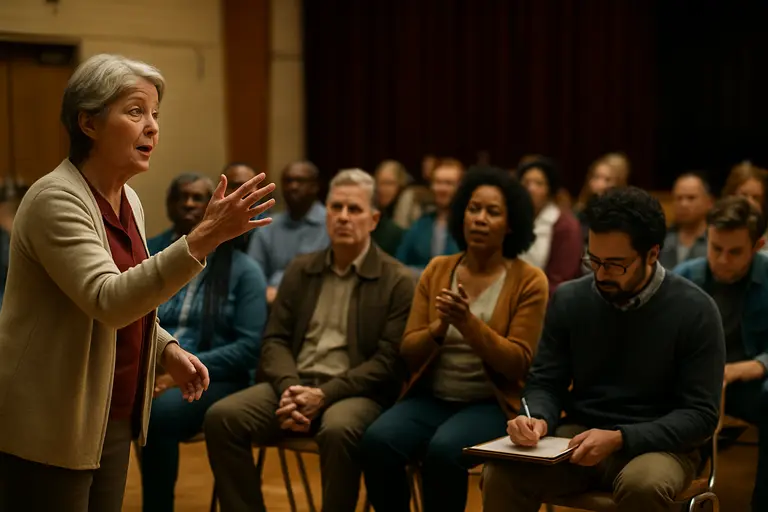
Indivisible Crystal Lake held its “GOTV — 2026 Postcard Writing Party” on Sunday, August 16, 2026, from 2:00 PM to 4:00 PM CDT at the Crystal Lake Public Library, 126 W Paddock St. The public event listing said the session was organized around postcards for six states with Senate and Congressional contests: Texas, Michigan, Wisconsin, Pennsylvania, Georgia, and North Carolina Mobilize event listing.
That location matters for local civic life because public libraries often serve as accessible meeting places for residents who may not already belong to a formal campaign office or organization. The research provided for this article does not identify the number of attendees, how many postcards were completed, or whether any Crystal Lake election officials were involved. Without those details, the supported finding is limited but still useful: a local volunteer group used a public library setting for organized voter-contact work on a specific date and time.
What Postcard Writing Parties Asked Volunteers To Bring
The same event listing said participants were asked to bring stamps or donate to help cover stamp costs. It also said postcards were pre-stacked in groups of 25, with supplies such as pens expected to be available. Those details help residents understand the scale of the activity: the setup was not described as open-ended letter writing, but as a structured session with cards already grouped for volunteers.
The event also included a community donation element. According to the listing, the organizers collected cooking oil, rice, beans, spaghetti, sauce, toilet paper, and cereal “for our immigrant friends.” This collection, though distinct from the voter outreach aspect, placed the event within a larger context of local community service. For more insights into similar community involvement efforts, Saint Joseph Detroit offers additional related information.
These postcard writing parties are best understood as civic organizing sessions rather than official election administration. The research supplied for this article does not say that the Crystal Lake Public Library, McHenry County election officials, or any public agency endorsed the messaging. Residents should separate volunteer advocacy activity from official election notices, ballots, registration records, polling locations, and deadlines.
How Postcard Writing Parties Fit Voter Outreach
What Research Says About Mail
The research on postcard writing parties is mixed enough to deserve careful wording. Indivisible Hawaiʻi’s summary of postcarding research says multiple randomized controlled trials, including work associated with the Environmental Voter Project, found that volunteer-created handwritten postcards using “loss aversion” messaging increased turnout by about 1.3 to 1.5 percentage points in competitive races. The same summary cites a Postcards4VA study showing a 0.4 percentage-point turnout increase, and it says postcard outreach can perform better when combined with phone banking, canvassing, and digital outreach postcarding research summary.
Those numbers should not be read as a Crystal Lake-specific result. The research provided here does not include a local turnout study tied to the August 16 library event, nor does it show whether residents in the six target states received the postcards, read them, or changed voting behavior because of them. A turnout effect measured in one campaign, district, or study may not repeat in another setting.
Still, the cited research gives residents a grounded way to evaluate claims. A one- or two-point turnout lift may sound small, but close contests can be affected by small changes in participation. That does not mean every postcard campaign has the same effect. Message design, voter list quality, timing, election type, volunteer consistency, and whether mail is paired with other outreach all matter.
Why Local Context Matters
For Crystal Lake residents, the local value of postcard activity may be partly social as well as electoral. A two-hour gathering can introduce residents to election calendars, voter-contact scripts, mailing logistics, and other forms of participation. It can also make civic work visible in a setting that is familiar to many residents.
At the same time, community members should ask clear questions before drawing broad conclusions from one event. The available research notes do not provide attendance, a completed-card total, postage costs, delivery dates, message language, recipient-selection criteria, or any measured outcome tied to Crystal Lake. Those missing details do not invalidate the event. They simply limit what can be claimed about its effect.
- Ask whether organizers can report how many cards were completed at a specific session.
- Ask what voter file or outreach list was used, without requesting private voter information.
- Ask when the cards were expected to be mailed in relation to voting deadlines.
- Ask whether the postcard effort was paired with phone calls, canvassing, or digital outreach.
Local Civic Takeaways Before November 3, 2026
For Volunteers
The next civic step for volunteers is accuracy. Handwritten voter contact depends on names, addresses, scripts, postage, and timing. If any one of those pieces is wrong, volunteer hours may have less effect. The August 16 event listing’s use of pre-stacked groups of 25 suggests an effort to keep the work organized, but the research provided does not show how quality control was handled after the session.
Volunteers should also recognize the difference between persuasion, turnout reminders, and official election information. A postcard can encourage participation, but it should not replace official sources for registration, mail ballot rules, polling places, or deadline changes. Local residents who receive any election-related message should verify voting instructions through the appropriate election authority for their address.
For Voters And Election Watchers
For voters, the key point is not whether they agree with a particular group. The civic issue is whether residents can understand who is contacting them, why they are being contacted, and where to confirm official voting information. Clear attribution on voter outreach helps residents separate volunteer messages from government notices.
For local election watchers, the August 16 event offers a small but concrete example of how national and state-level contests can generate local activity in Crystal Lake. The cards were aimed at voters in Texas, Michigan, Wisconsin, Pennsylvania, Georgia, and North Carolina, according to the event listing, rather than at a documented Crystal Lake municipal race. That distinction matters for public understanding. Local organizing does not always mean the target election is local.
Residents evaluating similar events should avoid overstating results that have not been measured. If organizers later publish attendance or completion totals, those numbers would help the public understand the scale of the effort. If no such data becomes available, the most accurate description remains narrower: a Crystal Lake group held a two-hour postcard session at the library on August 16, 2026, with supplies, postage needs, grouped cards, and a food-donation drive described in the public listing.
What Postcard Writing Parties Mean For Crystal Lake Voters
A Grounded Way To Read The Event
Postcard writing parties give residents a low-barrier way to participate in voter outreach, but public claims about results should stay tied to evidence. The supported facts show a specific Crystal Lake event at a specific public location on August 16, 2026. The broader research cited by Indivisible Hawaiʻi suggests handwritten postcards can produce modest turnout gains in some tested settings, especially when combined with other contact methods. The research provided here does not prove a turnout change in Crystal Lake.
That balanced view serves local voters best. Civic participation is healthiest when residents can volunteer, question, verify, and compare claims without turning every election activity into rumor or certainty. For Crystal Lake, the practical takeaway is simple: the August 16 session was a documented example of local residents organizing around voter contact before November 3, 2026. Its community value can be discussed now; its measurable electoral effect would require data that has not been provided.