The Marquette Park March reached its 60-year mark on August 5, 2026, so the civic question now is not how to promote a remembrance, but how residents, schools, election workers, housing advocates, and neighborhood institutions use the record after the date has passed. The original action centered on open housing in Chicago, yet its lessons also reach voter access, public meetings, public safety planning, and whether residents trust local agencies enough to take part.
That connection matters for civic participation. Housing patterns help shape school boundaries, ward concerns, transportation needs, polling-place access, and which public issues receive regular attention. As a local election strategist, I read the 1966 events not as a closed chapter, but as a warning about how exclusion can harden into civic distance. The response should remain nonpartisan: better records, wider public notice, safer public spaces, and more consistent invitations for residents to participate before decisions are final.
What The Marquette Park March Recorded
Marquette Park March Facts Residents Still Use
The Martin Luther King, Jr. Living Memorial Project records that on August 5, 1966, Dr. Martin Luther King Jr. led about 700 activists from a real estate office at 63rd Street and Kedzie Avenue toward Marquette Park to protest open-housing discrimination in Chicago; the same timeline reports that about 5,000 white counter-protesters gathered and that Dr. King was struck in the head by a rock during the confrontation MLK in Chicago timeline.
The Marquette Park March is often remembered because it made northern housing resistance visible. For residents reviewing local history, that detail is not secondary. It shows that civil rights conflict was not limited to southern courthouses, buses, or schools. Chicago’s open-housing fight involved real estate offices, neighborhood boundaries, parks, police response, and public streets. Those are local civic systems, and they still require public oversight.
The anniversary also gives local institutions a practical assignment. A commemoration should not stop with a speech or a plaque. Public libraries can preserve source packets. Schools can connect the event to maps and housing records. Election offices and civic groups can use the lesson to ask whether residents know where to register, where to vote, how to contact representatives, and how to speak at public meetings. A historical date becomes useful when it improves present-day access.
Why Chicago Lawn Changed After The March
Demographic Change Was Not A Straight Line
The federal housing research record shows that Chicago Lawn changed sharply in the decades after the 1966 open-housing campaign. A HUD Cityscape chapter on Rogers Park, Edgewater, Uptown, and Chicago Lawn reports that Chicago Lawn’s white share fell from about 77 percent in 1980 to about 43 percent in 1990, while Black and Latino populations each grew by nearly 200 percent during that decade; the chapter also reports that by 2000 the area was about 10 percent white, 53 percent Black, and 35 percent Latino HUD Cityscape chapter.
Those figures do not make the story simple. A neighborhood can become more diverse while still facing economic strain, housing pressure, uneven investment, or distrust rooted in earlier exclusion. Demographic change is not the same as civic repair. It tells residents that laws, organizing, market shifts, public administration, and family decisions all leave marks on a community over time.
For elections, the lesson is direct. Neighborhood change can alter language-access needs, precinct communication, candidate forums, school-board priorities, and turnout patterns. None of that requires partisan framing. It requires accurate data and a habit of asking who has not been reached. If a neighborhood’s population changes and civic institutions keep using the same outreach channels, participation gaps can widen even when formal rights are in place.
How The Anniversary Connects To Participation
Voting Habits Begin Before Election Day
At 60 years, the Marquette Park March asks residents to connect remembrance with routine civic work. Voting habits do not begin at the polling place. They begin when people learn that public agencies will answer questions, that meetings are open, that notices are understandable, and that neighborhood concerns are not dismissed until an election cycle arrives.
Open housing also connects to the mechanics of representation. Where people can live affects which schools their children attend, which transit routes they need, which police district serves them, which ward or district office they call, and where polling locations are placed. The 1966 march was focused on housing access, but the broader civic lesson is about entry into public life. A city that blocks families from neighborhoods also limits their route into local decision-making.
That is why commemoration should include practical civic steps. Local groups can hold nonpartisan registration clinics, review polling-place accessibility, invite election officials to explain deadlines, and help residents understand how ward, county, school, and park-district decisions differ. To explore broader participation issues, readers can check out related community insights at Richland Chamber, while Chicago-specific historical work should stay grounded in Chicago records and community institutions.
Local Records Residents Can Check
Documents Make Memory Usable
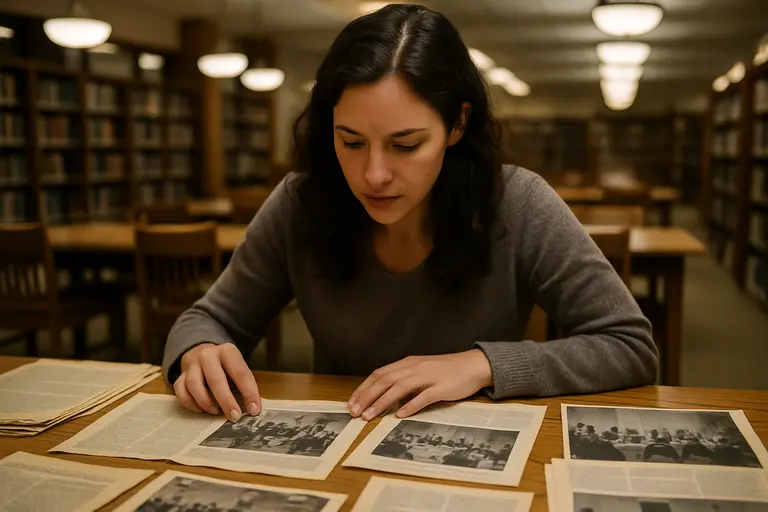
Historical memory is strongest when residents can check documents for themselves. For the 1966 open-housing campaign, that means timelines, housing research, maps, meeting records, newspaper archives, oral histories, and public-agency files where available. For present civic work, it means agendas, minutes, ward communications, election notices, school-board calendars, park-district plans, and housing-department materials.
Residents do not need to agree on every policy answer to agree that public records should be easy to find. A city council agenda should tell residents what is being voted on. A school-board packet should identify the action before the meeting. An election notice should give dates, locations, and eligibility information in plain terms. A housing program should identify the agency, the funding source, the application process, and the public contact.
Local newsrooms, neighborhood organizations, churches, mosques, chambers, unions, schools, libraries, and block clubs can help by directing people to original records rather than circulating claims without documentation. The same standard should apply to anniversary programming. If a speaker references the 1966 march, the source should be named. If a group claims a present-day civic gap, the public record or agency data should be identified.
- Ask which public office holds the record before sharing a claim.
- Compare anniversary statements with dated source material.
- Check whether meeting notices explain how residents may comment.
- Track whether outreach reaches renters, homeowners, young voters, older residents, and language-minority communities.
Marquette Park March Lessons For Civic Work
The Marquette Park March still asks a local question: who gets to enter the neighborhood, the meeting room, the ballot line, and the public record? The answer depends on more than one anniversary. It depends on whether agencies publish usable information, whether civic groups invite broad participation, and whether residents treat history as a guide for present public work.
Chicago’s 1966 open-housing conflict showed how local resistance could meet a national civil rights demand on a city street. The demographic changes that followed in Chicago Lawn show that neighborhoods can shift across decades, but the civic work does not end with population change. Participation has to be maintained through trust, notice, access, and accountability.
For residents marking the 60th anniversary after August 5, 2026, the most useful next step is specific: choose one public system connected to daily life, find its official meeting schedule or public notice page, and follow one decision from proposal to vote. That practice turns commemoration into citizenship. It keeps the history of open housing connected to the present work of open government.