In the world of politics, a good budget is key to success. Many candidates fail because they don’t plan their finances well. This can lead to a cash crisis at the worst time.
Creating three budget levels is a smart move. Imagine it like a financial survival kit. You have a Cadillac budget for the best case, a sedan for the real world, and ramen noodles for when you’re short. Every dollar matters, and your money runs out fast. If you’re out of cash before early voting, you might lose.
It’s common for campaigns to waste money on silly things, like fancy fidget spinners. But they forget about talking to voters. Spend at least 70% of your budget on reaching out to voters. Budgeting is about making smart choices, not just numbers.
Now, let’s explore how to make a budget that works in real life. And maybe even helps you win.
Offers Impact Units: Sponsor a Canvass Night, Print Pack, Hotline Minutes
Impact units are key in grassroots fundraising. They turn small donations into big changes. People want to support specific actions, not just general costs.
For example, sponsoring a canvass night costs just $250. This lets ten volunteers hit the streets, spreading your message. A $100 donation can also get 500 palm cards into voters’ hands, reaching more people.
Hotline minutes are another great option. For $50, you can fund an hour of calls, influencing undecided voters. These small donations add up, making every contribution count.
Hosting a house party can also help. Your home can fund a weekend of voter outreach. It’s a fun way to raise funds, blending socializing with activism.
Make these offers appealing by making them feel real. It’s like giving donors a piece of democracy. They feel like they’re part of something bigger, not just writing checks. This approach boosts donor involvement and builds a community around your cause.
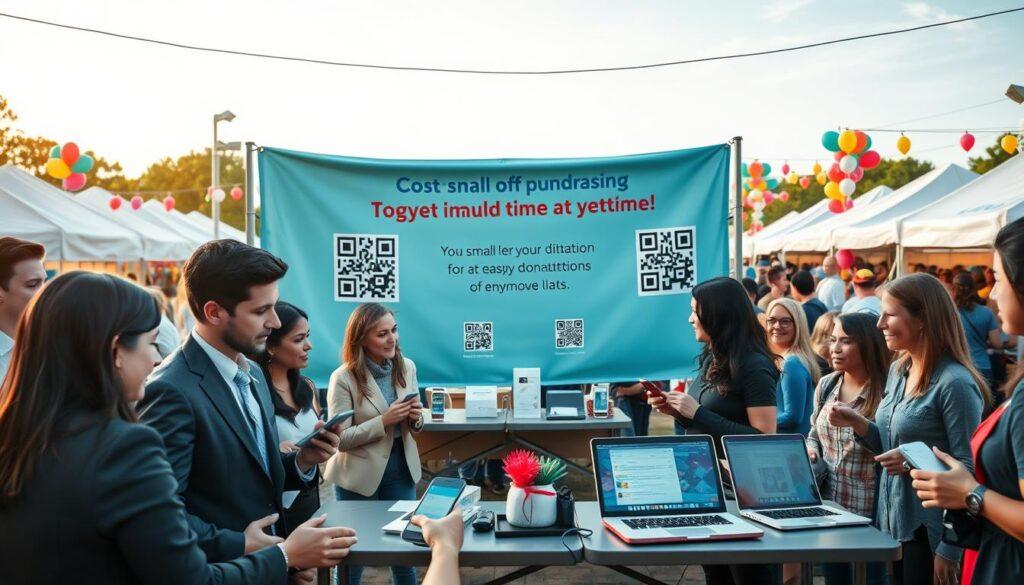
Channels: Email, SMS, Social, Live Events, QR Codes, and Phone Asks
In grassroots fundraising, channels are like an orchestra’s instruments. Each plays a vital role. Email is like the reliable casserole—it’s always there to feed many. It may not be exciting, but it works well.
SMS is like the flambé—it’s spectacular but can be risky if not managed right. Social media is like the open bar of fundraising. It makes everyone want to give after a few likes.
QR codes are like the secret door in a bookcase. They’re intriguing but only work if people are interested. Choosing the right channel is key.
For example, sending a quick email after a shocking statement is a chef’s kiss. A text blast for a 24-hour campaign can turn a dull day into a fundraising success.
Live events and phone asks are like the personal touch in a digital world. The goal is to blend these channels smoothly. A supporter who sees your Instagram, gets a text, and scans a QR code at an event should feel on a journey, not just another name.
And remember, always make sure your site works well on mobile. If it doesn’t, you’ll lose supporters.
Recurring Engine: Welcome Sequence, Stewardship, and Donor Ladders
Think of your fundraising efforts as a long-term relationship, not a quick affair. Recurring gifts are the ultimate goal. But adding a “make it monthly” option isn’t enough. You need a welcome sequence that feels personal, like a warm handshake.
The first email should make donors feel valued. Then, show them stewardship—the art of making them feel seen. Campaigns that do this well can see 30-40% of first-time donors give again before election day. A simple, personalized video update can turn a $5 monthly donor into a $50 one. It’s about connection, not just transaction.
Now, let’s talk about donor ladders. These aren’t just ideas; they’re real, built step by step. The key is in the follow-up. A thank-you call within 24 hours can make a big difference. Sending updates that show how their contributions are making a difference keeps them feeling valued.
Here’s how to effectively build your recurring engine:
- Welcome Sequence: Craft engaging and warm initial communications.
- Stewardship: Personalize updates to keep donors informed and appreciated.
- Donor Ladders: Use strategic asks to encourage higher giving levels.
In the world of fundraising grassroots, loyalty grows faster than interest. By caring for your donor relationships, you turn one-time gifts into ongoing support for your campaign.
House Party Kit: Host Recruitment, Agenda, Roles, and Pitch Script
A house party fundraiser can turn a simple living room into a hub of grassroots fundraising. Imagine 25-40 friends and supporters in a cozy space, enjoying snacks and each other’s company. These events can raise $2,000 to $5,000, with 60-70% of guests giving $50-200. That’s truly amazing.
First, finding the right host is key. Look for someone with a big living room and a talent for bringing people together. Give them an agenda that feels relaxed, not like a sales pitch. The goal is to make the evening enjoyable, not stressful.
Next, assign roles to make the event run smoothly. You’ll need someone to greet guests, another to pour drinks, and a third to chat with everyone. Think of them as the event’s social glue, making sure everyone feels welcome and ready to give.
Then, there’s the pitch script. It’s not just a list of facts; it’s a heartfelt story. It should touch people’s emotions, showing why your cause is important. A good house party can raise more money in two hours than months of emails. When people are having fun and surrounded by friends, they feel like they’re investing in something bigger than themselves.
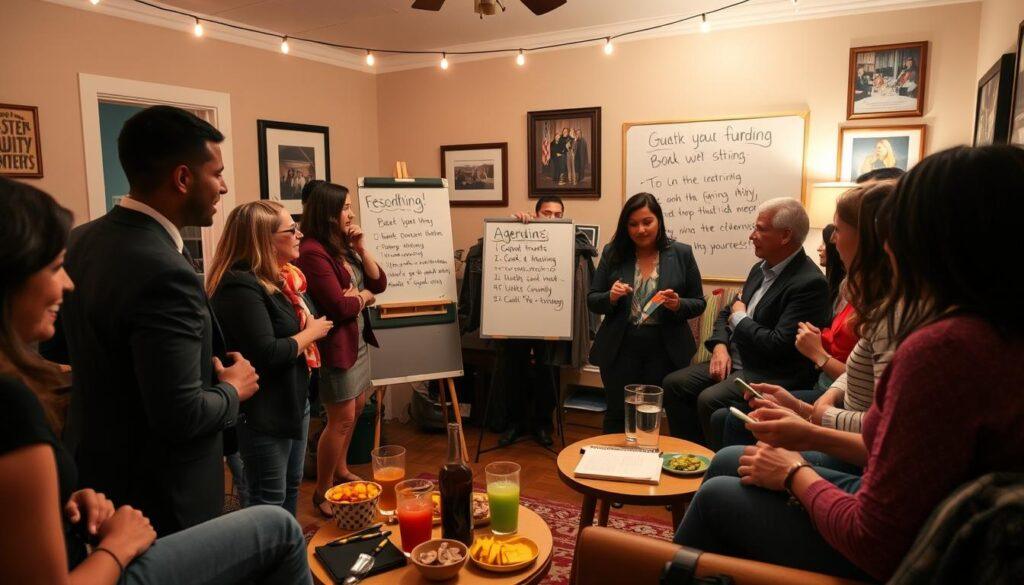
Start promoting your event 10-14 days before. Send out emails, post on social media, make phone calls, and put up flyers. This way, your house party becomes a *must-attend* event for your grassroots movement.
Compliance: Local Limits, Reporting, Receipts, and In-Kind Tracking
Understanding campaign finance compliance can be tough. It’s like finding your way out of a cornfield at night. But for fundraising grassroots, it’s essential. Without it, you might lose your way and your campaign.
Campaign finance laws make it clear who funds campaigns and how money is spent. The rules differ by government level. Knowing these local limits is key. What’s okay in one place might not be in another. Here are some key compliance points:
- Contribution Limits: Know how much individuals can donate to your campaign.
- Reporting Frequency: Most places need regular financial reports filed online.
- Prohibited Sources: Know who can’t contribute to your campaign.
Keep track of every dollar from the start. Reporting deadlines are like tax day, but they come more often. Receipts are important for your accountant and to avoid trouble. Keep them organized and easy to find.
In-kind donations can be tricky. That donated office space from a supporter’s uncle? It counts, and the FEC wants to know. Track these donations well and report them on your finance disclosures.
Compliance might seem like a scavenger hunt, but it’s worth it. It keeps you out of trouble. For fundraising grassroots, being transparent is key. It shows your small-dollar donors their money is used wisely, not secretly.

Payment Tools: Wallets, Fee Recovery, Donor Privacy, and Refunds
Your $25 donation might only be worth $23.50 after fees. Let’s break it down. In the world of online donations, fees can sneak up on you. They can take thousands from your budget.
Digital wallets like PayPal, Venmo, and ActBlue have changed fundraising. They’re like ATMs for your cause. But, their fine print can be tricky. Here’s what you need to know:
- Fee Recovery: Asking donors to cover fees can be tricky. If done right, many will help out. But, if it feels like a hidden cost, some might not give.
- Donor Privacy: In today’s world, donors want to know their info is safe. Being open about how you use their data is important.
- Refunds: Refunds can happen for many reasons. A clear refund policy can protect your reputation.
Remember, a small issue can lose you donors. Choose payment tools that are reliable and transparent. It’s like picking a roommate.
For more on the best payment gateways for nonprofits, check out this guide.
Testing: Subject Lines, Buttons, Amounts, Match Language, and Urgency Windows
Testing your fundraising tactics is like fine-tuning a musical instrument; it can create a symphony of donations. In the realm of fundraising grassroots, small adjustments can lead to big results. Think of subject lines as your opening line in a conversation—if it doesn’t catch attention, it’s like whispering into the void.
Consider this: “Hey” won’t cut it. A subject line like “FWD: Did you see what they said about you?” is more likely to get a response. It’s not just about volume; it’s about precision. A campaign might send 2-3 fundraising emails per week, and with typical response rates hovering around 1-2%, every detail counts.
But testing doesn’t stop at subject lines. The color of your donate button can feel absurd to analyze, yet it’s vital. I’ve seen campaigns boost conversion rates by 40% simply by changing “Donate” to “Chip in $10.” This shows the importance of match language—phrases like “Triple your impact before midnight!” tap into psychological triggers.
Urgency windows also play a vital role. Our brains are wired for scarcity, and even arbitrary deadlines can spur action. But remember, testing is a science, not superstition. Run one variable at a time, track the data, and resist the urge to declare victory after just a few conversions.
Lastly, let’s not forget the thank you flows. This is the post-credits scene of your fundraising movie, and it’s essential for keeping your audience engaged. A well-crafted thank-you can turn a one-time donor into a loyal supporter, eager for the next campaign.
| Testing Element | Impact on Donations | Best Practices |
|---|---|---|
| Subject Lines | Higher open rates | Use engaging and relevant phrases |
| Buttons | Increased click-through rates | Test colors and wording |
| Suggested Amounts | Improved donation sizes | Offer multiple amounts for choice |
| Match Language | Enhanced emotional connection | Use impactful phrases |
| Urgency Windows | Boosted immediate responses | Create clear deadlines |
KPI Dashboard: AOV, Retention, Churn, CAC, and ROI by Channel
Grassroots fundraising without a KPI dashboard is like navigating in the dark. You might find some success, but often, you’ll get lost. It’s vital to track your average order value (AOV) and donor churn. A KPI dashboard is key to your campaign’s success.
Retention rate shows if your efforts keep donors or if they leave quickly. Campaigns that focus on donors see 30-40% of first-time donors give again before election day. This is a statistic you can’t ignore!
Churn is a silent threat in fundraising. Losing 20% of recurring gifts each month is like running on a treadmill. And customer acquisition cost (CAC) matters too. If it costs more to get a donation than the donation itself, you’re losing money.
ROI by channel is the ultimate test. That Instagram influencer might look good, but does it really help? Focus on metrics that show real results, like which channel keeps donors coming back.
In grassroots fundraising, data tells the story of your movement’s growth. Here are key KPIs to track:
| KPI | Description | Importance |
|---|---|---|
| AOV | Average Order Value | Helps gauge donor spending habits |
| Retention Rate | Percentage of donors who give again | Indicates effectiveness of donor engagement |
| Churn Rate | Rate of donor loss | Critical for understanding donor loyalty |
| CAC | Customer Acquisition Cost | Measures efficiency of fundraising efforts |
| ROI | Return on Investment by channel | Essential for optimizing fundraising strategies |
To boost your grassroots fundraising, dive into your data. For more tips, check out this resource. Your campaign’s success depends on understanding key metrics.
Gratitude Plan: Thank You Calls, Wall of Supporters, and Progress Notes
Gratitude is more than a nice gesture; it’s a key tool in fundraising. When donors give, they’re backing a vision. A quick thank-you call can turn a one-time donor into a long-term supporter.
In today’s world of automated messages, a real voice stands out. It makes a big difference.
Creating a wall of supporters is a great idea. It can be digital or in your office. This wall honors those who support your cause. It shows that every contribution counts.
Imagine it as a yearbook for democracy, celebrating those who help save it.
Progress notes are also important. A simple email about how their money was used can make donors feel involved. It shows them the impact of their giving.
Don’t overlook thank-yous. Make them personal and tailor them to each donor’s level of giving. A good gratitude plan is just as important as your fundraising efforts. People give to causes and to the version of themselves reflected in your thank-you notes.
Building these relationships can lead to 30-40% of first-time donors giving again before election day.