Ever tried to organize voter registration drive without clear goals? It’s like trying to assemble IKEA furniture without the instructions. You’ll end up with extra parts and a wobbly democracy.
Setting specific, measurable goals turns wishful thinking into real results. How many people do you want to register? Which communities need the most attention? These aren’t corporate buzzwords – they’re the difference between effective activism and well-meaning chaos.
Think of it this way: aiming to register 500 new voters in low-turnout precincts gives you something tangible. Tracking demographics ensures you’re actually reaching the people who need it most. This isn’t about perfection – it’s about progress you can actually measure.
Learning how to run voter registration event starts with objectives that would make Peter Drucker proud. Specific. Measurable. Achievable. Relevant. Time-bound. Because building democracy deserves more than good intentions – it deserves a plan that actually works.
Verify eligibility rules and deadlines
Imagine you’ve planned the perfect voter registration drive. Everything is set, and then you find out you broke state election laws. It’s like showing up to a fight with a knife when everyone else has guns.
Voting rules in America are as varied as snowflakes. Each state has its own set of rules and quirks. Some need volunteers to be officially deputized. Others have deadlines that seem too early.
Your event planning needs to be precise. Registration deadlines differ greatly. Some states stop registration a month before the election. Others allow it until the Friday before.
Age rules are also unique. Many states let 17-year-olds register if they’ll turn 18 by Election Day. But not all states agree.
Party affiliation can also be tricky. Some states ask you to declare your party during registration. Others don’t. It’s like choosing between Spotify Premium and the free version.
| State Type | Registration Deadline | 17-Year-Old Registration | Party Declaration Required |
|---|---|---|---|
| Early Deadline States | 30 days before election | Varies by state | Sometimes |
| Moderate Deadline States | 15-20 days before | Often allowed | Depends on primary type |
| Same-Day States | Election Day itself | With age qualification | Rarely required |
North Dakota has no voter registration. Everyone knows each other there. Wyoming sometimes rejects national forms like spam emails. Knowing these quirks helps a lot.
Local County Clerks are your best friends. They know the rules better than anyone. Building good relationships with them saves a lot of trouble.
Checking eligibility rules is like reading the fine print. It might not be fun, but it prevents big mistakes. Your drive’s success depends on getting this right from the start.
What works in California might not in Texas. What’s normal in New York could be illegal in Arizona. The only thing that’s certain is to check with local authorities before starting.
Build a project team and assign leads
Think of your voter registration team like a heist crew. Everyone has their own special skills. You’re not just filling slots – you’re casting characters for the greatest democracy production of the season.
Your first recruit should be the spreadsheet sorcerer. This person loves color-coded tabs and alphabetizing registration forms. They’ll handle data entry with the precision of a Swiss watchmaker.
Next, find your people magnet. This charismatic connector can convince a cat to take a bath. They’re perfect for managing your community outreach plan and making everyone feel welcome.
Don’t forget the logistics wizard who actually understands how folding tables work. This practical problem-solver will mastermind your event logistics with military precision. They’ll keep a sense of humor about the inevitable chaos.
Campus Coffees work for any group size – from intimate gatherings to full student organizations. The magic happens when you match personalities to positions, not just by seniority.
Your clipboard holder shouldn’t be someone’s punishment duty. Assign roles based on superpowers, not seniority. The person who loves spreadsheets? Data entry. The natural storyteller? Voter education.
Remember: nobody wants the clipboard of doom. Strategic deployment of human capital turns obligation into inspiration. When people play to their strengths, voter registration becomes less chore and more choice.
Your dream team should feel less like assigned tasks and more like discovered callings. The right person in the right role transforms event logistics from headache to highlight.
This approach to your community outreach plan ensures everyone contributes their best work while enjoying the process. Because let’s be honest – democracy building should feel more like a party than paperwork.
Budgeting, fundraising, and in-kind asks
Let’s talk about the financial reality of democracy. It’s where civic duty meets spreadsheet anxiety. Budgeting for your voter registration drive isn’t about finding money trees. It’s about strategic resource allocation that would make a Fortune 500 CFO proud.
Start with the non-negotiables: tables that won’t collapse under the weight of democracy, pens that actually work. And signage visible from farther away than your average political promise.
Fundraising requires selling democracy like it’s the hottest ticket in town. You’re not asking for money – you’re investing in community transformation. Emphasize impact metrics: “Your $50 registers approximately 15 voters” sounds sexier than “We need cash for pens.”
In-kind asks are your secret weapon. That local printer might donate materials if you promise to mention them in your press release. The coffee shop down the street might provide caffeine support – because nothing fuels democracy like properly caffeinated volunteers.
Here’s the magic trick: incentives. Small tokens like “I Voted” stickers can work wonders. Buttons, pens, or even discount coupons from local businesses can turn hesitant citizens into registered voters.
Remember your cousin who works at Office Depot? This might be their moment to shine. In-kind donations often come from unexpected places when framed as community partnership opportunities.
The financial architecture of your event shouldn’t be an afterthought. It’s the scaffolding that holds everything together. From volunteer snacks to that critical backup Wi-Fi hotspot when cellular signals decide to take a democracy holiday.
Pick high-yield locations and dates
Choosing where and when to set up your voter registration operation is like playing three-dimensional chess with urban sociology. You need spots where people actually have time to stop and chat, not just rush by on their way to somewhere more important.
Think about places where people are already waiting. Farmers’ markets, college orientations, DMV lines – the irony of registering voters at the DMV is almost too perfect. These are golden opportunities in your community outreach plan.
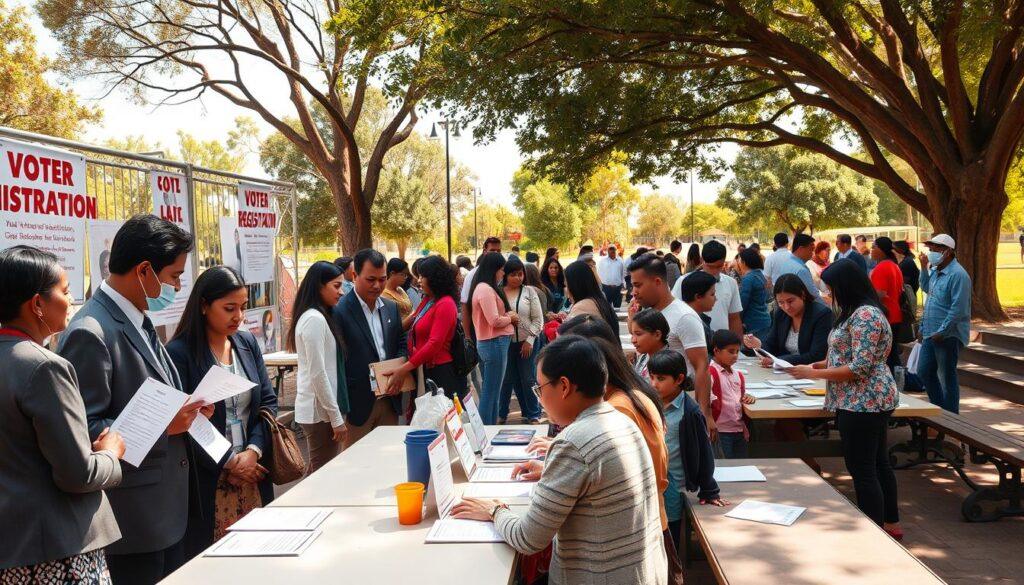
Timing is everything in event logistics. Avoid scheduling during major sporting events unless you enjoy explaining civic duty to someone whose team just lost. Cultural events are your best friend – music festivals, community fairs, anywhere people are feeling communal and open-minded.
Remember Rock the Vote? They didn’t accidentally choose rock concerts. They went where their target audience already gathered, making registration feel like part of the experience.
Here’s your cheat sheet for location success:
- High foot traffic areas with natural waiting periods
- Places aligned with your target demographic’s interests
- Venues with built-in community vibes
- Locations near public transportation
Plan your dates like you’re coordinating a moon landing. Work backward from local election deadlines – missing the cutoff is the political equivalent of showing up after the buffet closes. Your community outreach plan deserves better than that.
The right location and timing can transform your voter registration from chore to celebration. It’s not just about event logistics – it’s about meeting people where they already want to be.
Recruit and train volunteers
Recruiting volunteers is where dreams meet reality. You might get Deadpool instead of Captain America. They might ask about tacos instead of politics.
Here’s the math: for every 20 who sign up, 7 will show up. Three will think it’s a bake sale. Two will leave for coffee, and it’ll last a while.
Training turns volunteers into democracy ambassadors. It’s not just about filling out forms. They need to handle tough questions with patience and knowledge.
Pro tip: New voters are great recruits. They know all the excuses and can answer “Why bother?”
The Volunteer Recruitment Playbook
Use many ways to recruit. Social media gets the enthusiastic but flaky. Community boards get the reliable but tech-wary. Personal networks get the best.
Make training simple. You can have a meeting with pizza or phone trainings. Cover the basics like what to do when things go wrong.
- Registration requirements and deadlines
- Common questions and approved answers
- Location logistics and shift schedules
- What to do when things go sideways
Practice for awkward conversations. Your team should handle excuses and tough questions well.
| Volunteer Type | Recruitment Strategy | Training Focus | Retention Rate |
|---|---|---|---|
| New Registrants | Personal invitation | Sharing personal stories | 85% |
| College Students | Campus organizations | Flexible scheduling | 70% |
| Retirees | Community centers | Detailed process training | 95% |
| Social Media Recruits | Instagram/TikTok | Quick reference guides | 45% |
Every volunteer is a reflection of your team. One bad interaction can undo many good ones. Training is essential for success.
When you organize voter registration drive well, you’re not just collecting names. You’re building a team that can turn skepticism into action. That’s how you run voter registration event that makes a difference.
Keep cheat sheets handy with answers to common questions. Include contact info for quick help. Make sure every volunteer knows they’re making a difference.
Create scripts and multilingual materials
Writing a voter registration pitch is like crafting dialogue for a Coen Brothers film. It needs natural rhythm, unexpected humor, and a touch of weirdness. Your script should feel real, not like it was written by a group of lawyers.
Think of yourself as a conversational architect, not a clipboard-wielding interrogator. Your goal is to build bridges, not check boxes. Start with a friendly question, like “Hey, have you seen the new taco truck?” instead of “I’m here to discuss your civic participation metrics.”
Multilingual materials are key to democracy. The federal government offers forms in Spanish, Chinese, Japanese, Vietnamese, and Tagalog. But your community outreach plan might need more languages based on your area’s demographics.
Using Google Translate for Haitian Creole speakers is a bad idea. It’s better to use professional translations or native speakers for accuracy.
Your script should have answers for every objection:
- “I’m too busy” → “Takes 90 seconds – shorter than waiting for your coffee order”
- “My vote doesn’t matter” → “Says everyone who’s never lost an election by 3 votes”
- “The lizard people control everything” → “Exactly why we need more non-reptilian representation”
Test your scripts on friends who enjoy conspiracy theories and find corporate jingles suspicious. If they mock your approach, you’re on the right track. Good event logistics include preparing for linguistic diversity, not just parking and porta-potties.
Materials that reflect real speech patterns are key. People trust authenticity over perfection. A slightly imperfect translation that captures the spirit is often better than a perfect one that sounds robotic.
Your multilingual approach should be central to your community outreach plan, not an afterthought. Poor translations show disrespect. Quality materials show respect and build trust.
Your conversation should help people find their voting voice, not just collect data. The difference is in your preparation. Get this right, and you’re not just registering voters; you’re building a more inclusive democracy, one conversation at a time.
Marketing Plan (Flyers, Social, Local Media)
Your voter registration event needs a push, no matter how good the cause. A smart community outreach plan knows where people look for info. Today, that’s everywhere, like on streaming services.
Social media is more than one thing; it’s many platforms in disguise. TikTok appeals to the young with fun videos. Facebook connects with parents and groups. Nextdoor, on the other hand, reaches those who might complain but might also register.
Building relationships with local media is key. Treat reporters like rare plants – give them unique stories and data. They’re tired of press releases; offer them real stories instead of jargon.
Flyers must grab attention fast. Use big fonts for the basics, eye-catching images, and a clear call to action. No one will read tiny text.
Work with local businesses for better promotion. Coffee shops, breweries, and bookstores can help. These partnerships make your event more visible and fun.
Your community outreach plan should mix digital and old-school charm. Aim to inform and engage through various channels. Democracy deserves more than just flyers.
Event weekend schedule and station map
Welcome to the tactical war room of democracy. Here, your voter registration drive meets real people. It’s where plans turn into reality, with surprises and unexpected moments.
Your event schedule needs to be precise but flexible. Imagine a mix of military planning and a neighborhood party. Make sure your dates match state registration deadlines, as they vary a lot.
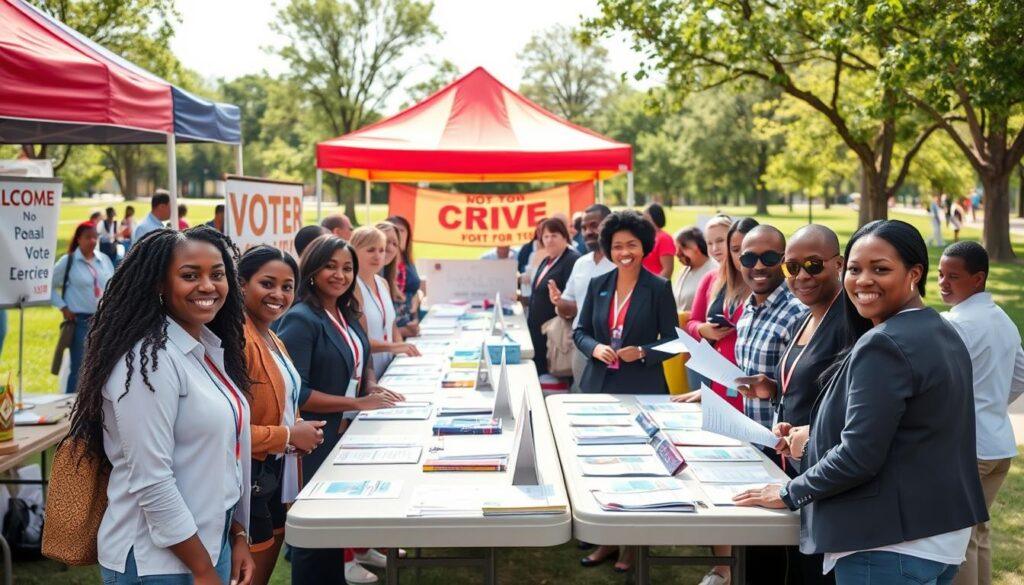
Station mapping is like urban planning for democracy. You’re designing a small city for citizens to move through. Include zones for registration, volunteers, and a coffee station for morale.
- Registration Central: Multiple tables with clear signage
- Volunteer Command: Check-in station with supplies
- Morale Oasis: Refreshments and seating area
- Information Hub: FAQ station and materials distribution
Plan for unexpected delays like weather changes or unexpected guests. These can happen, so be ready.
Your timeline should include setup, peak hours, and a debrief over pizza. It’s a great way to bond with your team.
Remember, the best event logistics mix precision with flexibility. You’re running a democracy event, full of surprises.
Troubleshooting common issues
Welcome to the moment when your plans meet reality. This is when your event logistics skills are put to the test. It’s also where democracy gets real.
You’ll face excuses like “I’m too busy” and conspiracy theories about voting machines. Your goal is not to win arguments but to remove barriers. Sometimes, just listening is enough.
- “My vote doesn’t make a difference” – Your vote can change everything, even in local elections. Many elections are won by just one or two votes.
- “I’m not political” – Voting is about having a say in your community’s future, not politics.
- “The system is rigged” – Your participation keeps the system honest and accountable.
Technical issues will pop up during your how to run voter registration event. Pens will vanish, tables will wobble, and forms will fly away.
Always have backup systems ready because Murphy’s Law is real for civic events. Keep extra supplies and know your backup plans. Train your team to handle surprises well.
Teach your team to respond with empathy and patience. Nothing says “democracy” like talking down to voters. Give them the tools to listen and understand.
You’re not there to turn skeptics into experts. You’re there to make registration easy. Sometimes, just acknowledging concerns is enough. Other times, it’s about having that extra pen.
Your troubleshooting skills can turn disasters into stories. They can turn frustrated citizens into registered voters. And that’s how democracy moves forward, one solved problem at a time.
Post-event data entry and form returns
The event itself might be the flashy concert, but post-event data management is the road crew that makes sure everything actually works. This is where your meticulous planning meets the reality of bureaucracy.
Data entry is the unsexy but absolutely critical phase of your organize voter registration drive. It’s like the morning-after cleanup that nobody wants to do but everyone needs. Without proper systems, those registration forms might as well be confetti – pretty to look at but ultimately useless.
Your first priority is to record names and phone numbers of everyone who registered. This creates two powerful advantages. First, you can follow up in a few weeks to confirm they’ve heard from state election officials. Second, you’re building a valuable list for get-out-the-vote efforts later.
The key is establishing systems that don’t rely on memory. “I think Jessica took those forms” is not a data management strategy. You need clear labeling, organized tracking, and someone who actually enjoys spreadsheets.
Form returns require understanding state-specific rules that vary more than regional pizza preferences. Some states want bundles mailed together. Others demand individual submissions. Some require specific forms of delivery. Getting this wrong is like sending wedding invitations without RSVP cards – awkward for everyone involved.
| State Type | Form Return Method | Deadline Window | Special Requirements |
|---|---|---|---|
| Bundle States | Mail together in batches | 3-5 business days | Notarization sometimes required |
| Individual States | Submit forms separately | 1-2 business days | Photo ID copies often needed |
| Hybrid Systems | Online + physical submission | Varies by county | Digital signatures accepted |
| Express States | Direct election office delivery | 24-48 hours | Appointment often necessary |
Follow-up protocols are non-negotiable. Voters need confirmation their registration actually worked. Nothing undermines trust faster than believing you’re registered only to discover you’re not on election day. This is where your event logistics planning pays dividends.
For more guidance, check out this detailed guide to organizing a voter registration that covers these administrative nuances.
Remember: the paperwork might feel tedious, but it’s where registration drives transform from feel-good events into actual democratic impact. Your attention to these details determines whether your effort registers voters or just collects paper.
Thank-yous, debrief, and retention
Think the event ends when volunteers go home? That’s just the start of your community outreach plan. It’s where you turn one-time helpers into a dedicated team.
Start with thank-yous. A simple email isn’t enough. Personalized thanks are key to keeping volunteers. That extra hour someone put in? They deserve more than a generic email.
Organizations lose volunteers because they’re treated like replaceable parts. Be specific and timely with your thanks. Mention what they did well and do it quickly. Handwritten notes are the best way to show appreciation.
The debrief is important, not for blaming, but for learning. Ask three questions: What worked well? What was tough? What would make you want to do it again?
Use this chance to improve, not punish. That chaotic hour? It’s valuable for planning your next how to run voter registration event. The person who solved the printer issue? They’re a future leader.
Retention is key to keeping volunteers. Share your successes and the next steps. This keeps them engaged beyond the event.
Find your superstars and ask them to lead. They might want training or a better parking spot. Listen to what they need.
Now, let’s talk about how to make volunteers feel valued:
| Appreciation Method | Effort Level | Impact Score | Best For |
|---|---|---|---|
| Generic mass email | Low | 2/10 | Nobody, honestly |
| Personalized shout-outs | Medium | 7/10 | All volunteers |
| Handwritten notes | High | 9/10 | Key contributors |
| Public recognition | Medium | 8/10 | Superstars |
| Skill development offer | High | 9/10 | Retention candidates |
Don’t forget to share your success. Send photos to campus@democracyforward.org. They might feature your event. Then, share this toolkit with others to help them plan their own events.
This follow-through turns your community outreach plan into a lasting effort. The best how to run voter registration event is one where volunteers are eager to return.
Sample timelines and templates
Templates are like the secret keys to civic engagement. Why start from scratch when democracy needs our help? The right plan turns confusion into a well-organized effort.
Sample timelines help avoid the “we should have started sooner” feeling. They outline the whole process for a successful voter registration drive. You get everything from volunteer sign-up sheets to script templates and logistics checklists.
The LWV toolkit provides all the answers. It includes data collection forms, materials in different languages, and guides for any problems. Good planning is key to a smooth voter registration drive.
Picasso once said that stealing is okay if it’s for art. In democracy building, we’re all artists with clipboards. Using proven plans is better than starting over. The best organizers see templates as blueprints, not shortcuts.
Give your next voter registration drive a head start. Templates turn good ideas into real action. That’s how we build democracy, one form at a time.